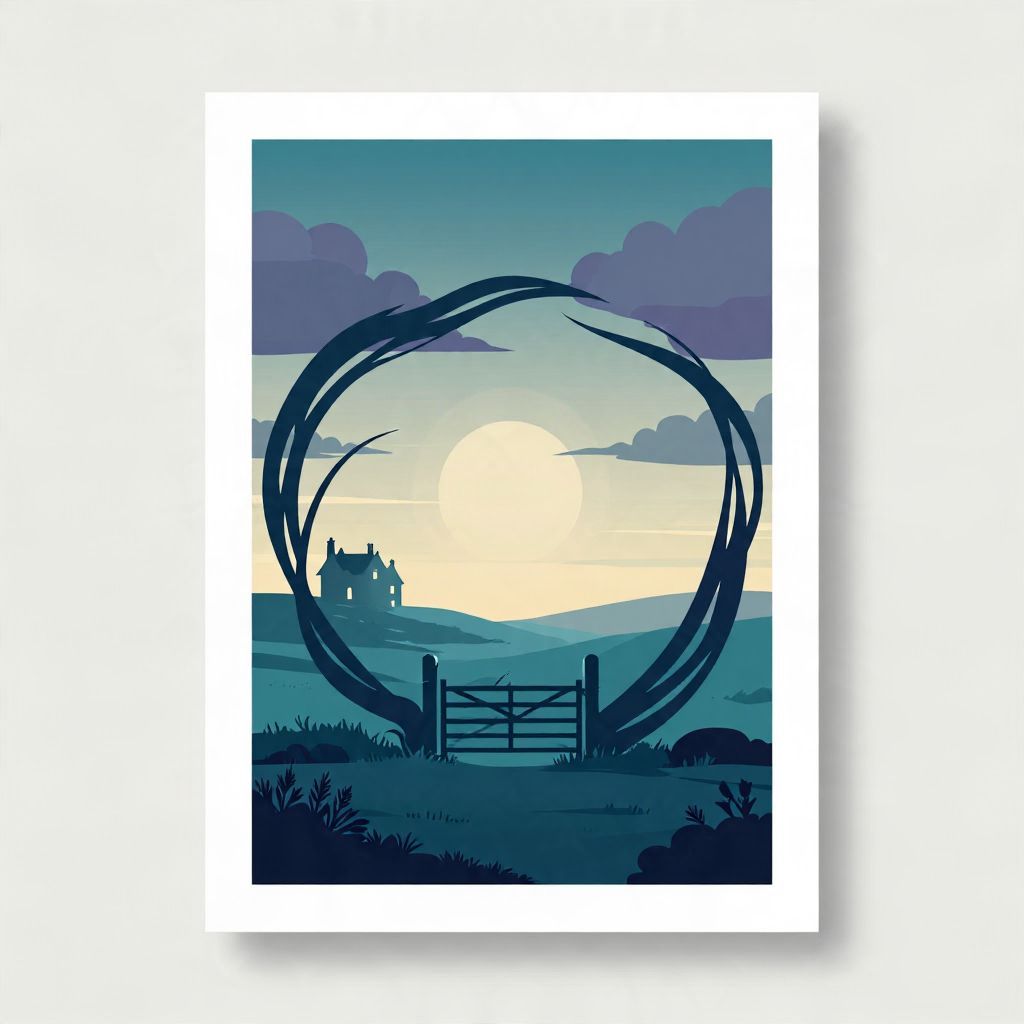
If you’re wondering how Wuthering Heights ends, the short answer is that the novel closes on a note of uneasy peace rather than dramatic resolution. The story’s central passions, griefs, and resentments do not vanish, but the next generation begins to move beyond the destructive cycle that shaped Heathcliff, Catherine, and Edgar.
The ending is both haunting and restorative: the novel leaves room for memory, loss, and the possibility of healing. That balance is one reason readers still ask what the final scenes mean and whether the ending should be read as tragic, hopeful, or both.
How does Wuthering Heights movie end?
In most film versions of Wuthering Heights, the ending follows the novel’s emotional arc: Heathcliff’s obsession and suffering come to an end, the younger generation finds a path toward marriage and stability, and the moorland setting remains a symbol of memory rather than revenge. The final impression is usually one of quiet release, not triumph.
Spoiler-filled ending explanation
Spoilers ahead: the ending centers on Heathcliff’s decline and death, followed by the promise of a new life for Cathy and Hareton. The story closes after the older generation’s damage has been acknowledged, suggesting that love, when twisted by pride and possession, can destroy lives for years.
Heathcliff’s final state
By the end, Heathcliff is no longer driven by the same furious energy that once governed him. His fixation on Catherine has consumed him for so long that, when the possibility of revenge loses its force, he seems emptied out rather than redeemed.
In many readings, his death is not a moral victory for anyone. It feels more like exhaustion, as if the novel is showing the cost of refusing grief and turning love into obsession.
The next generation’s resolution
The most important movement at the end involves Cathy Linton and Hareton Earnshaw. Their relationship gradually replaces the bitterness of the older generation with mutual respect, education, and affection.
This shift matters because Wuthering Heights is not only a Gothic tragedy; it is also a novel about inheritance. What is passed down is not just property, but emotional damage, habits of cruelty, and the possibility of change.
The final atmosphere of the novel
The ending is often remembered for its stillness. Instead of a dramatic reconciliation, Emily Brontë gives readers a landscape of lingering memory, where the dead remain present in the imagination and the living continue on.
That final mood is one reason the novel feels so modern. It does not tidy up emotional pain; it asks what survives after passion has burned itself out.
What happens in the last chapters?
The final chapters bring together the threads of the two households, especially through the younger characters. Hareton begins to emerge from the harshness that shaped him, while Cathy learns to see beyond class prejudice and inherited suspicion.
At the same time, the narrative frame suggests that the past is still active. The moors, the houses, and the remembered figures of Catherine and Heathcliff continue to shape how the living understand themselves.
Why the ending feels unsettled
Even when the plot reaches a calmer place, the novel does not offer complete closure. The emotional force of Catherine and Heathcliff’s bond remains central, and the ending preserves that intensity as memory rather than resolving it into comfort.
That is why some readers experience the conclusion as tragic and others as hopeful. Both responses are valid, because the novel holds grief and renewal together.
Book summary of Wuthering Heights
Wuthering Heights follows the intertwined lives of the Earnshaw and Linton families on the Yorkshire moors. The novel is framed by an outsider narrator, which gives the story a layered, retrospective quality and makes the truth of events feel filtered through memory and testimony.
At its center is the intense connection between Heathcliff and Catherine Earnshaw. Their bond is shaped by childhood intimacy, social division, pride, and emotional dependence, and it becomes the force that drives much of the novel’s suffering.
Main characters at a glance
- Heathcliff — a foundling who becomes the novel’s most powerful and destructive figure.
- Catherine Earnshaw — passionate, divided between desire and social ambition.
- Edgar Linton — civil, refined, and emotionally vulnerable in contrast to Heathcliff.
- Cathy Linton — the younger Catherine, whose growth helps shape the ending.
- Hareton Earnshaw — a key figure in the novel’s movement toward reconciliation.
Themes that shape the ending
Love and obsession
The novel repeatedly asks whether love can become possessive, self-destructive, or even violent. Heathcliff and Catherine are often described as soulmates, but the book also shows how their bond damages everyone around them.
By the ending, the novel suggests that love without restraint or empathy can become a form of haunting.
Revenge and inheritance
Much of the plot is driven by revenge across generations. Property, marriage, and social status become tools for punishment, and the younger characters inherit the consequences of older wounds.
The final chapters complicate that pattern by showing that inheritance can also be interrupted. Cathy and Hareton begin to transform what they receive.
Nature, landscape, and isolation
The moors are more than setting; they reflect the novel’s emotional extremes. Open, wild, and exposed, they mirror the characters’ passions and the sense that the natural world is bound up with memory and longing.
The ending does not erase that landscape. Instead, it leaves the reader with the feeling that the land remembers what people cannot fully say.
Literary style and narrative technique
Wuthering Heights is famous for its nested narration. Much of the story comes through Lockwood and Nelly Dean, which means readers must piece together events from partial, subjective accounts.
This structure deepens the ending because it keeps the past alive as interpretation. We do not simply witness events; we hear how they have been remembered, judged, and retold.
Gothic features in the ending
- Isolated houses and stormy weather
- Family secrets and haunting memories
- Emotional extremity and psychological intensity
- A blurred boundary between the living and the dead in the imagination
These Gothic elements help explain why the ending feels so eerie. Even when the plot settles, the atmosphere does not fully relax.
How the movie endings usually compare to the book
Film adaptations often simplify the novel’s layered narration and compress the generational structure. As a result, the ending may feel more overtly romantic, more tragic, or more visually symbolic than the book’s quieter final movement.
Still, most adaptations preserve the essential pattern: the old passion ends, the younger pair offers a different future, and the moors remain a place of emotional memory.
What adaptations tend to emphasize
- The romance between Heathcliff and Catherine
- The visual power of the Yorkshire landscape
- The final emotional release of Heathcliff’s story
- The contrast between destruction and renewal
Why the ending still matters
The ending of Wuthering Heights matters because it refuses simple moral balance. No one is fully innocent, and no one escapes the consequences of the past without cost.
Yet the novel does not end in total despair. It allows for a gentler future, suggesting that love can be learned differently by those who come after the original tragedy.
Should you read the ending as happy or sad?
The most accurate answer is that it is both. The ending is sad because the central love story is ruined by pride, resentment, and emotional damage. It is hopeful because the younger generation breaks the pattern and creates a more humane bond.
That duality is part of what makes the novel enduring. Brontë gives readers a conclusion that feels earned, unsettling, and emotionally rich all at once.
Final takeaway
If you’re asking how Wuthering Heights movie ends, the essential answer is that the story closes with loss giving way to limited renewal: Heathcliff’s destructive obsession ends, and Cathy and Hareton point toward a calmer future. The ending is not neatly happy, but it is deeply meaningful.
For more on the novel’s tragic family history, you may also want to read how Catherine dies in Wuthering Heights and how Cathy dies in Wuthering Heights.