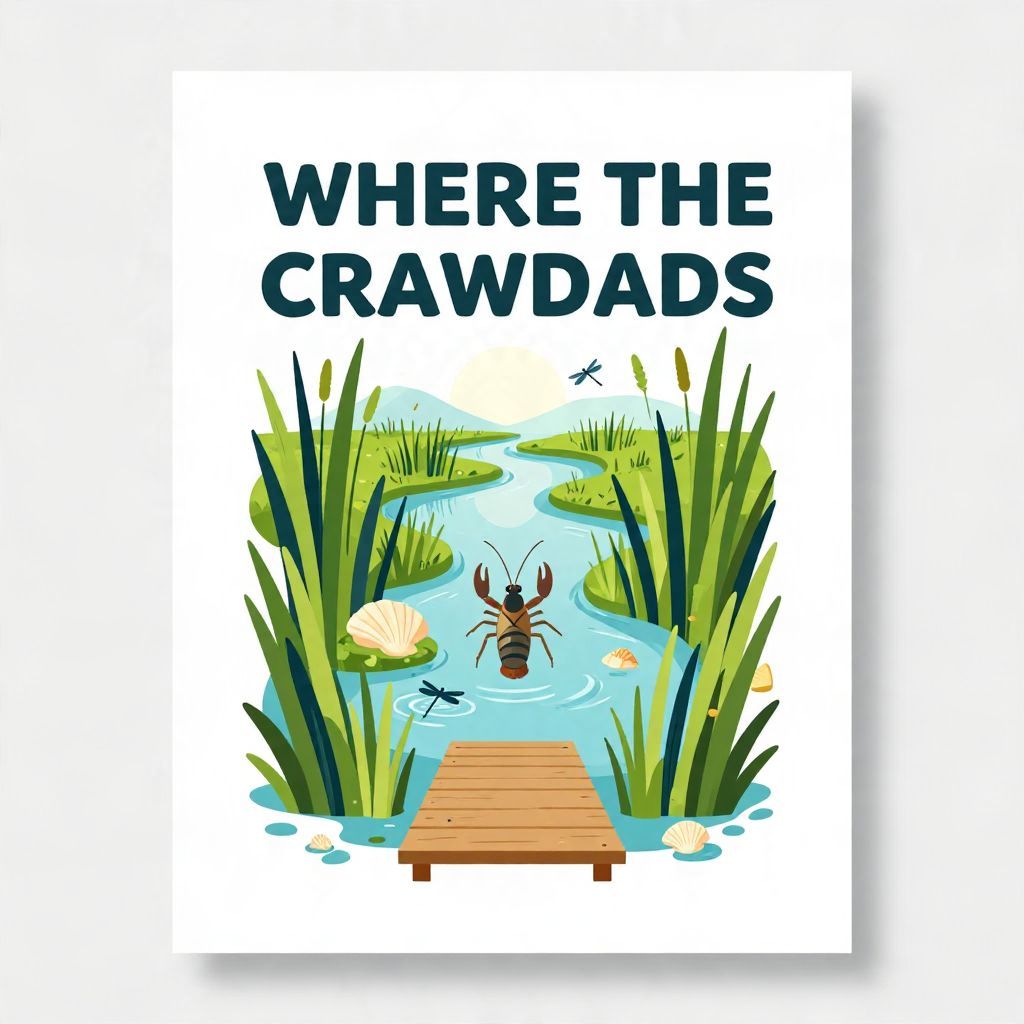
If you’re trying to understand Where the Crawdads Sing, you may be looking for a clear explanation of what the novel is about, why it resonated with so many readers, and what its central ideas mean. Delia Owens’s bestselling book blends coming-of-age fiction, mystery, and nature writing in a story that is as much about isolation and survival as it is about crime.
This guide gives a concise overview of the novel’s premise, major characters, themes, symbols, and literary style. It also notes the book’s place in contemporary fiction and helps readers decide what to pay attention to while reading.
What is Where the Crawdads Sing about?
Where the Crawdads Sing is a literary mystery set in the marshes of coastal North Carolina. It follows Kya Clark, a girl who grows up largely alone after her family leaves her behind, and traces how her isolation shapes her identity, relationships, and the suspicion that later surrounds her.
Plot overview without major spoilers
The novel moves between two timelines: Kya’s childhood and young adulthood in the marsh, and a later investigation into a death that draws the town’s attention to her. The structure gradually reveals how Kya survives abandonment, learns from the natural world, and becomes both an outsider and a subject of local rumor.
Kya’s life in the marsh
Kya is left to fend for herself in a remote marsh after members of her family disappear one by one. With little formal education and almost no stable adult care, she learns to cook, gather food, and navigate the landscape through observation and instinct.
Nature becomes her classroom, shelter, and emotional language. The marsh is not just a setting; it is the environment that shapes her imagination, resilience, and sense of belonging.
The town and the mystery
As Kya grows older, she has limited contact with the nearby town, where many people view her with suspicion or pity. The novel’s mystery element emerges when a local man is found dead, and Kya becomes a central figure in the investigation.
Without giving away the ending, it is fair to say that the book asks readers to consider how prejudice, loneliness, and social exclusion can influence what people believe about guilt and innocence.
Who are the main characters?
The novel’s emotional center is Kya, but several supporting figures help define her world and the tensions around her. Their roles are important because they show the difference between connection, exploitation, and judgment.
- Kya Clark — the protagonist, often called the “Marsh Girl,” whose survival and inner life drive the novel.
- Jumpin’ — a kind local man who offers practical help and becomes one of Kya’s few reliable human connections.
- Mabel — Jumpin’s wife, who also shows Kya compassion and support.
- Tate Walker — a thoughtful boy from the area who shares Kya’s interest in the marsh and later becomes important to her emotional development.
- Chase Andrews — a local man whose relationship to Kya and role in the mystery make him central to the novel’s suspense.
What themes does the novel explore?
Where the Crawdads Sing is popular partly because it combines suspense with themes that are easy to recognize but deeply layered. The novel uses Kya’s life to explore how environment, class, gender, and community shape a person’s fate.
Isolation and belonging
Kya’s loneliness is one of the novel’s most important themes. The book shows both the damage caused by abandonment and the ways a person can build a life outside ordinary social structures.
At the same time, it asks whether true belonging must come from people, place, or both. For Kya, the marsh offers a kind of belonging that human society withholds.
Nature as knowledge
The novel treats the natural world as a source of wisdom rather than background scenery. Kya learns patterns, survival skills, and emotional steadiness by studying birds, tides, plants, and animal behavior.
This emphasis gives the book part of its literary identity: it is a mystery, but also a nature-inflected coming-of-age story.
Prejudice and social judgment
The town’s view of Kya reveals how communities can turn difference into suspicion. Because she is poor, isolated, and outside conventional family life, she is often treated as less trustworthy or less fully human.
The novel suggests that social prejudice can shape legal and emotional outcomes, not just gossip.
Love, trust, and vulnerability
Romantic and platonic relationships in the novel are tied to trust, but trust is never simple. Kya wants connection, yet her history makes intimacy risky, and the book repeatedly shows how care can be genuine, conditional, or manipulative.
Important symbols and motifs
Several recurring images give the novel its emotional texture and help connect the plot to its larger ideas. These symbols are not decorative; they reinforce the book’s view of survival, instinct, and identity.
The marsh
The marsh symbolizes refuge, wildness, and self-reliance. It is a place where Kya is vulnerable, but also where she becomes most herself.
Birds and field guides
Birdlife matters because it reflects Kya’s observational intelligence and her desire to classify, understand, and preserve the world around her. Birds also suggest migration, freedom, and the tension between rootedness and movement.
Shells, feathers, and natural collections
Kya’s habit of collecting and studying natural objects reflects her effort to make order from chaos. These items stand in for memory, beauty, and the fragile evidence of a life lived at the edge of society.
How is the novel written?
The book’s style is accessible but intentionally atmospheric. It combines lyrical descriptions of landscape with straightforward suspense plotting, which helps explain why it appeals to both literary and mainstream readers.
Dual timeline structure
By alternating between past and present, the novel builds tension while gradually revealing Kya’s history. This structure also encourages readers to reinterpret earlier events as new information comes to light.
Close focus on setting
The writing repeatedly returns to marsh details, weather, wildlife, and seasonal change. That close attention to place gives the novel a strong sense of mood and helps the setting function almost like a character.
Blending genres
The book sits at the intersection of several genres: literary fiction, romance, mystery, and nature writing. That blend is part of its popularity, because it offers emotional depth, suspense, and vivid scenery at the same time.
Why did the book become so widely discussed?
Where the Crawdads Sing became a major bestseller because it is highly readable while still addressing serious emotional and social questions. Readers were drawn to its survival story, its romantic thread, and its mystery structure, all of which are anchored by a memorable setting.
It also sparked discussion because the novel invites strong responses to Kya’s treatment, the town’s assumptions, and the ending’s moral ambiguity. That combination of page-turning plot and interpretive tension helped the book remain widely talked about.
What should readers pay attention to?
If you are reading the novel for the first time, a few elements are especially worth noticing. They help reveal how the book works beneath its surface suspense.
- How Kya learns from observation rather than formal schooling.
- The contrast between the marsh and the town as two different social worlds.
- How other characters interpret Kya versus how the narration presents her.
- The role of memory in shaping what readers know and when they know it.
- The repeated use of natural imagery to express emotion and identity.
Who might enjoy Where the Crawdads Sing?
This novel is a good fit for readers who like character-driven fiction, atmospheric settings, and mysteries that unfold slowly through memory and revelation. It may especially appeal to readers interested in stories about resilience, solitude, and the emotional power of place.
If you prefer tightly plotted crime fiction with fast procedural detail, this book may feel more reflective than investigative. But if you enjoy a novel that combines suspense with nature writing and a strong sense of voice, it is likely to be rewarding.
Final takeaway
Where the Crawdads Sing is best understood as a novel about survival, loneliness, and the complicated relationship between a person and the world that judges her. Its mystery plot gives the book momentum, but its lasting appeal comes from Kya’s inner life and the marsh landscape that shapes it.
For readers exploring the book further, you may also want to read an explanation of the ending of Where the Crawdads Sing or compare it with another popular contemporary title like what November 9 is about.