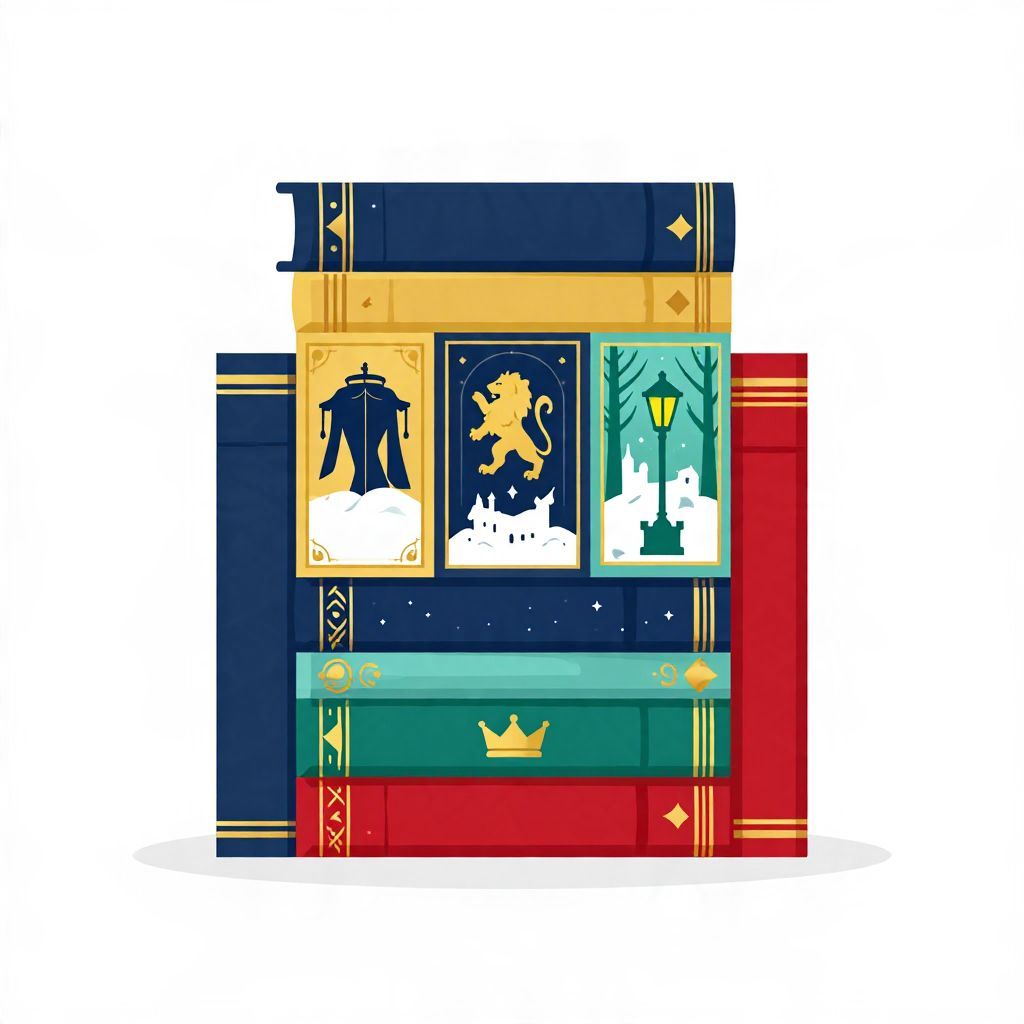
If you’re wondering how many Narnia books there are, the short answer is seven. C. S. Lewis’s The Chronicles of Narnia is a seven-book fantasy series that follows different children, magical creatures, and moral trials across the land of Narnia.
Readers often ask the question because the books are sometimes discussed in publication order and sometimes in chronological order. That difference matters for reading the series well, especially if you want the clearest introduction to Lewis’s world.
How many Narnia books are there in The Chronicles of Narnia?
There are seven Narnia books. C. S. Lewis wrote the full series between 1950 and 1956, and together they form one of the best-known fantasy cycles in children’s literature. The books can be read in publication order or in a chronological order based on Narnia’s internal timeline.
What are the seven Narnia books?
The seven books in The Chronicles of Narnia are:
- The Lion, the Witch and the Wardrobe
- Prince Caspian
- The Voyage of the Dawn Treader
- The Silver Chair
- The Horse and His Boy
- The Magician’s Nephew
- The Last Battle
These novels are linked by setting, recurring ideas, and occasional returning characters, but each book also works as a distinct adventure. Some are highly episodic, while others build toward a larger mythic conclusion.
What is the best reading order for Narnia?
For most first-time readers, publication order is the easiest and most natural choice. It preserves the way the series was originally introduced to readers and avoids some of the explanatory material that appears in the later-written prequels.
Publication order
- The Lion, the Witch and the Wardrobe
- Prince Caspian
- The Voyage of the Dawn Treader
- The Silver Chair
- The Horse and His Boy
- The Magician’s Nephew
- The Last Battle
Chronological order
- The Magician’s Nephew
- The Lion, the Witch and the Wardrobe
- The Horse and His Boy
- Prince Caspian
- The Voyage of the Dawn Treader
- The Silver Chair
- The Last Battle
Chronological order can be appealing if you want the story of Narnia’s world from its beginnings. But publication order often gives a better sense of discovery, because Lewis did not write the books as a single preplanned sequence from start to finish.
Why do people disagree about the reading order?
The disagreement comes from the fact that The Magician’s Nephew is a prequel. It explains the origins of Narnia, the wardrobe, and several key mythic elements, but it was published after the first four books had already established the world.
That means there are two legitimate ways to approach the series. One follows the order in which readers originally encountered the books; the other follows the internal chronology of the fictional world.
Best order for different readers
- First-time readers: publication order
- Readers revisiting the series: chronological order can be interesting
- Families reading aloud: publication order usually feels smoother
- Readers curious about Narnia’s origins: start with The Magician’s Nephew
What kind of series is Narnia?
The Chronicles of Narnia is a fantasy series, but it is not only about magic and adventure. Lewis blends quest narrative, allegory, fairy tale, myth, and Christian symbolism to create books that work on more than one level.
Children can enjoy the talking animals, enchanted landscapes, and dramatic battles. Adult readers often notice the series’ moral structure, symbolic patterns, and philosophical concerns about courage, temptation, sacrifice, and redemption.
What themes run through the Narnia books?
The series is varied, but several themes appear again and again.
- Good versus evil: Many books center on the struggle between rightful order and corrupt power.
- Growth and responsibility: Children often begin uncertain or immature and must learn courage, humility, or trust.
- Sacrifice and renewal: The stories frequently connect suffering with restoration.
- Wonder and imagination: Narnia invites readers into a world where the marvelous feels morally meaningful.
- Faith and moral choice: Characters are often tested by what they believe and whom they follow.
These themes help explain why the books have remained popular for decades. They are adventure stories, but they also ask what it means to choose wisely, grow up well, and recognize truth.
Who are the main characters in the series?
The series does not have one single protagonist. Instead, different books focus on different children and groups of travelers.
Major recurring figures
- Aslan: the great lion and central symbolic presence of the series
- Peter, Susan, Edmund, and Lucy Pevensie: the four siblings who appear in the earliest and most famous books
- Prince Caspian: a rightful heir whose story centers on restoration and leadership
- Eustace Scrubb: a later character whose arc emphasizes transformation and humility
- Jill Pole: a companion in later adventures, especially in The Silver Chair
Because the series is episodic, the cast changes from book to book. That structure makes Narnia feel both unified and spacious, like a world with many entry points.
What makes the first Narnia book so important?
The Lion, the Witch and the Wardrobe is usually the best-known entry point because it introduces Narnia in a direct, memorable way. It also establishes the series’ basic pattern: ordinary children enter an extraordinary world, face a moral challenge, and return changed.
The book’s popularity has shaped the way many readers think about the entire series. Even though it is only one of seven, it often functions as the gateway to the whole world of Narnia.
How does The Magician’s Nephew change the series?
The Magician’s Nephew is important because it serves as a prehistory of Narnia. It explains how the world begins and introduces background material that deepens the symbolism of the later books.
For readers who start there, the series can feel more mythic and origin-focused. For readers who begin with the published first book, the revelations in The Magician’s Nephew arrive later and can feel more surprising.
Is Narnia only for children?
No. The books were written for younger readers, but they have long attracted adults as well. Their accessible style makes them easy to enter, while their layered symbolism and theological undertones reward rereading.
That said, the books are not all alike in tone. Some are brisk and playful; others are more reflective, solemn, or overtly allegorical. Readers who enjoy classic fantasy, moral fables, or literary fairy tales often find the series especially rewarding.
Why does the series still matter?
Narnia remains influential because it combines literary simplicity with imaginative depth. Lewis writes in a clear, direct style, but the books are built from enduring story-shapes: journeys, tests, betrayals, restorations, and final reckonings.
The series also helped define modern children’s fantasy. Its blend of adventure and symbolism influenced later writers and continues to invite discussion about how fantasy can carry moral and spiritual meaning.
Quick answer for readers in a hurry
How many Narnia books are there? There are seven. If you want the simplest reading path, begin with The Lion, the Witch and the Wardrobe and continue in publication order through The Last Battle.
If you enjoy book-count and series guides, you may also like how many books are there in the world and how many books are in a library.