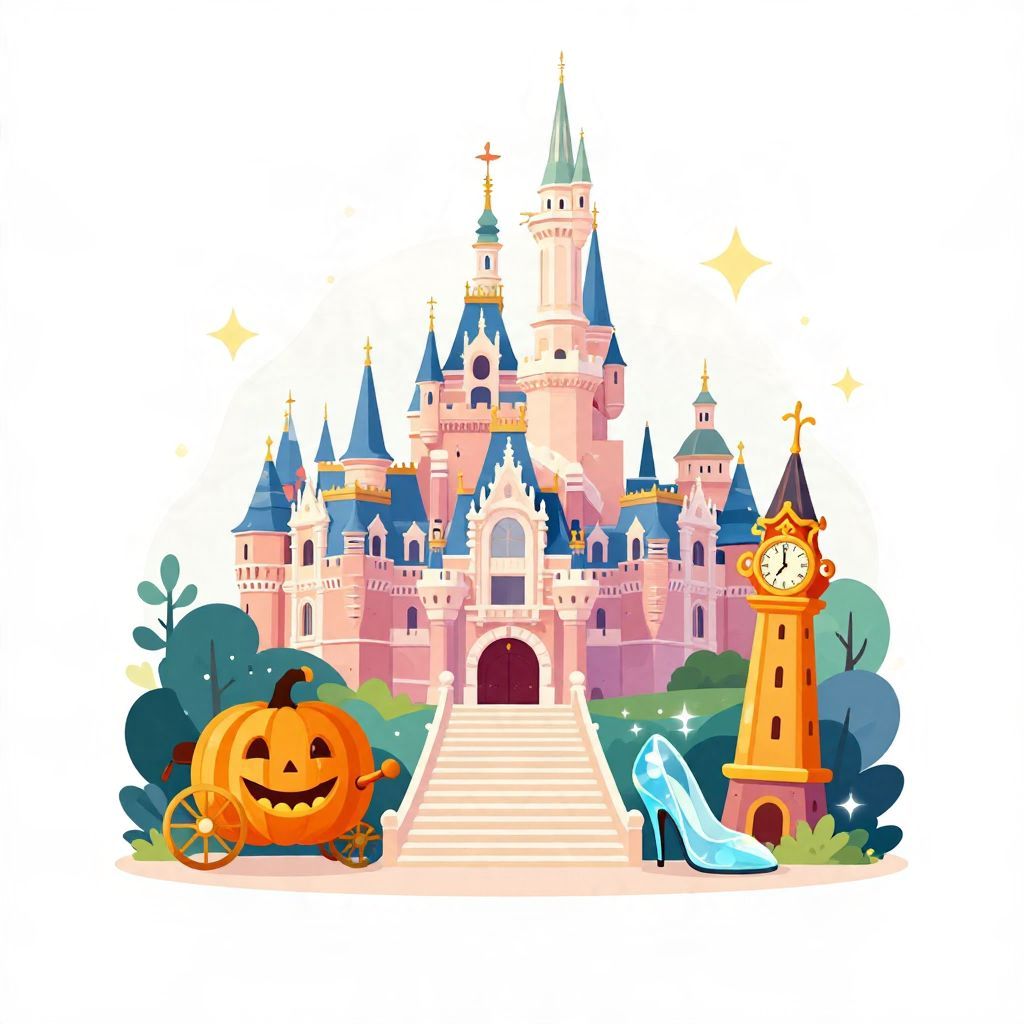
If you’re wondering where Cinderella takes place, the simplest answer is that it does not have one fixed, officially named real-world setting. In most versions, the story unfolds in a timeless fairy-tale kingdom or a vaguely European court, with the action centered on Cinderella’s home, the palace, and the spaces that separate social rank.
That flexibility is part of the tale’s power. Different retellings shift the setting to fit local culture, period details, and thematic emphasis, while keeping the same core contrast between domestic hardship and royal transformation.
Where does Cinderella take place?
Cinderella usually takes place in an unnamed fairy-tale kingdom, often imagined as a European-style setting with a modest home, a grand palace, and nearby village or court spaces. The story is intentionally non-specific, which lets readers focus less on geography and more on the contrast between Cinderella’s life of labor and the world of privilege she eventually enters.
The story’s setting: a fairy-tale world, not a precise map
Unlike a realist novel, Cinderella is not built around a carefully documented city, country, or historical date. Its setting is broad enough to feel universal, which is one reason the tale has survived in many cultures and versions.
In most familiar retellings, the key locations are:
- Cinderella’s home — usually a house where she lives with her stepfamily and is forced into domestic work.
- The palace — the site of the royal event, often a ball or celebration where she is transformed socially and visually.
- The route between them — roads, carriages, gardens, or thresholds that symbolize movement from oppression to possibility.
Because the tale is so adaptable, the “where” matters less as a fixed place than as a structure of contrasts.
Why the setting is usually unnamed
A universal fairy-tale design
Fairy tales often use generalized settings so the story can feel timeless. In Cinderella, the lack of a named town or country helps the narrative function as an archetype rather than a local history.
Social contrast is more important than geography
The tale depends on the difference between two worlds: the cramped, labor-filled domestic space where Cinderella is undervalued, and the elegant public space of the palace, where she is finally recognized. The setting reinforces class difference, not just scenery.
Adaptability across cultures
Because the setting is not fixed, storytellers can relocate the tale to different eras and regions without breaking its logic. That is one reason versions of Cinderella appear in many traditions, from oral folktales to modern films and novels.
Common places in Cinderella and what they mean
The hearth or kitchen
In many versions, Cinderella’s labor happens in the kitchen, by the fireplace, or in other service spaces. These areas symbolize work, invisibility, and confinement, especially when compared with the public glamour of the palace.
The bedroom or attic
Some retellings place Cinderella in a small room, attic, or servant’s quarters. This detail emphasizes her isolation and low status within her own home.
The ballroom
The ballroom is one of the tale’s most important symbolic spaces. It is where Cinderella is seen differently, where transformation becomes social as well as magical, and where appearance temporarily reshapes identity.
The garden, steps, or threshold
Threshold spaces matter in fairy tales, and Cinderella uses them often. Stairs, doorways, and garden paths mark moments of transition, especially between private suffering and public recognition.
How different versions change the location
Because Cinderella exists in many forms, the setting can vary widely. Some versions lean into a distinctly European courtly atmosphere, while others adapt the tale to local customs, architecture, and social structures.
For example, literary retellings may specify a kingdom, a city, or a named historical period. Film and stage versions often add visual detail—castles, villages, carriages, forests, and grand halls—even when the source tale remains vague.
That means the answer to “where does Cinderella take place?” depends partly on which version you mean. The classic folktale is intentionally undefined, while later adaptations may be much more concrete.
Historical background: why the setting feels European
Many readers picture Cinderella in a European-style setting because influential written versions were shaped by European literary traditions. Those versions helped establish the familiar image of a castle, a prince, and a formal ball.
Still, it is important not to confuse a familiar literary style with a single original location. Cinderella-type stories are found in multiple cultures, and the tale’s core pattern is broader than any one national setting.
Setting as a literary device
Symbolism
The setting in Cinderella works symbolically. The home represents neglect and servitude; the palace represents visibility, status, and transformation. The movement between them is the story’s emotional engine.
Contrast
Fairy tales often rely on sharp contrasts, and this one is especially clear. Hardship versus reward, darkness versus light, and domestic labor versus public celebration all become visible through place.
Timelessness
The vague setting allows the story to feel timeless. Readers can imagine it in many centuries and many cultures, which helps explain why the tale remains so widely recognized.
What readers usually want to know about the location
- Is Cinderella based in a real place? Usually no; the classic tale is not tied to one verified real-world location.
- Is it set in France? Not necessarily. Some famous literary versions are European in tone, but the story itself is not confined to France.
- Is the palace important? Yes. It is the central public setting and the site of Cinderella’s transformation and recognition.
- Does the setting change by adaptation? Absolutely. Films, retellings, and stage versions often localize the story in different ways.
Why the location matters to the story’s themes
The setting is not just background; it shapes the tale’s meaning. Cinderella’s home environment highlights exploitation and emotional neglect, while the palace dramatizes the possibility of change, dignity, and social mobility.
At the same time, the story’s unnamed location keeps the focus on character and theme rather than on historical realism. That balance between specificity and vagueness is one reason the tale remains so flexible and enduring.
Quick takeaway
Cinderella takes place in an unnamed fairy-tale kingdom, usually imagined as a European-style world with a humble home and a royal palace. The exact location is deliberately vague, because the story is meant to feel universal, symbolic, and adaptable across cultures and retellings.
If you enjoy thinking about setting in classic stories, you may also like exploring where Romeo and Juliet takes place or where The Outsiders takes place.