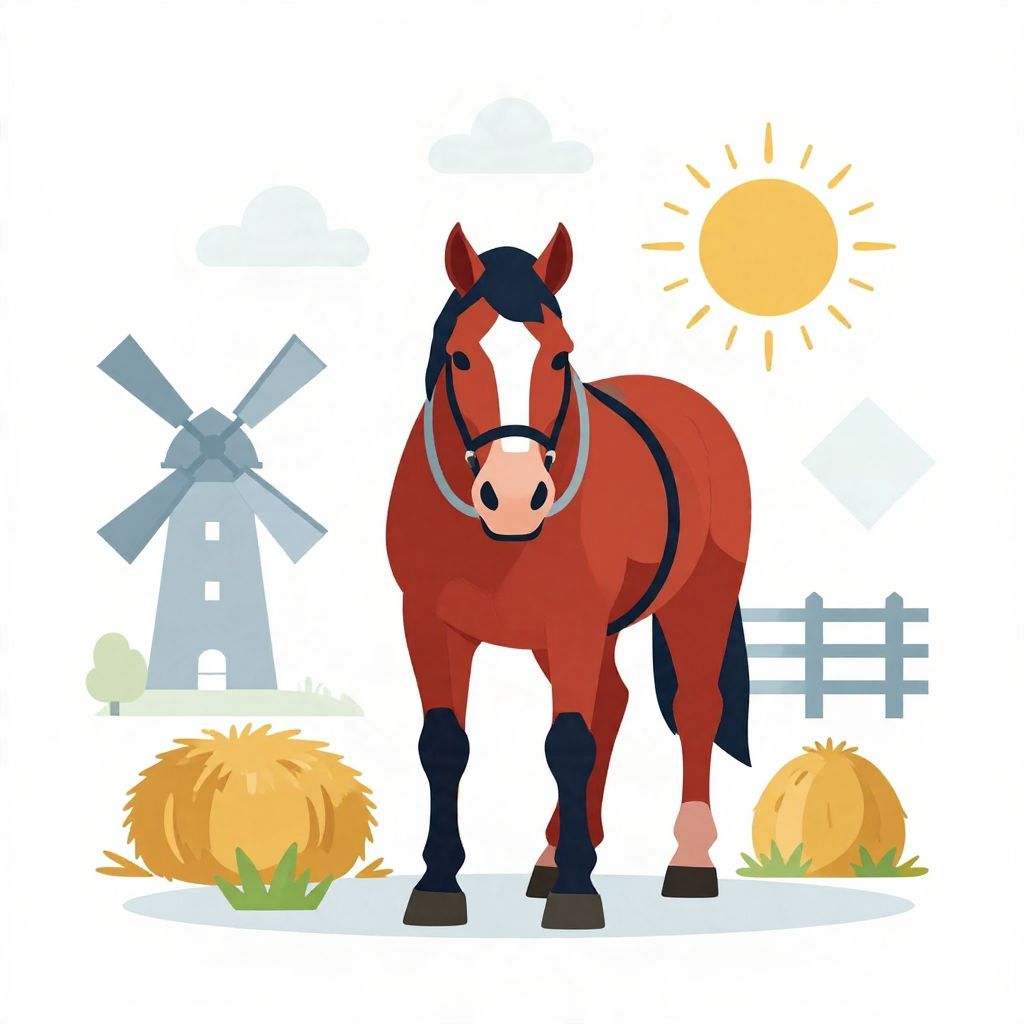
If you’re asking who Boxer represents in Animal Farm, the short answer is that he stands for the loyal working class, especially ordinary laborers whose strength is used to build a system they do not control. Orwell makes Boxer one of the novel’s most moving figures because his goodness, honesty, and exhaustion reveal how power can exploit devotion.
His role is not just symbolic; it is central to the novel’s political warning. Boxer shows how propaganda, hard work, and misplaced trust can keep people obedient even when a revolution begins to betray its ideals.
Who does Boxer represent in Animal Farm?
Boxer represents the exploited working class, especially the industrial proletariat and rural laborers who give their strength to a political cause but receive little protection in return. He embodies loyalty, physical labor, and political innocence, making him a symbol of workers who are praised for their effort yet manipulated by those in power.
Why Boxer is such an important symbol
Strength without real power
Boxer is the strongest animal on the farm, and he repeatedly uses that strength to keep the farm running. Yet he has almost no influence over decisions, which reflects how laborers can be essential to a system while remaining powerless within it.
Orwell uses that contrast to show a bitter truth: being indispensable does not mean being protected. Boxer works harder whenever the farm faces trouble, but his labor only deepens his dependence on the pigs.
Loyalty that becomes vulnerability
Boxer’s famous attitude can be summed up by his determination to work harder and trust the leadership. That loyalty is admirable on a human level, but in the novel it also becomes dangerous because it prevents him from questioning authority.
He believes the revolution’s promises and assumes the pigs are acting for everyone’s benefit. Orwell presents that trust as tragically misplaced, not because Boxer is foolish, but because he is decent in a system built on deception.
Boxer and the history behind the allegory
How Orwell uses the Russian Revolution as a framework
Animal Farm is widely read as an allegory of the Russian Revolution and the rise of Soviet totalitarianism. Within that framework, Boxer is often understood as representing the ordinary workers and peasants who supported the revolution but were later exploited by the regime that emerged from it.
He is not a one-to-one historical figure in the way some characters are more closely aligned with specific leaders. Instead, he stands for a broad social class whose labor sustains the state while its own interests are ignored.
Why Orwell makes Boxer sympathetic
Orwell does not present Boxer as cynical or politically sophisticated. He makes him sincere, disciplined, and physically tireless so that readers feel the injustice of what happens to him.
That sympathy matters. Boxer is not only a symbol; he is also the novel’s emotional center for many readers because he shows how cruelty often works best when it is disguised as necessity.
Boxer’s key traits and what they mean
- Hardworking: He represents labor as the foundation of society.
- Trusting: He shows how propaganda succeeds when people want to believe in a cause.
- Obedient: His discipline reflects the way workers are often expected to sacrifice without complaint.
- Naive: His lack of political awareness makes him easy to exploit.
- Self-sacrificing: He gives everything to the farm, even when the farm gives little back.
Taken together, these traits make Boxer a powerful example of symbolism in literature. Orwell turns one character into a larger social warning about labor, power, and betrayal.
Boxer’s famous motto and its meaning
“I will work harder” as a political idea
Boxer’s repeated determination to work harder is one of the clearest expressions of his character. On the surface, it sounds admirable and productive. In the context of the novel, though, it becomes heartbreaking because it shows how a worker can internalize blame instead of recognizing exploitation.
The motto suggests a dangerous belief: that any failure in the system can be solved by more effort from the powerless. Orwell uses this to criticize political structures that demand sacrifice from the many while shielding the few from responsibility.
Why that attitude matters in the novel
Boxer’s mindset helps the pigs maintain control. If the animals believe that all problems can be solved through more labor, then they are less likely to ask who benefits from that labor.
This is one reason Boxer remains such a memorable literary symbol. He is not rebellious, but his obedience reveals how authoritarian systems survive through the goodwill of ordinary people.
Boxer’s fate and its deeper meaning
Spoiler note: Boxer’s ending
Later in the novel, Boxer is no longer useful to the pigs in the same way, and his fate becomes one of the most devastating moments in Animal Farm. Orwell uses that ending to show the ultimate betrayal of the working class by leaders who once claimed to serve it.
The emotional force of the scene lies in its cruelty and irony. The animal who gave the most receives the least loyalty in return, which reinforces the novel’s argument that power often consumes the people who helped create it.
What the ending says about exploitation
Boxer’s treatment is not accidental; it is the logical outcome of a system built on manipulation. Once labor is exhausted, it is discarded.
That makes Boxer one of Orwell’s most painful symbols. He represents not only workers, but the tragic way idealism can be used up by those in control.
Common interpretations of Boxer
Boxer as the working class
This is the most common and strongest interpretation. Boxer stands for workers who believe in collective progress but are denied real power.
Boxer as the “good citizen” under authoritarianism
Some readers also see Boxer as a broader symbol of the obedient citizen who follows rules, trusts institutions, and assumes that hard work will be rewarded. In that reading, Orwell warns that virtue alone cannot protect people from political abuse.
Boxer as a tragic figure
Beyond symbolism, Boxer functions as a tragic character. His flaw is not malice but trust, and that makes his downfall especially moving. He is admirable, but his very goodness leaves him exposed.
How Boxer compares to other major characters
- Napoleon: Represents authoritarian power and corruption.
- Snowball: Represents revolutionary idealism and political conflict.
- Squealer: Represents propaganda and manipulation.
- Boxer: Represents labor, loyalty, and the exploited majority.
Boxer is different from the pigs because he does not seek power. He is also different from the cynical animals because he still believes the farm can succeed through shared effort.
That contrast is crucial. Orwell shows that revolutions do not fail only because leaders become corrupt; they also fail when honest workers are denied the tools to understand what is happening around them.
Why students are often asked about Boxer
Teachers often ask about Boxer because he is one of the clearest examples of allegory in the novel. Identifying what he represents helps readers understand how Orwell uses animals to discuss class struggle, propaganda, and political betrayal.
He is also useful for essays because he connects several major themes at once: labor, loyalty, exploitation, and the loss of revolutionary ideals.
Key takeaways about Boxer
- Boxer represents the working class in Animal Farm.
- He symbolizes strength, loyalty, and political innocence.
- His fate shows how authoritarian systems exploit the people who support them.
- His story is one of the novel’s strongest warnings about blind trust in leadership.
So, if you’re answering the question who does Boxer represent in Animal Farm, the clearest response is that he stands for hardworking ordinary people whose devotion is used against them. Orwell makes Boxer unforgettable because he is both a symbol and a tragedy.
For a fuller picture of the novel’s political allegory, you may also want to read about who Snowball represents in Animal Farm and who Napoleon represents in Animal Farm.