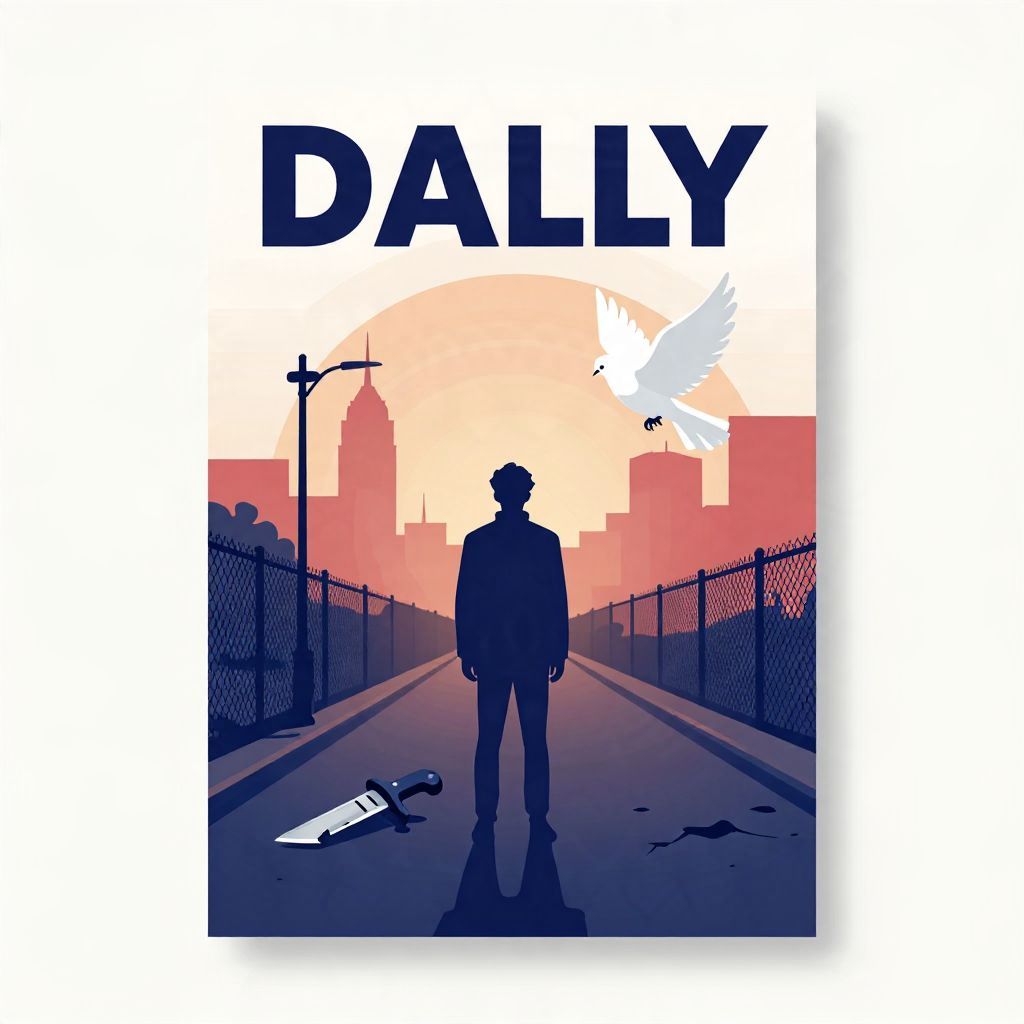
If you’re asking “Does Dally die in The Outsiders?”, the short answer is yes. Dallas “Dally” Winston dies near the end of S. E. Hinton’s novel, and his death is one of the book’s most important turning points, both emotionally and thematically.
It is not just a plot event. Dally’s death helps reveal what the novel is saying about violence, grief, loyalty, and the way young people can be trapped by the worlds around them.
Does Dally die in The Outsiders?
Yes. Dally dies after Johnny’s death, when he cannot cope with the loss and the pressure closing in on him. In the novel’s final sequence, Dally is overwhelmed by grief and desperation, and his death follows a confrontation with the police. It is one of the book’s most tragic moments and is meant to show how deeply the events of the story have shattered him.
Who is Dally Winston?
Dally Winston, usually called Dally, is one of the Greasers in The Outsiders. He is tough, sharp-tongued, and often acts like he does not care about anyone or anything, but the novel gradually shows that his hardness is a defense mechanism.
Compared with Ponyboy, Johnny, and the other boys, Dally seems more hardened by life. He has spent more time in trouble, and he understands violence and survival in a way the younger boys do not. That makes him seem fearless, but it also makes him one of the most vulnerable characters in the story.
Why Dally matters in the novel
- He represents the cost of a violent environment.
- He challenges the idea that toughness means emotional strength.
- He shows a different side of loyalty: fierce, protective, and self-destructive.
What happens before Dally dies? Spoilers ahead
Before Dally dies, Johnny is badly injured while saving children from a burning church. Johnny later dies from those injuries, and that loss hits Dally especially hard. Dally has invested deeply in Johnny’s safety and future, so Johnny’s death leaves him devastated.
Afterward, Dally’s behavior becomes increasingly frantic. He robs a store, then goes to the lot where the Greasers are gathered and tells them what he has done. From there, he runs from the police and is killed by gunfire.
Why his death feels sudden
Hinton writes the scene in a way that feels abrupt and emotionally overwhelming. That suddenness reflects Dally’s state of mind: he is not making calm, rational choices, but acting out of grief, panic, and despair.
Why does Dally die?
Dally dies because he has reached a breaking point. Johnny’s death removes the one person he seems to care about most, and Dally cannot absorb that loss. His death is not presented as a heroic sacrifice in the usual sense; it is more like a collapse.
In literary terms, Dally’s death functions as a tragic consequence of the novel’s central conflicts. The story repeatedly shows how poverty, violence, and social division shape the boys’ lives. Dally’s end suggests that those pressures can destroy a person from the inside as much as from the outside.
Three ways to understand Dally’s death
- As grief: he cannot bear Johnny’s death.
- As self-destruction: he seems to stop caring whether he lives or dies.
- As social tragedy: the world around him has left him few healthy options.
Is Dally’s death important to the theme of The Outsiders?
Yes. Dally’s death is central to the novel’s themes of loss, innocence, and the destructive cycle of violence. The Outsiders is not only about gang conflict; it is also about how young people are shaped by class, fear, and the need to protect one another.
Dally’s death reinforces the idea that violence does not stay contained. It spreads outward, harming the people who are already most damaged. The novel does not treat his death as random; it is the final expression of a life spent surviving in a brutal world.
Major themes connected to Dally
- Brotherhood and loyalty: Dally protects the people he loves, even if he hides it.
- Grief: Johnny’s death breaks the emotional armor he has built.
- Violence and consequence: the story shows how violence leads to more loss, not resolution.
- Lost innocence: the boys are forced to confront adult pain too early.
What does Dally’s death say about his character?
Dally is often remembered as the toughest Greaser, but his death reveals that toughness is not the same as resilience. He is emotionally exposed in the one area that matters most to him: Johnny. Once Johnny is gone, Dally’s usual control disappears.
This is what makes him such a powerful character. He is not simply a “bad boy” stereotype. He is a person whose rough exterior hides fear, attachment, and pain. His death makes the reader rethink everything he has said and done earlier in the novel.
Dally and Johnny
The relationship between Dally and Johnny is one of the most important in the book. Dally is rough with Johnny, but he is also protective in a way that suggests genuine care. Johnny, in turn, seems to see past Dally’s hardness.
Because of that bond, Johnny’s death is not just another sad event. It is the event that strips away the last thing holding Dally together.
How does Dally’s death affect Ponyboy?
Dally’s death deeply affects Ponyboy because it forces him to confront the emotional cost of everything that has happened. Ponyboy has already lost Johnny, and seeing Dally die adds another layer of shock and confusion.
For Ponyboy, Dally’s death is part of the book’s larger lesson that people are more complicated than labels like “Greasers” and “Socs.” Dally may have seemed cruel or reckless, but his end shows that he was suffering too.
Why Ponyboy’s perspective matters
The novel is told through Ponyboy’s first-person narration, so readers experience Dally’s death through a young character who is still trying to understand the world. That perspective makes the scene feel immediate, personal, and emotionally raw.
What literary techniques shape the scene?
S. E. Hinton uses several techniques to make Dally’s death land with force. The scene is brief, tense, and emotionally compressed, which matches the chaos of the moment.
Key techniques
- First-person narration: Ponyboy’s voice makes the event intimate and subjective.
- Foreshadowing: Dally’s recklessness and emotional intensity hint that he may not survive the story’s fallout.
- Contrast: Dally’s toughness is contrasted with his vulnerability after Johnny dies.
- Symbolism: his death symbolizes the collapse of the protective mask he has worn.
The result is a scene that feels both sudden and inevitable, which is often how tragedy works in fiction.
Why readers still ask about Dally’s death
People keep asking “Does Dally die in The Outsiders?” because his death is unforgettable and easy to miss if you are only looking for a simple plot answer. It is also one of the moments that most clearly explains the emotional depth of the novel.
For students, it often comes up in class discussion because it connects to major literary questions: What causes tragedy? Can loyalty become destructive? How does grief change behavior? Dally’s death gives the novel much of its emotional weight.
Quick takeaway
Dally does die in The Outsiders, and his death matters because it is the novel’s darkest proof that grief, violence, and social pressure can destroy even the toughest character. If you are reading for class or revisiting the book, pay close attention to how Hinton builds Dally from a seemingly hardened outsider into one of the story’s most tragic figures.
For more help with the novel’s ending and related character deaths, you may also want to read how Dally dies in The Outsiders and how Johnny dies in The Outsiders.