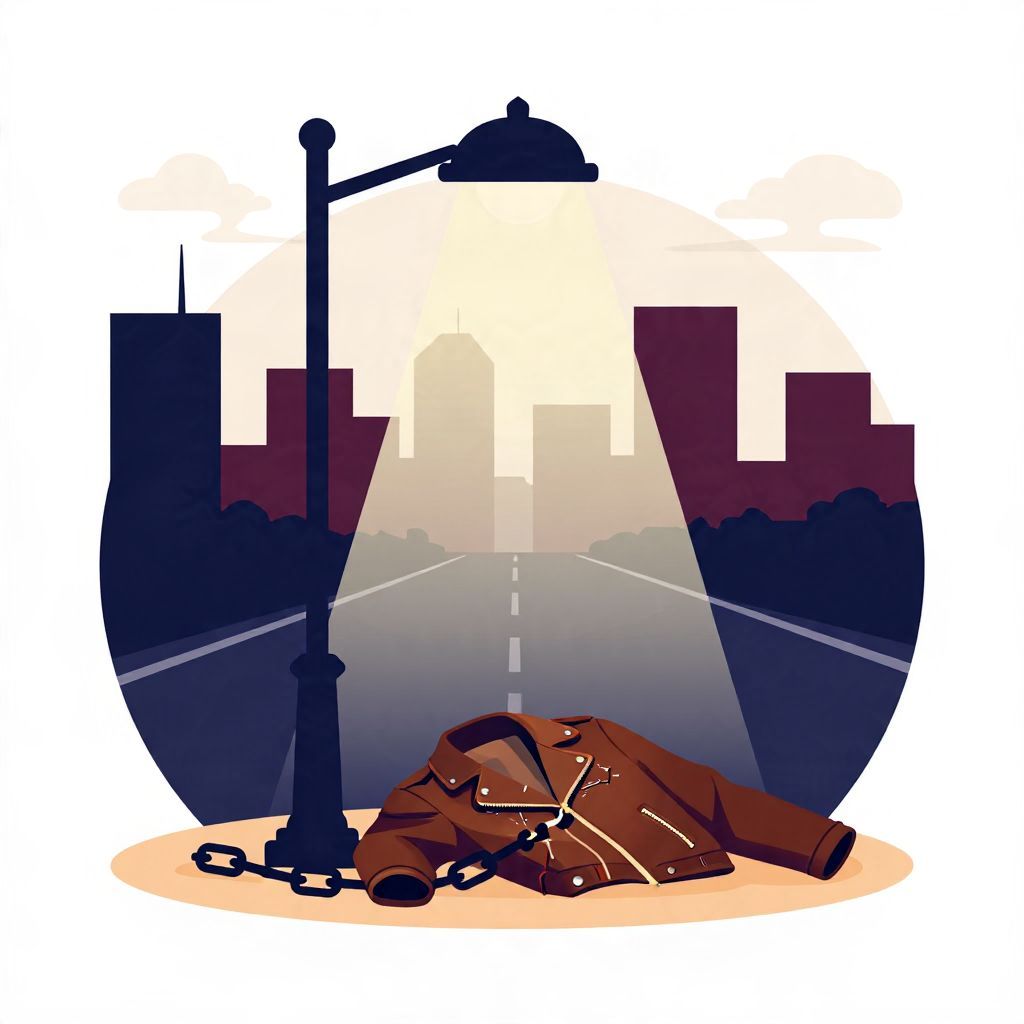
If you’re asking how Dally dies in The Outsiders, the short answer is that Dallas “Dally” Winston is killed by police after he robs a convenience store and points an unloaded gun at them. His death comes immediately after Johnny’s death and is one of the novel’s most painful turning points.
It is not just a shocking plot event. S. E. Hinton uses Dally’s death to show how grief, violence, and hopelessness can push a person past the point of recovery.
How does Dally die in The Outsiders?
Dally dies when police shoot him after he runs from the hospital, commits a robbery, and confronts them with an unloaded gun. In the novel’s logic, his death is both literal and symbolic: it reflects his emotional collapse after Johnny’s death and the destructive path he has been on for much of the story.
Spoiler-filled summary of Dally’s final scene
Major spoilers ahead. After Johnny dies from injuries sustained in the church fire, Dally is devastated. He leaves the hospital in a state of panic and despair, then robs a grocery store because he seems unable to cope with what has happened.
When police corner him in an alley, Dally pulls out a gun. The gun is unloaded, but the officers do not know that. They shoot him, and Ponyboy later realizes that Dally wanted to die. His actions suggest not a plan for survival, but a desperate attempt to end his pain.
Why Dally’s death matters
Dally’s death is one of the novel’s clearest examples of how emotional trauma can become self-destructive. Unlike Johnny, who dies after trying to save children, Dally dies in a moment of reckless defiance. The contrast deepens the tragedy of the book and shows how differently the two boys respond to suffering.
It also reveals that Dally’s toughness has always covered a deep vulnerability. He acts hard, sarcastic, and fearless, but after Johnny’s death that armor fails.
Who is Dallas Winston?
Dallas Winston, usually called Dally, is one of the Greasers and one of the novel’s most intense characters. He is older than Ponyboy and Johnny, hardened by poverty, trouble with the law, and life on the streets. He is often cruel in speech, but he is also fiercely loyal, especially to Johnny.
Dally’s role in the story
- Protector: He helps Ponyboy and Johnny after the church fire and supports them in dangerous situations.
- Rebel: He rejects rules and authority, often acting before thinking.
- Tragic figure: His inability to process grief makes him one of the novel’s most tragic characters.
What leads to Dally’s death?
Dally’s death is the result of several pressures building across the novel. He has already been living with anger, loneliness, and a sense that the world is against him. Johnny’s death removes the one person he truly cares about, and that loss breaks his emotional balance.
The death of Johnny Cade
Johnny’s death is the immediate trigger. Dally has been protective of Johnny throughout the novel, and Johnny represents something rare for him: affection, trust, and purpose. Once Johnny is gone, Dally seems to lose the last reason he has to keep going.
Grief turned outward
Instead of expressing grief openly, Dally turns it into action. He runs, steals, threatens, and provokes. Hinton presents this as a form of emotional damage rather than simple delinquency. Dally’s final choices make sense psychologically, even if they are disastrous.
Themes connected to Dally’s death
Violence and its consequences
The Outsiders repeatedly shows that violence creates more pain than power. Dally has spent his life in violent environments, and his death is the final consequence of that world. The scene suggests that violence cannot solve grief, fear, or social division.
Loss and despair
Dally’s death is closely tied to the theme of loss. He does not simply lose Johnny; he loses emotional stability, hope, and self-control. His final confrontation with the police reads like a surrender to despair.
Identity and emotional armor
Dally’s image as a tough Greaser is a kind of armor. The novel implies that people who seem hardest may be carrying the most pain. His death strips away that mask and exposes the fragility beneath it.
Class conflict
The Greasers and Socs are divided by class, opportunity, and expectation. Dally’s life has been shaped by neglect and hardship, and the novel suggests that social conditions help create the world that destroys him.
Symbolism in Dally’s death scene
The unloaded gun
The unloaded gun is one of the most important symbols in the scene. It shows that Dally is not trying to win a fight; he is acting out a death wish. The weapon becomes a symbol of self-destruction rather than power.
The alley
The alley setting reinforces isolation and entrapment. Dally is cut off from the people who might have reached him, and the narrow space mirrors how little room he has left in his life.
Police lights and authority
The police represent the final force of social control in the scene. Whether or not Dally intended to die, the authorities respond with lethal force. Hinton leaves readers with a grim sense of how quickly a young person’s life can end once events spiral out of control.
How Ponyboy understands Dally’s death
Ponyboy’s reaction is central to the meaning of the scene. He does not see Dally as a criminal who simply got what was coming to him. Instead, he understands that Dally was broken by Johnny’s death and that his final act was a cry of despair.
This interpretation matters because Ponyboy is learning to see beyond labels. One of the novel’s major lessons is that people are more complicated than their reputations, and Dally’s death forces that lesson into sharp focus.
Book summary: where Dally’s death fits in the plot
To place the event in context, the novel follows Ponyboy Curtis and his Greaser friends as tensions with the Socs escalate. After a deadly fight and a dramatic rescue from a burning church, Johnny and Dally become central to the story’s emotional climax.
Johnny later dies from injuries, and Dally’s death follows almost immediately. Together, these losses transform the novel from a coming-of-age story into a tragedy about innocence, violence, and the cost of growing up too fast.
Why readers remember Dally
Dally stands out because he is not a simple villain or hero. He is reckless, abrasive, and often unkind, but he is also loyal, wounded, and deeply human. That complexity is part of why his death stays with readers.
Hinton does not romanticize him. Instead, she shows how a person shaped by hardship can become both dangerous and heartbreakingly vulnerable.
Literary style and technique in the death scene
First-person narration
The story is told by Ponyboy, which means Dally’s death is filtered through grief and confusion. This perspective makes the scene feel immediate and personal, but it also limits what readers know. We experience the event as Ponyboy does: shocked, emotional, and trying to make sense of it afterward.
Foreshadowing
Dally’s earlier behavior foreshadows his end. He repeatedly acts as though he has little regard for his own safety, and his emotional dependence on Johnny becomes more visible as the novel progresses. By the time Johnny dies, Dally’s collapse feels tragic but not surprising.
Contrast
Hinton uses contrast throughout the novel, especially between Dally and Johnny, toughness and tenderness, action and reflection. Dally’s death sharpens those contrasts and gives the ending its emotional force.
Is Dally’s death inevitable?
The novel does not present Dally’s death as fate in a mystical sense, but it does make it feel tragically inevitable. His environment, choices, and emotional wounds all push him toward disaster. At the same time, the book suggests that a different life might have been possible if he had had more support, safety, and hope.
That tension is part of what makes the ending powerful. Dally’s death feels both avoidable and heartbreaking, which is often how tragedy works in realistic fiction.
Why Dally’s death still resonates
Dally’s death resonates because it captures a painful truth: some people act hardest when they are most hurt. The scene is brief, but it leaves a lasting impression because it shows grief turning into self-destruction in a world that offers too little help.
For many readers, it is one of the most memorable moments in The Outsiders because it changes the meaning of the whole novel. It is not just about gang rivalry anymore; it is about loss, vulnerability, and the cost of never learning how to heal.
If you want to explore the character further, you may also like this related guide on how old Dallas Winston is in The Outsiders.