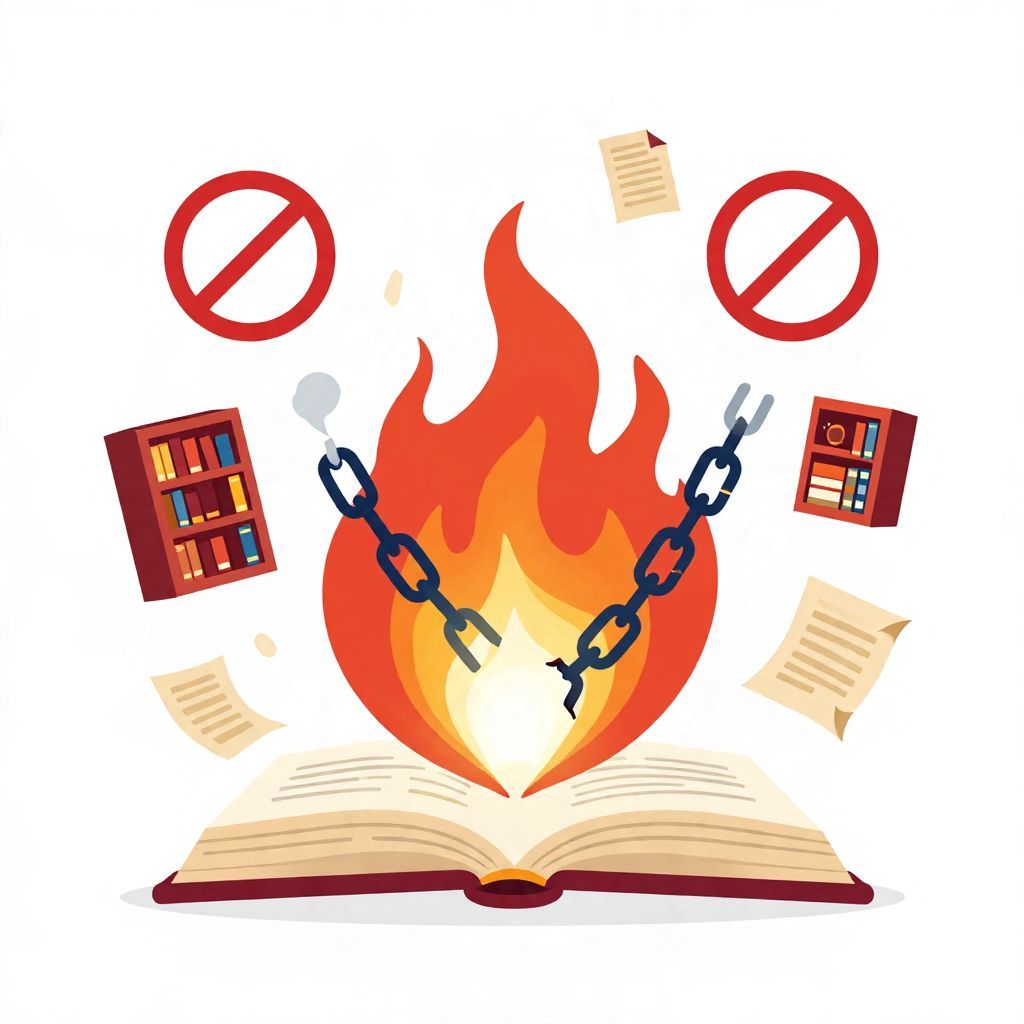
If you’ve wondered why is Fahrenheit 451 banned, the short answer is that Ray Bradbury’s novel has often been challenged because it depicts censorship, contains some mature language and themes, and has been viewed by some readers as politically or morally unsettling. Ironically, a book about the dangers of suppressing ideas has itself become a frequent target of school and library objections.
Understanding those challenges means looking at the novel’s history, its themes, and the difference between being banned, challenged, and removed from a classroom or library list.
Why is Fahrenheit 451 banned or challenged?
Fahrenheit 451 is challenged most often because it centers on censorship, questions authority, and includes language, violence, and disturbing ideas that some parents or institutions consider inappropriate for younger readers. In many cases, the book is not formally banned everywhere; instead, it is challenged, restricted, or temporarily removed from a curriculum or library collection after complaints.
What the novel is about
Published in 1953, Ray Bradbury’s novel imagines a future society where books are outlawed and “firemen” burn them. The story follows Guy Montag, a fireman who begins to question his role in a culture that prefers entertainment, speed, and conformity over thought.
The premise makes the book a direct meditation on censorship, but it also explores loneliness, memory, and the cost of intellectual freedom. That combination is exactly what has made it both enduringly popular and periodically controversial.
Why schools and libraries have objected to it
1. Censorship as the central subject
Some objections come from the book’s own subject matter. Because Fahrenheit 451 criticizes censorship so openly, it can be seen as politically provocative or as encouraging students to question social authority.
2. Mature language and disturbing content
The novel includes profanity, references to suicide, violence, emotional distress, and scenes of destruction. Even when the language is not especially graphic by adult standards, it may still concern parents or school boards deciding what is age-appropriate.
3. Anti-social or anti-establishment interpretations
Some readers have objected to the book’s treatment of government, media, and social conformity. Depending on the community, those themes may be interpreted as subversive, pessimistic, or too politically charged for a required reading list.
4. Religious or moral concerns
Like many classic novels that have faced challenges, Fahrenheit 451 has sometimes been criticized for its worldview rather than a single scene or line. Readers may object to its implied criticism of passive entertainment, shallow culture, or institutions that shape public thinking.
Is Fahrenheit 451 actually banned everywhere?
No. In most cases, the book is not universally banned. It has been challenged, restricted, or removed in particular schools, libraries, or districts, often after complaints from parents, teachers, or community groups. That distinction matters: a challenged book is not the same as a book that is legally prohibited nationwide.
Because policies vary by place and time, the status of the novel can differ widely. One school may assign it in class while another may keep it off a required-reading list or require parental permission.
Why the irony matters
One reason the question “Why is Fahrenheit 451 banned?” remains so common is that the book’s irony is impossible to miss. A novel warning readers about the dangers of suppressing books has itself been treated as threatening in some settings.
That irony does not mean every challenge is identical or baseless. It does mean the novel has become part of the larger cultural debate it describes: who gets to decide what people read, and what happens when a society becomes afraid of difficult ideas?
Key themes behind the controversy
Censorship and intellectual freedom
The most obvious theme is the destruction of books, but Bradbury is really writing about the destruction of independent thought. Books in the novel stand for complexity, memory, and disagreement.
Conformity and distraction
The society in the novel is saturated with noise, speed, and shallow amusement. That environment can feel uncomfortably familiar to modern readers, which is part of why the book still resonates.
Alienation and awakening
Montag’s growing unease gives the novel its emotional shape. His transformation from obedient worker to questioning individual is one reason the book is often taught in literature classes despite the controversy.
Characters and symbols that deepen the debate
Guy Montag
Montag is the central figure whose changing perspective drives the story. He begins as a loyal fireman and becomes a symbol of moral and intellectual awakening.
Clarisse McClellan
Clarisse, the curious and observant neighbor, helps trigger Montag’s doubts. She represents attention, conversation, and the habit of asking questions.
Captain Beatty
Beatty is one of the novel’s most important voices for the defense of censorship. He is intelligent, articulate, and deeply committed to the system he serves, which makes him more complex than a simple villain.
The Mechanical Hound, fire, and books
Bradbury uses recurring symbols to reinforce the story’s ideas. Fire can mean destruction, but it also suggests warmth and renewal; books represent preserved thought; the Mechanical Hound stands for surveillance and control.
How Bradbury’s style affects its reception
Bradbury’s prose is lyrical, compressed, and often poetic, which gives the novel a fable-like quality. That style makes the book memorable, but it can also make its warnings feel intense or exaggerated to some readers.
He does not write like a detached social scientist. Instead, he uses vivid imagery, sharp contrasts, and emotional urgency to make censorship feel not abstract but human and immediate.
Why the book is still taught despite challenges
Many teachers and librarians continue to value Fahrenheit 451 because it raises essential questions about reading, media, and freedom of expression. It is especially useful in discussions of dystopian fiction, propaganda, and the role of literature in public life.
For students, the novel also offers a clear example of how a book can be controversial for the very reason it is important: it asks readers to think critically about what a society loses when it stops reading deeply.
Common misunderstandings about the book
- “Banned” always means illegal everywhere. In practice, many challenged books are only restricted in specific places.
- The book is only about book burning. It is also about conformity, emotional emptiness, and the loss of genuine conversation.
- Controversy means the book is outdated. In fact, its themes often feel newly relevant in media-saturated cultures.
What readers should take away
Fahrenheit 451 has been banned or challenged because it is a book that refuses to be comfortable. It confronts censorship directly, includes mature material, and asks readers to think about freedom, control, and the cost of not reading.
If you are exploring related literary controversies, you may also want to read about why The Catcher in the Rye is banned or learn more about what a dystopian novel is.