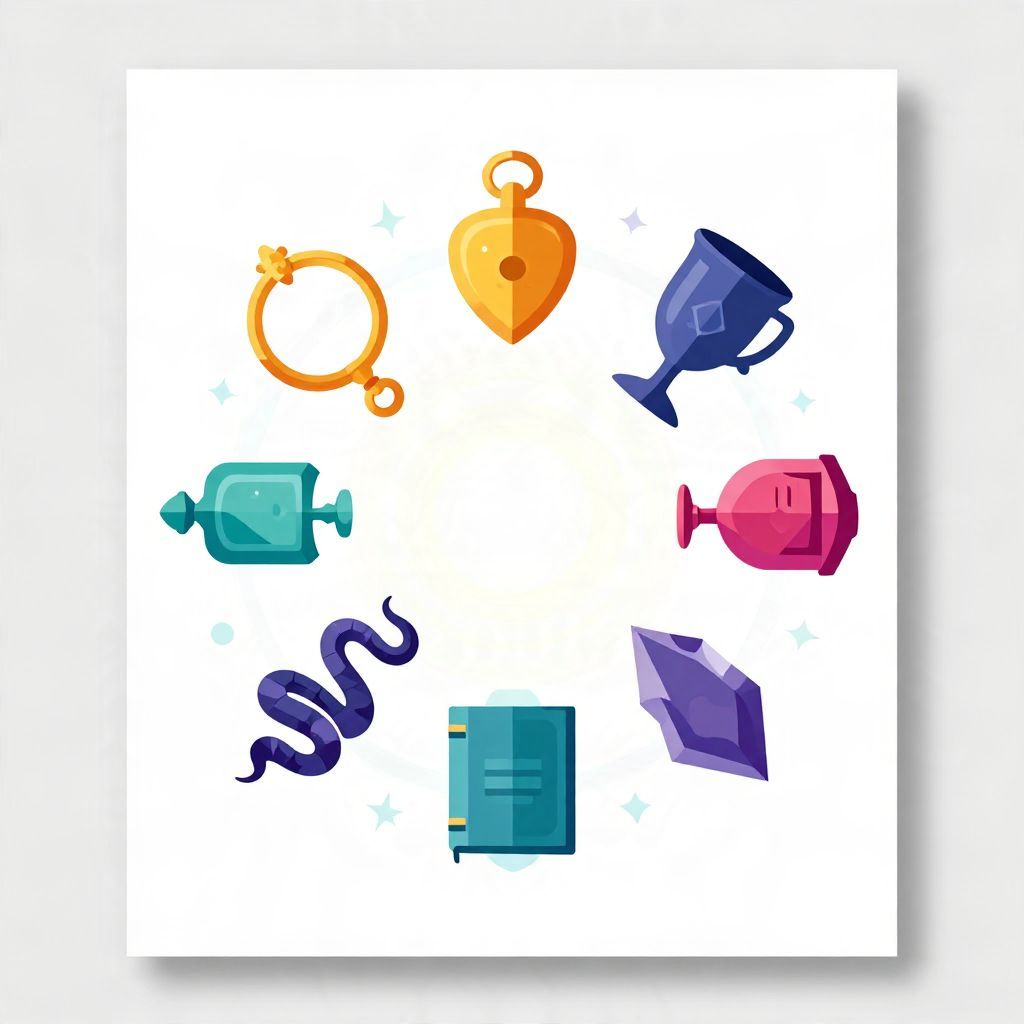
If you’ve wondered what are the seven Horcruxes, the answer lies in J.K. Rowling’s Harry Potter series, where Horcruxes are objects used to hide pieces of a dark wizard’s soul. The idea is central to Voldemort’s quest for immortality and to the series’ final conflict.
Because the term is often discussed in literary analysis as well as fandom, it helps to separate the concept itself from the specific objects Voldemort creates, and from the symbolic role Horcruxes play in the story.
What are the seven Horcruxes in Harry Potter?
The seven Horcruxes are the seven objects into which Voldemort divides parts of his soul to avoid death. In the series, these objects are not just magical containers; they are narrative anchors that preserve his power, complicate the plot, and embody the cost of splitting the self through murder and dark magic.
How Horcruxes work in the series
A Horcrux is created when a wizard commits murder and uses dark magic to place a fragment of the soul inside an external object. That act is treated as profoundly unnatural in the books, and it leaves the creator spiritually damaged even if physically alive.
For Voldemort, Horcruxes are a method of survival, but they also make him less human in a literal and symbolic sense. The series presents them as an extreme expression of his fear of death and his refusal to accept moral limits.
The seven objects Voldemort uses
- Tom Riddle’s diary
- Marvolo Gaunt’s ring
- Salazar Slytherin’s locket
- Helga Hufflepuff’s cup
- Rowena Ravenclaw’s diadem
- Nagini, Voldemort’s snake
- Harry Potter, who becomes an accidental Horcrux
Strictly speaking, readers often ask about the “seven Horcruxes,” but Voldemort does not intentionally make Harry one. Harry becomes a Horcrux by accident when part of Voldemort’s soul attaches to him during the attack on the Potters.
Why the number seven matters
Seven has strong symbolic weight in literature and folklore, often suggesting completeness, power, or magical significance. In Harry Potter, the number also fits the series’ interest in layered enchantment, prophecy, and hidden structures.
Voldemort’s desire to divide his soul into seven parts reflects his obsession with control and mastery. At the same time, the number gives the final books a clear quest structure: the heroes must identify, locate, and destroy each fragment before Voldemort can be defeated.
Literary meaning of the Horcruxes
Fragmentation of the self
One of the strongest themes attached to the Horcruxes is fragmentation. Voldemort’s soul is literally broken apart, but the image also suggests a personality stripped of empathy, wholeness, and ethical restraint.
This makes the Horcruxes more than plot devices. They dramatize the idea that power gained through violence destroys the very self it is meant to protect.
Mortality and the fear of death
The Horcruxes are also a response to mortality. Voldemort cannot tolerate the limits of human life, so he tries to turn death into something avoidable through magical engineering.
The books oppose that impulse with a different view of life and death: not denial, but acceptance, sacrifice, and love. That contrast is one reason the Horcrux storyline feels so central to the series’ moral structure.
Objects as symbols
Each Horcrux is an object with a history, and that matters. The diary, ring, locket, cup, and diadem all carry traces of the wizarding world’s past, linking Voldemort’s evil to older bloodlines, houses, and institutions.
By using inherited or storied objects, Rowling ties personal corruption to cultural memory. The objects are not random containers; they are symbolic relics turned into instruments of decay.
How the Horcrux hunt shapes the plot
The search for the Horcruxes drives much of the final movement of the series, especially in Harry Potter and the Deathly Hallows. The story shifts from school-based mystery to a broader quest narrative, with Harry, Hermione, and Ron tracking clues across the wizarding world.
This structure changes the pacing and tone of the series. Instead of solving a single mystery, the characters confront a dispersed, almost archaeological challenge: uncovering hidden pieces of a dark past and destroying them one by one.
Why the hunt matters narratively
- It gives the final books a clear objective.
- It connects earlier clues to later revelations.
- It raises the stakes beyond ordinary combat.
- It forces the heroes to rely on memory, research, and teamwork.
Horcruxes and the series’ moral framework
The Horcrux concept helps define the difference between Voldemort and the protagonists. Voldemort seeks survival at any cost, even if it means mutilating his soul and destroying others.
By contrast, the series repeatedly values loyalty, sacrifice, and the willingness to face death without surrendering one’s humanity. In that sense, the Horcruxes are not only dark magical objects; they are a test of the series’ ethical vision.
Common questions readers ask
Are all seven Horcruxes created intentionally?
No. Six are intentional creations, while Harry is an accidental Horcrux. That distinction is important because it shows that Voldemort’s attempt to control death is incomplete and unstable from the start.
Are the Horcruxes the same as the Deathly Hallows?
No. The Horcruxes and the Deathly Hallows are separate concepts. Horcruxes preserve pieces of a soul, while the Hallows are legendary magical objects associated with mastery over death. The final book places these ideas in conversation, but they are not the same thing.
Why are the Horcruxes so hard to destroy?
They are protected by powerful magic and often hidden in meaningful or well-guarded places. More importantly, destroying a Horcrux usually requires something extraordinarily destructive, which raises the danger and seriousness of the quest.
Reading the Horcruxes as a literary device
From a literary perspective, the Horcruxes function as a quest mechanism, a symbol of divided identity, and a moral counterpoint to the series’ theme of love. They let the books combine mystery, fantasy, and philosophical conflict without losing momentum.
They also create a satisfying pattern of revelation. Each Horcrux uncovered adds information about Voldemort’s past, deepens the world-building, and brings the reader closer to understanding how the final confrontation must unfold.
What readers should remember
If you are asking what are the seven Horcruxes, the simplest answer is that they are the seven soul-fragments Voldemort uses to cheat death. The richer answer is that they represent the series’ darkest ideas about power, identity, and the price of refusing mortality.
For a related look at the objects themselves and Voldemort’s age within the story, you may also find What Were the 7 Horcruxes? and How Old Is Voldemort? helpful next reads.