If you are asking “What were the 7 Horcruxes?”, you are almost certainly thinking of the Harry Potter series by J.K. Rowling. The answer matters because the Horcruxes are central to Voldemort’s survival, the series’ darkest magic, and the final conflict that drives the last books.
In simple terms, a Horcrux is an object used to hide part of a wizard’s soul so that death becomes far harder to achieve. Voldemort’s seven Horcruxes are among the most important symbols in modern fantasy: they represent fear of death, the corruption of power, and the cost of immortality.
What were the 7 Horcruxes in Harry Potter?
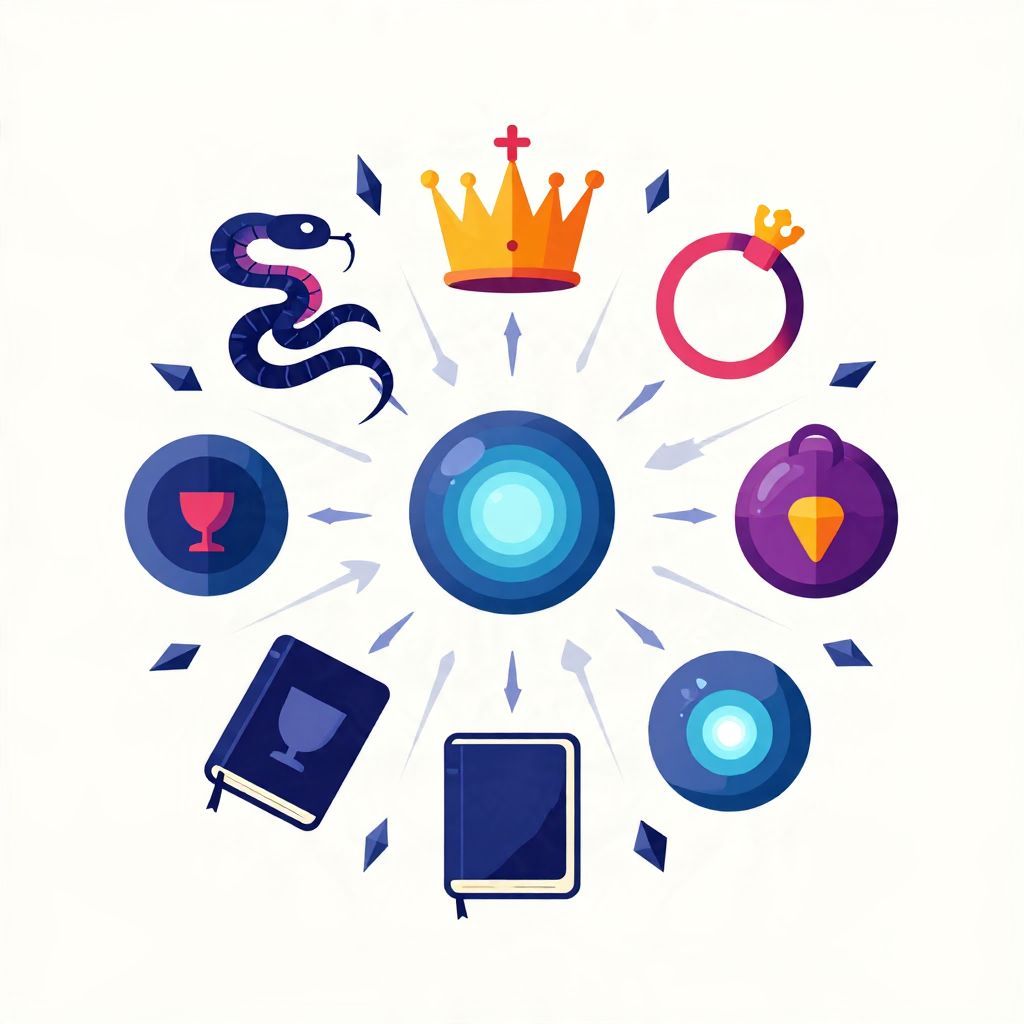
The seven Horcruxes were objects or beings that Voldemort used to conceal fragments of his soul: the diary, Marvolo Gaunt’s ring, Salazar Slytherin’s locket, Helga Hufflepuff’s cup, Rowena Ravenclaw’s diadem, Nagini the snake, and Harry Potter himself. Each one had to be destroyed before Voldemort could truly be defeated.
A quick overview of Horcruxes in the series
Horcruxes are one of the most unsettling inventions in the Harry Potter books because they turn the idea of the soul into something breakable and hideable. Rowling uses them to make Voldemort’s evil feel not just violent, but spiritually fractured.
Why Voldemort made them
Voldemort feared death above all else. By splitting his soul into multiple parts, he tried to make himself nearly impossible to kill, even if his body was destroyed.
Why seven matters
Seven is often treated in the series as a powerful magical number, and Voldemort’s choice reflects his obsession with control and symbolic perfection. The number also deepens the story’s structure: Harry and his allies must uncover a hidden set of objects before the final battle can be won.
The seven Horcruxes, listed clearly
- The diary — Tom Riddle’s diary, later revealed to be Voldemort’s first Horcrux.
- Marvolo Gaunt’s ring — a family heirloom connected to Voldemort’s maternal line.
- Salazar Slytherin’s locket — a relic tied to Hogwarts history and the Gaunt family.
- Helga Hufflepuff’s cup — a treasured cup stolen from Hepzibah Smith.
- Rowena Ravenclaw’s diadem — a lost magical object hidden at Hogwarts.
- Nagini — Voldemort’s snake, later revealed as a living Horcrux.
- Harry Potter — unintentionally made a Horcrux when Voldemort’s killing curse rebounded on him.
1. Tom Riddle’s diary
The diary appears in Harry Potter and the Chamber of Secrets. It allows Riddle’s memory to manipulate Ginny Weasley, making it both a magical object and a trap for identity and possession.
2. Marvolo Gaunt’s ring
This ring is tied to Voldemort’s family history and the idea that his obsession with bloodline and inheritance is twisted from the start. It also connects the Horcrux hunt to the past crimes that shaped him.
3. Salazar Slytherin’s locket
The locket is a classic example of how Rowling links ancient wizarding history with present danger. It also becomes a test of loyalty, endurance, and trust when Harry, Ron, and Hermione search for it.
4. Helga Hufflepuff’s cup
The cup highlights Voldemort’s habit of stealing and corrupting meaningful historical objects. It turns a symbol of tradition into a vessel for evil.
5. Rowena Ravenclaw’s diadem
The diadem is associated with wisdom, but Voldemort hides it in a place of forgotten things, which fits the series’ recurring theme that truth is often buried in overlooked spaces.
6. Nagini
Nagini is the most disturbing Horcrux because it is alive. That choice makes Voldemort’s soul feel even more unstable and shows how far he has moved from human feeling.
7. Harry Potter
Harry is the accidental Horcrux, one of the series’ most important plot revelations. This twist gives the story emotional force because Harry carries a piece of the enemy he is trying to destroy, yet remains fully himself.
How the Horcruxes shape the plot
The Horcrux hunt changes the final books from a school fantasy into a quest narrative with high stakes. Instead of a single villain to defeat, Harry must help uncover and destroy multiple hidden sources of Voldemort’s power.
From mystery to war
Early books in the series often center on school life, clues, and magical puzzles. The Horcrux storyline expands that structure into a war against hidden evil, where knowledge matters as much as courage.
The emotional cost of the quest
Destroying the Horcruxes is not just a technical task. It forces the characters to confront loss, sacrifice, and the possibility that victory may require painful choices.
Themes connected to the Horcruxes
The Horcruxes are not only plot devices; they are also the clearest expression of the series’ major themes. Rowling uses them to explore what happens when a person rejects mortality, empathy, and wholeness.
Fear of death
Voldemort’s deepest fear is death, and the Horcruxes are his answer to it. The books suggest that this fear, when taken to an extreme, leads not to safety but to moral ruin.
Fragmentation of the self
Because each Horcrux contains part of Voldemort’s soul, they symbolize a self split by violence and ambition. The result is a villain who is less human the more powerful he tries to become.
Corruption of history and heritage
Several Horcruxes are tied to old family lines or famous founders. Rowling uses that pattern to show how legacy can be abused when someone values status over meaning.
Love versus domination
Harry’s life is shaped by love, sacrifice, and protection, while Voldemort’s is shaped by domination and fear. The contrast becomes especially sharp once Harry learns he is connected to Voldemort in such an intimate way.
Characters most connected to the Horcrux storyline
- Harry Potter — the central figure of the prophecy and the accidental Horcrux.
- Voldemort — the creator of the Horcruxes and the series’ main antagonist.
- Hermione Granger — crucial for research, logic, and memory of magical history.
- Ron Weasley — important for loyalty, emotional grounding, and the human side of the quest.
- Dumbledore — the key figure who helps explain the Horcruxes and their history.
Symbols and literary techniques
Rowling uses the Horcruxes as a recurring symbol system, which is one reason the series feels so tightly structured. Each object carries both literal danger and thematic meaning.
Objects with hidden identities
Many Horcruxes look ordinary, beautiful, or historically valuable. That contrast between appearance and reality is a recurring technique in the series and a reminder that evil often hides in plain sight.
Fragmented revelation
Rowling reveals the Horcruxes gradually, which creates suspense and encourages rereading. Earlier clues gain new meaning once readers understand what Voldemort has done.
Mythic and fairy-tale echoes
The hunt for lost objects, the power of names, and the final confrontation with death all connect the series to fairy-tale and mythic traditions. The Horcruxes help give the story a legendary scale.
Book summary context: where the Horcruxes matter most
If you are reading for the first time, the Horcruxes become most important in the later books, especially Harry Potter and the Half-Blood Prince and Harry Potter and the Deathly Hallows. Earlier books plant clues, but the full significance emerges only near the end.
Without spoiling too much
At first, the series presents Voldemort as a dark wizard who survived defeat. Later, readers learn that his survival depends on a hidden magical system, and that system is what Harry and his friends must dismantle.
Why the Horcrux concept works so well
The Horcrux idea is memorable because it combines fantasy logic with a very human fear: the desire to escape death. It also gives the story a clear external goal while deepening Voldemort’s character as someone who has literally divided himself against humanity.
As a narrative device, it is elegant: each Horcrux can anchor a separate mystery, memory, or location, while the full set creates a larger arc of discovery. That is part of why the final books feel both adventurous and psychologically dark.
Should readers approach the series through the Horcrux question?
Yes, especially if you are revisiting the books or studying them in a classroom setting. The Horcruxes offer a strong lens for understanding the series’ ending, its moral structure, and its treatment of power.
Best reasons to focus on them
- They explain Voldemort’s survival and vulnerability.
- They connect the series’ mystery elements to its ending.
- They reveal major themes of death, memory, and identity.
- They help readers track the final quest across multiple books.
Final takeaway
The seven Horcruxes are the hidden core of Voldemort’s power and one of the most important ideas in the Harry Potter series. If you remember nothing else, remember this: each Horcrux is a piece of a soul split to avoid death, and destroying them is what makes Voldemort mortal again.
If you want to explore more literary questions and series analysis, you may also enjoy related reading on the Harry Potter book order and J.K. Rowling’s author profile.