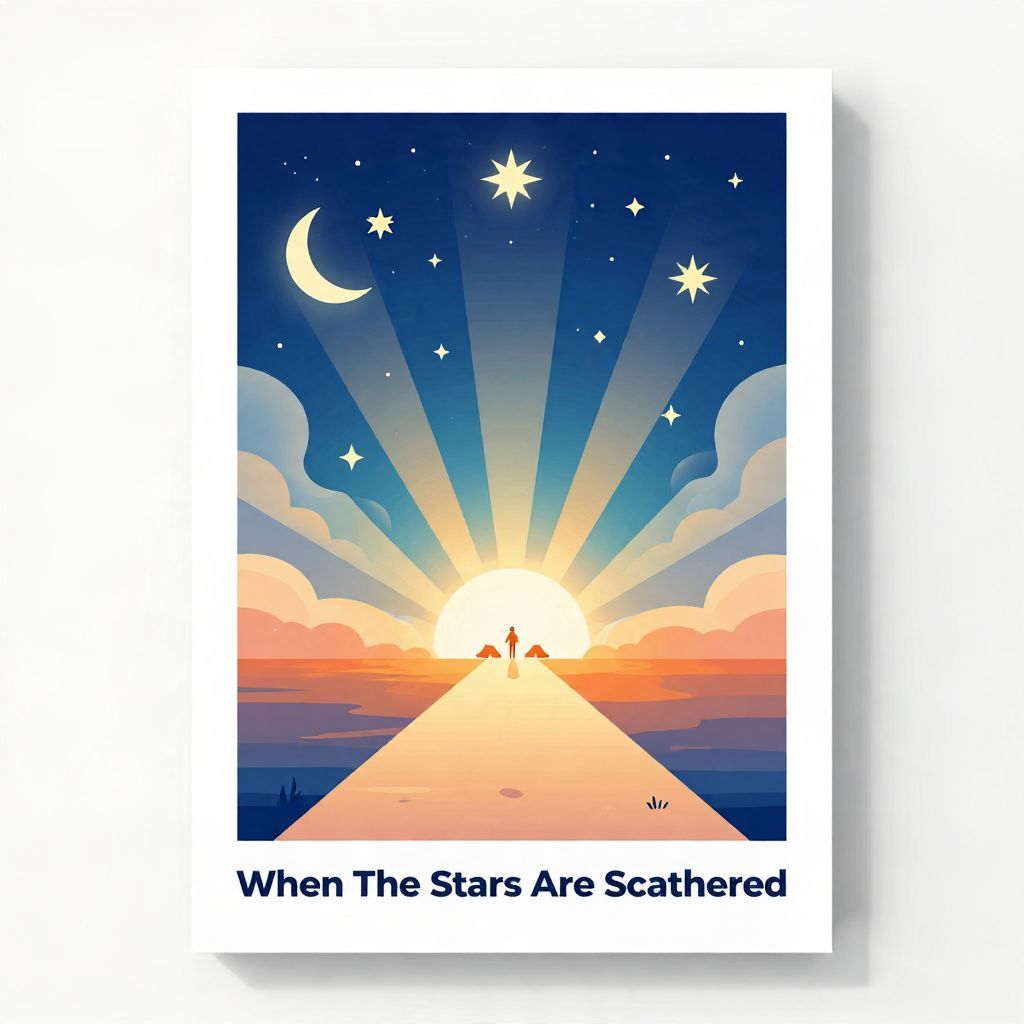
Curious about When the Stars Are Scattered and why it resonates so strongly with readers? This graphic memoir offers a moving, accessible account of childhood, displacement, and family responsibility, told through a child’s perspective. It is especially notable for how it turns a difficult real-life situation into a story of endurance, hope, and care.
Below, you’ll find a clear explanation of the book’s premise, major themes, characters, and literary significance, along with helpful context for readers approaching it for the first time.
What is When the Stars Are Scattered about?
When the Stars Are Scattered is a graphic memoir by Victoria Jamieson and Omar Mohamed about growing up in a refugee camp in Kenya after fleeing civil war in Somalia. The book follows Omar and his younger brother Hassan as they navigate daily life, uncertainty, and the hope of resettlement, while trying to build a childhood inside a place defined by waiting.
Who created the book?
The memoir is co-authored by Victoria Jamieson, an American graphic novelist, and Omar Mohamed, whose childhood experiences form the heart of the story. Jamieson is known for accessible, emotionally precise graphic storytelling, while Mohamed brings the lived perspective that gives the memoir its authenticity and emotional weight.
Why the collaboration matters
The partnership allows the book to balance narrative clarity with firsthand memory. Jamieson shapes the material into a readable graphic form, while Mohamed’s experience anchors the story in real displacement, loss, and resilience.
What happens in the story?
The memoir centers on Omar’s life in the Dadaab refugee camp, where he and Hassan live after being separated from their family during the Somali civil war. Omar takes on adult responsibilities early, especially in caring for his brother, while also trying to attend school and make sense of a future that remains uncertain.
Life inside the camp
Rather than focusing on dramatic action, the book emphasizes routine: school, food distribution, friendships, medical worries, and the long wait for possible relocation. That ordinary texture is part of what makes the memoir powerful, because it shows how a child’s life continues even under extreme instability.
Omar and Hassan
The emotional center of the memoir is the bond between the two brothers. Hassan’s developmental disabilities and Omar’s protective role add tenderness and pressure to the narrative, showing how love can become both a source of strength and a burden when a child must help raise a sibling.
What themes does the book explore?
When the Stars Are Scattered explores several overlapping themes that make it useful for both general readers and students studying memoir or humanitarian literature.
- Displacement and belonging: The book shows what it means to grow up without a stable home, while still trying to create a sense of self and community.
- Family responsibility: Omar’s role as caregiver raises questions about childhood, duty, and sacrifice.
- Hope and patience: The memoir repeatedly returns to waiting, but it frames waiting as an active, difficult form of endurance rather than passivity.
- Education: School represents both opportunity and uncertainty, since learning becomes a path toward a different future.
- Resilience: The story highlights small acts of persistence that help people survive prolonged hardship.
Hope without sentimentality
The memoir does not pretend that hardship disappears. Instead, it presents hope as fragile but necessary, something sustained through friendship, routine, and the possibility of change.
How is the memoir told?
The book uses the graphic memoir form to make a complex humanitarian story emotionally immediate and visually clear. Panels can compress time, emphasize expression, and show the contrast between the camp’s crowded reality and the inner life of a child trying to stay hopeful.
Visual storytelling
Because it is a graphic memoir, the illustrations do a great deal of narrative work. Facial expressions, body language, and visual repetition help readers understand emotion and routine without heavy exposition.
Accessible style for younger readers
The language and structure make the memoir approachable for middle-grade and teen readers, but the subject matter remains serious. That combination is one reason the book is often used in classrooms and reading groups.
What symbols and motifs stand out?
Several recurring images and ideas help shape the memoir’s meaning, even when they are not presented as formal literary symbols in a highly abstract sense.
The stars
The title itself suggests distance, aspiration, and orientation. Stars can imply hope and guidance, but in the memoir they also evoke the vastness of the world beyond the camp and the uncertainty of what lies ahead.
Waiting
Waiting functions almost like a central motif. The characters wait for news, for aid, for school opportunities, and for resettlement, and that repeated condition becomes part of the emotional landscape of the book.
School and books
Education appears as a symbol of future possibility. It is not a simple solution, but it offers structure, dignity, and a way to imagine life beyond survival alone.
Why does the book matter literarily?
When the Stars Are Scattered is important because it expands what memoir can do. It turns a major global crisis into an intimate, child-centered narrative, making the refugee experience legible through everyday details rather than abstract statistics.
The book also shows how graphic nonfiction can carry serious historical and social content without losing emotional accessibility. Its visual form helps readers engage with a difficult subject while keeping the focus on human relationships.
How does it compare to other books?
Readers who appreciate this memoir often respond to stories that combine emotional honesty with social or historical context. It may appeal to those who enjoy graphic memoirs, refugee narratives, or books about family under pressure.
- If you want another emotionally grounded coming-of-age story, you may also enjoy memoirs that center childhood resilience.
- If you are interested in displacement and survival, refugee literature and nonfiction can offer broader historical context.
- If you prefer visual storytelling, other graphic memoirs may feel especially rewarding because they use images to deepen emotional nuance.
Who will likely connect with it?
This book can be especially meaningful for readers who want a compassionate introduction to refugee experiences, teachers looking for a discussion-friendly text, and students studying memoir structure, visual narrative, or themes of identity and survival.
Is there anything readers should know before starting?
The memoir is emotionally affecting, but it is not overwhelming in its presentation. It handles serious material with care and clarity, making it suitable for readers who want an honest story that remains readable and hopeful.
Best approach to reading it
It helps to read the book slowly and pay attention to the visual details as well as the dialogue. The emotional power often comes from what is shown in the panels: pauses, expressions, and the contrast between small joys and large uncertainties.
Final takeaway
When the Stars Are Scattered is a thoughtful, deeply human graphic memoir about growing up in exile, caring for family, and holding onto hope when the future is unclear. Its strength lies in its balance of honesty and tenderness, making it a memorable read for anyone interested in memoir, refugee stories, or powerful visual storytelling.
If you’re exploring related reading, you might also like what The Summer I Turned Pretty is about or want a broader look at what a dystopian novel is.