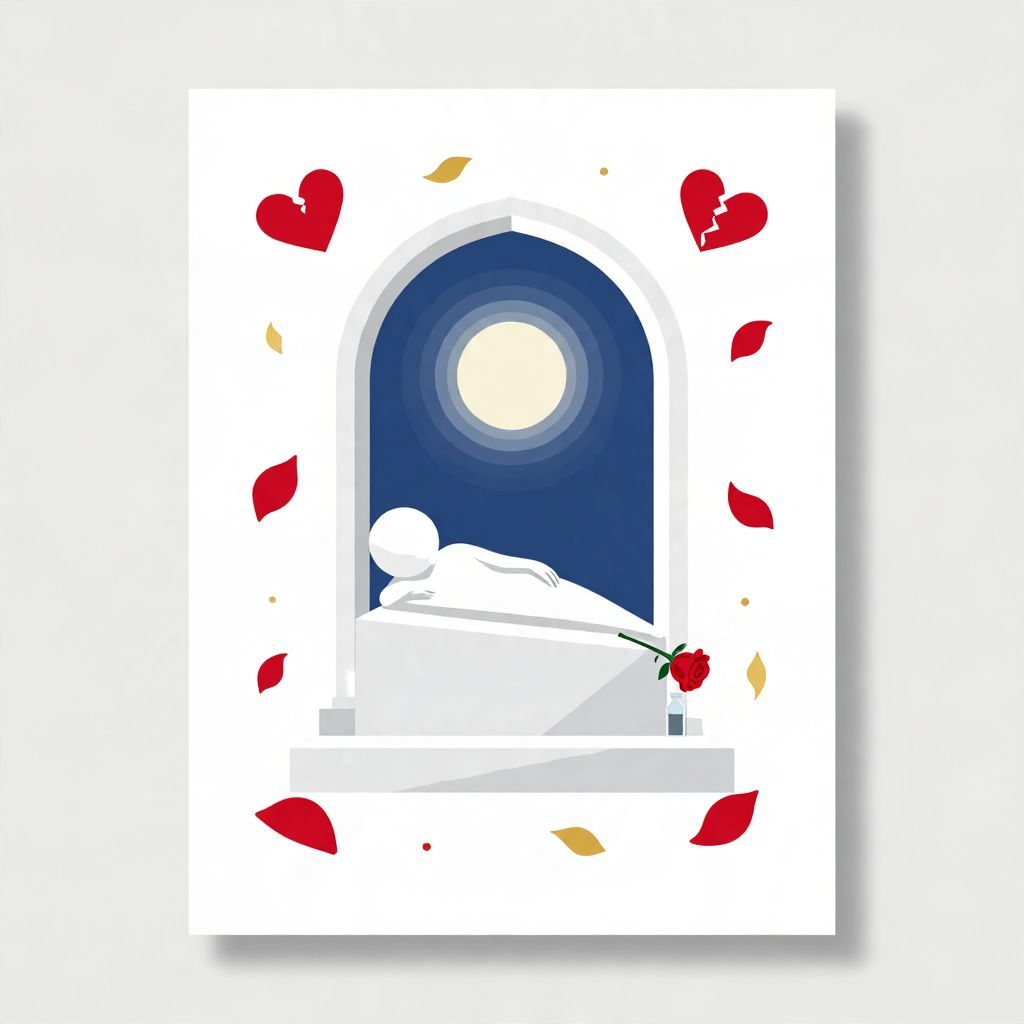
If you’re asking how does Juliet die, you’re usually looking for a clear explanation of one of literature’s most famous tragic endings. In Shakespeare’s Romeo and Juliet, Juliet does not die from an illness or accident; her death is part of the play’s final chain of misread signals, desperate choices, and tragic timing.
That ending matters because Juliet’s death is not just a plot point. It completes the play’s exploration of love, haste, family conflict, and fate, turning a private romance into a public tragedy.
How Does Juliet Die in Romeo and Juliet?
Juliet dies by stabbing herself with Romeo’s dagger after she wakes in the Capulet tomb and finds Romeo dead beside her. She chooses death rather than live without him, making the final scene a tragic culmination of the lovers’ failed attempt to escape their families’ feud.
What Happens Before Juliet’s Death?
Juliet’s death comes after a sequence of events that leave both lovers trapped by misunderstanding. Friar Laurence’s plan to reunite Romeo and Juliet depends on a sleeping potion that makes Juliet appear dead, but the message explaining the plan never reaches Romeo in time.
The sleeping potion plan
To avoid marrying Paris, Juliet agrees to drink a potion that will make her seem lifeless for a short time. The plan is meant to create a window in which Romeo can return, take her away, and help her begin a new life.
The failed message
Romeo instead hears that Juliet has died for real. Believing he has lost her forever, he buys poison and goes to the tomb, where he kills himself before Juliet wakes. When Juliet revives, she finds the catastrophe already complete.
Why Juliet’s Death Is So Tragic
Juliet’s death is tragic because it is both chosen and preventable. She is not destroyed by one villain alone, but by a chain of human errors, secrecy, and impulsive acts that might have been avoided if the message had arrived or if the families had reconciled sooner.
Love and desperation
Juliet’s final act shows the depth of her devotion to Romeo, but it also reveals how completely the lovers’ world has collapsed. Shakespeare presents love as intense and transformative, yet vulnerable when it is forced to survive in isolation.
Fate and timing
The play repeatedly emphasizes bad luck, missed timing, and the sense that events are unfolding beyond the lovers’ control. Juliet’s death feels fated because everything happens too late: the letter, the rescue, the explanation, and the reunion.
Juliet as a Character
Juliet begins the play as a young girl shaped by her family’s expectations, but she becomes one of Shakespeare’s most decisive tragic heroines. Over the course of the play, she grows from obedience to self-determination, especially in the scenes where she defies her parents and risks everything for Romeo.
Strength and agency
Even though Juliet is very young, she is not passive. She makes difficult choices, speaks with remarkable clarity, and acts with courage under pressure. Her death can therefore be read not only as loss, but as the final expression of her refusal to surrender control over her life.
Innocence and maturity
Juliet’s language often blends youthful intensity with startling maturity. Shakespeare uses that contrast to heighten the tragedy: she is old enough to love deeply and decide boldly, but still too young to survive the consequences of the world around her.
Key Themes Connected to Juliet’s Death
Juliet’s death brings together the play’s central themes. It is one of the clearest moments in the drama where Shakespeare’s ideas about love, conflict, and mortality converge in a single image.
- Love versus family loyalty: Juliet must choose between her marriage to Romeo and her obligation to the Capulet household.
- Fate versus free will: The lovers make choices, but those choices are repeatedly overtaken by chance and bad timing.
- Violence and consequence: The feud poisons private life and turns affection into catastrophe.
- Youth and impulsiveness: The speed of the romance mirrors the speed of the tragedy.
- Death as union: In the tomb scene, death becomes the only place where the lovers can be together without interference.
Symbols and Literary Techniques in the Final Scene
Shakespeare strengthens the ending with recurring symbols and dramatic techniques that make Juliet’s death feel inevitable and emotionally overwhelming.
The tomb
The Capulet tomb is more than a setting; it is a symbol of sealed fate. It turns marriage imagery into burial imagery, placing Juliet’s supposed wedding night and final resting place in the same space.
The dagger
Romeo’s dagger becomes the instrument of Juliet’s death, linking the lovers even in destruction. The weapon also reflects the play’s larger pattern of ordinary objects becoming tragic tools through circumstance.
Dramatic irony
The audience knows more than the characters do, especially once Romeo receives the false news of Juliet’s death. That gap in knowledge creates unbearable tension, because viewers can see the disaster approaching while the characters cannot stop it.
Book Summary: A Brief Overview of the Tragedy
Romeo and Juliet follows two teenagers from feuding families in Verona who fall in love quickly and secretly marry. Their relationship is tested by violence, exile, and a plan to fake Juliet’s death, but the plan fails, and both lovers die before they can be reunited in life.
Why the ending defines the play
The final deaths force the Montagues and Capulets to confront the cost of their hatred. Juliet’s death is not an isolated event; it is the emotional climax of the entire tragedy and the moment when the play’s social conflict becomes impossible to ignore.
How to Read Juliet’s Death
Readers often respond to Juliet’s death in different ways. Some see it as a romantic sacrifice, while others see it as the devastating result of adults failing to protect the young. Both readings can coexist, because Shakespeare leaves room for grief, admiration, and criticism at once.
As a romantic tragedy
In this reading, Juliet’s death confirms the depth of her love and the impossibility of separating her from Romeo. The tomb scene becomes a final, heartbreaking declaration of devotion.
As a social tragedy
In another reading, the ending exposes the damage caused by family pride, secrecy, and rigid social control. Juliet dies because the world around her gives her too few safe choices.
Why Juliet’s Death Still Matters
Juliet’s death remains powerful because it speaks to enduring human fears: being misunderstood, losing someone suddenly, and discovering that a single delay can change everything. The scene is famous not just because it is sad, but because it captures how fragile hope can be under pressure.
If you want to explore the tragedy further, you may also find these related guides useful: how Juliet dies in the play and how old Juliet is in Romeo and Juliet.