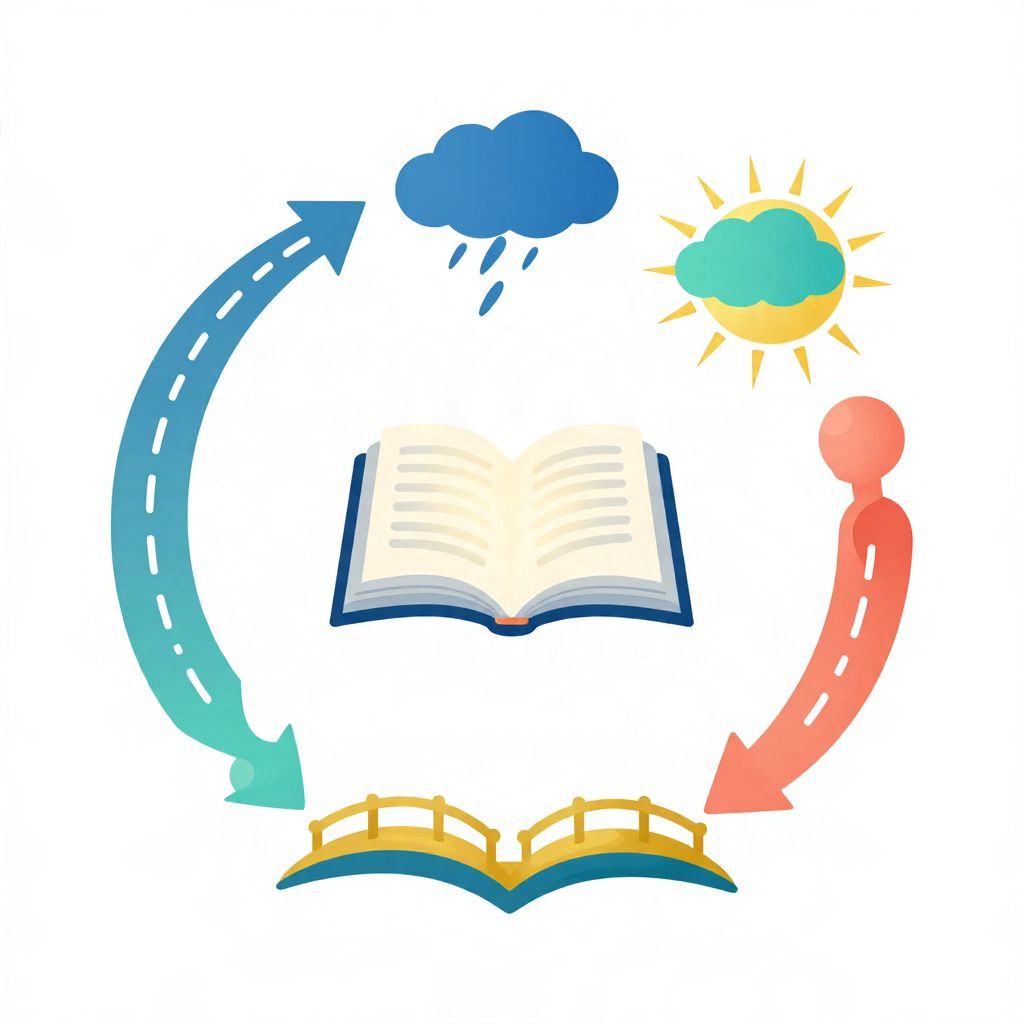
When readers ask what happens at the end of a story, they are usually asking about more than the final scene. They want to know how conflict is settled, what loose ends are tied up, and what the ending means for the characters and the theme.
In literary terms, that answer is the resolution. It is the part of a story where the central conflict is addressed and the narrative reaches a sense of closure, whether that closure is neat, bittersweet, or intentionally unresolved.
What does resolution mean in a story?
Resolution is the part of a story where the main conflict is resolved or brought to a meaningful stopping point. It usually comes after the climax and shows the consequences of the characters’ choices. A resolution may answer major questions, restore balance, or leave some uncertainty if the author wants an open ending.
How resolution fits into story structure
Resolution is one of the most familiar elements of traditional plot structure. It appears near the end, after the rising action and climax have already pushed the story to its turning point.
The basic plot sequence
- Exposition introduces characters, setting, and situation.
- Rising action builds tension through conflict and complications.
- Climax is the story’s turning point or highest moment of tension.
- Falling action shows the immediate results of the climax.
- Resolution closes the story and establishes the final outcome.
Not every story follows this pattern exactly, but the idea helps readers understand how endings work. In many stories, the resolution is where the reader sees whether the conflict has been solved, transformed, or left hanging.
What happens in the resolution?
The resolution can do several jobs at once. It may settle the plot, reveal what the characters have learned, and show how the story’s world has changed.
Common functions of a resolution
- Answers key questions raised by the plot.
- Shows consequences of the climax and earlier decisions.
- Restores order in a conventional ending.
- Leaves ambiguity if the author wants the reader to reflect.
- Highlights theme by showing what the story ultimately suggests about life, identity, love, power, loss, or justice.
A strong resolution does not simply “wrap things up.” It gives the ending emotional and thematic weight. Even if the plot is simple, the resolution can deepen the meaning of everything that came before it.
Does resolution always mean a happy ending?
No. A resolution is not the same as a happy ending. It means the story has reached its final stage, but that final stage can be joyful, tragic, mixed, or unresolved.
Different kinds of resolutions
- Closed resolution: the main conflict is fully settled.
- Open resolution: the ending leaves important questions unanswered.
- Happy resolution: the outcome is positive or hopeful.
- Tragic resolution: the outcome is painful, often involving loss or failure.
- Bittersweet resolution: the ending combines gain and loss.
For example, a romance may end with the couple together, while a literary novel may end with a character accepting a difficult truth rather than “winning” in a conventional sense. In both cases, the story can still have a clear resolution.
Resolution versus climax: what is the difference?
Readers sometimes confuse resolution with climax because both occur near the end. The difference is that the climax is the turning point, while the resolution is what follows.
At the climax, the central conflict reaches maximum tension. In the resolution, that tension begins to settle. If the climax is the moment of decision, the resolution is the moment of consequence.
A simple way to remember it
- Climax: the story’s biggest turning point.
- Resolution: the story’s final settling of events.
This distinction matters in analysis because the climax often reveals the protagonist’s true choice, while the resolution shows what that choice means.
Why resolution matters in literary analysis
Resolution is important because it often reveals the story’s deepest concerns. The ending can confirm a theme, complicate it, or challenge the reader to question it.
What the resolution can reveal
- Theme: what the story suggests about human experience.
- Character growth: whether the protagonist has changed.
- Moral perspective: how the text frames right, wrong, justice, or sacrifice.
- Tone: whether the ending feels hopeful, ironic, sad, or reflective.
- Structure: how the author shapes pacing and closure.
In some stories, the resolution confirms that the character has learned something essential. In others, it shows that learning came too late, or that the world remains unchanged despite the character’s efforts.
How authors use resolution to shape meaning
Writers use resolution in different ways depending on genre, style, and purpose. A mystery may use the resolution to reveal the culprit, while a literary story may use it to create emotional resonance rather than complete explanation.
Common literary effects of resolution
- Closure: the reader feels the story has reached an endpoint.
- Ironic contrast: the ending may undercut earlier expectations.
- Emotional release: tension gives way to relief, grief, or reflection.
- Foreshadowing payoff: earlier hints make sense at the end.
- Symbolic closure: an image, object, or setting change signals completion.
Because of this, resolution is not only about plot mechanics. It is also a craft tool that helps authors control the reader’s final impression.
Resolution in different genres
The meaning of resolution stays the same across genres, but the way it appears can change a lot. Genre expectations often shape how complete or surprising the ending feels.
In mystery and thriller fiction
The resolution usually explains the central puzzle, reveals motives, and settles the question of who is responsible. Readers often expect a clear answer.
In romance
The resolution often focuses on emotional commitment, reconciliation, or the couple’s future together. The ending may affirm love, though not all romances are simple or cheerful.
In fantasy and adventure
The resolution may restore balance to a world, complete a quest, or show how the hero’s journey has changed the larger community.
In literary fiction
The resolution may be quieter and more ambiguous. Instead of tying up every detail, it may emphasize a character’s realization, loss, or uncertain future.
How to identify the resolution in a story
If you are reading for class or writing an essay, it helps to know how to spot the resolution. Look for the point after the climax when the story starts to settle and the main conflict no longer drives the action.
Questions to ask while reading
- Has the central conflict been addressed?
- Are the main consequences now clear?
- Does the story begin to slow down after the turning point?
- Are the characters in a new emotional or practical position?
- Does the ending suggest closure, uncertainty, or both?
If the answer to most of these questions is yes, you are likely in the resolution. In some modern stories, however, the boundary between climax and resolution can be blurred on purpose.
Resolution and theme: why endings stay with readers
The resolution often shapes how readers interpret the entire story. A final scene can make earlier events seem tragic, hopeful, ironic, or even ambiguous in retrospect.
That is why endings matter so much in literature. A resolution does not just finish the plot; it helps define what the story has been saying all along.
Examples of thematic impact
- A peaceful ending may suggest forgiveness or renewal.
- A sad ending may emphasize the cost of pride, violence, or misunderstanding.
- An unresolved ending may suggest that life is uncertain and not everything can be explained.
- A circular ending may imply that the characters have changed little, or that history repeats itself.
In this way, resolution is both structural and interpretive. It is the ending event, but it is also the lens through which the whole story can be understood.
Final takeaway
So, what does resolution mean in a story? It is the final stage where the main conflict is settled or brought to a meaningful close. Whether the ending is happy, tragic, or open-ended, the resolution gives the story its last shape and often its deepest significance.
If you want to explore story endings further, you may also find this guide on what the resolution of a story is helpful, along with this related example about implied resolution in a story excerpt.