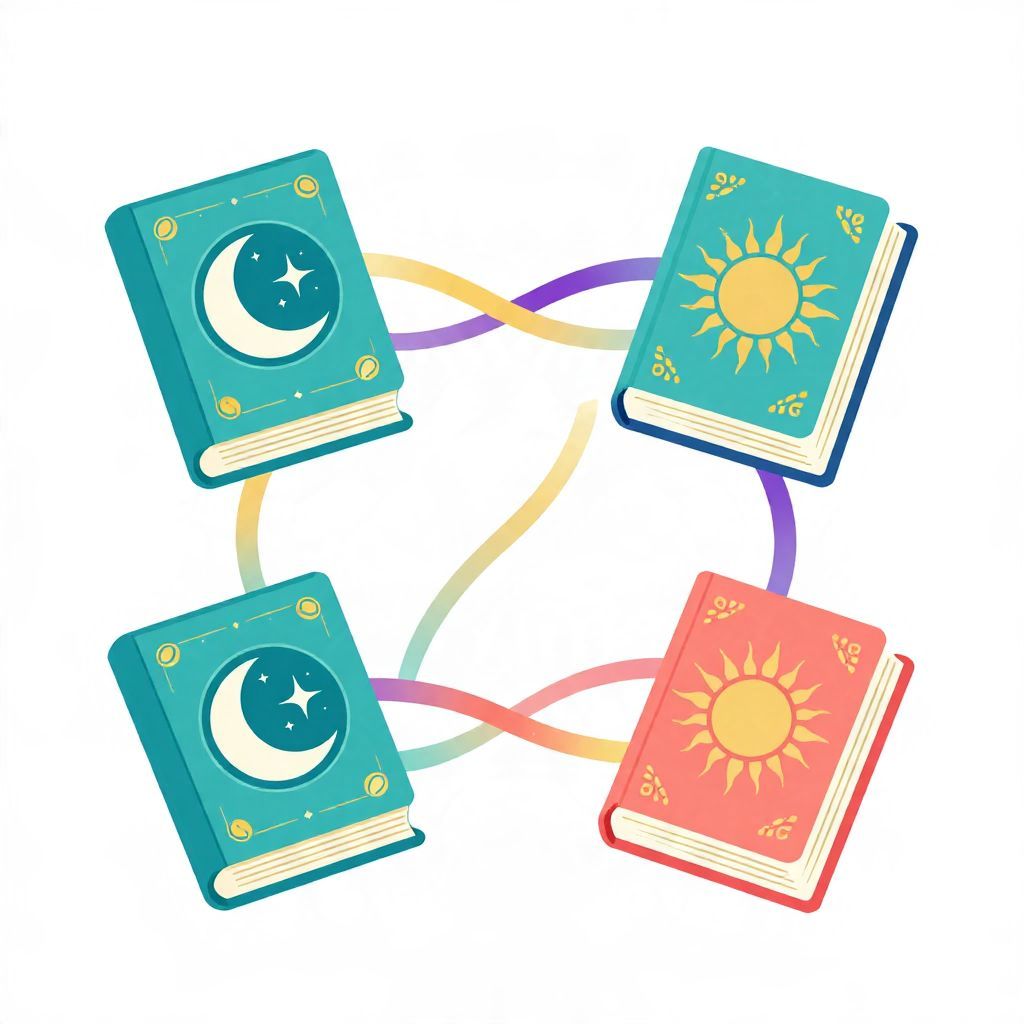
If you’re wondering whether Sarah J. Maas books are connected, the short answer is yes—but not all in the same way. Her major series are usually best understood as separate story worlds, while some readers also look for thematic echoes, shared fantasy conventions, and possible crossover hints.
That makes the reading experience a little different from a single long saga. Some books stand alone as their own series, while others invite comparison because of recurring tropes, character arcs, and worldbuilding choices.
Are Sarah J. Maas books connected?
Yes, but mostly as separate series rather than one single continuous storyline. Sarah J. Maas has written multiple fantasy series that each center on their own cast, setting, and plot. Readers often connect them because they share genre DNA, similar emotional stakes, and a few broader fantasy world-building patterns, but they are not all one straightforward sequence.
Which Sarah J. Maas books belong to which series?
A useful way to think about the question is to group her books by series. That helps separate direct plot connections from broader stylistic or thematic links.
The main series readers usually discuss
- Throne of Glass — an epic fantasy series centered on Celaena Sardothien/Aelin and a large cast of political and magical characters.
- A Court of Thorns and Roses — a fantasy romance series that begins with a Beauty and the Beast-inspired premise and expands into a larger fae-centered conflict.
- Crescent City — an urban fantasy series with a more contemporary setting, different world mechanics, and a new central cast.
Each of these series can be read on its own, and each has its own internal continuity. You do not need to read one entire series just to understand the basics of another, though readers who want the fullest experience sometimes choose to read them all.
Are the series in the same universe?
This is where the question becomes more interesting. Some readers and later-book developments suggest possible connections across Maas’s series, especially between A Court of Thorns and Roses and Crescent City. Those links matter most for readers following publication order and looking for crossover implications, but the books are still distinct series with their own narrative identities.
What “connected” can mean in practice
- Shared themes such as found family, trauma, healing, power, and sacrifice.
- Similar fantasy structures including courts, kingdoms, magical hierarchies, and chosen-one or reluctant-hero arcs.
- Possible crossover references that become more noticeable for readers who know multiple series.
- Parallel character dynamics like enemies-to-lovers tension, protective bonds, and morally complicated allies.
So if you are asking whether the books are connected in the sense of a single, simple chronological saga, the answer is no. If you mean whether they may reward reading together and noticing overlaps, the answer is much more yes.
What should readers know before starting?
Because Sarah J. Maas writes long-form fantasy with romance, action, and layered worldbuilding, it helps to know what kind of reading experience you are choosing. Her books are character-driven, emotionally intense, and often built around slow reveals rather than immediate explanations.
Key features of her style
- Romantic tension is often central, even in books with large-scale political or magical plots.
- Expansive worldbuilding gradually reveals history, magic systems, and hidden power structures.
- Strong emotional arcs shape the story as much as external conflict.
- Series-length payoffs are common, so early books may feel like setup for later developments.
That means readers who prefer tidy, self-contained novels may find the structure sprawling, while readers who enjoy immersive series will likely appreciate the depth. The books are designed to build momentum over time.
How do the books compare to one another?
Although they share an author, the series differ in tone and emphasis. That difference matters if you are deciding where to begin or whether to move from one series to another.
Throne of Glass
This series is often the most obviously epic in scale. It leans heavily into quests, court intrigue, magical history, and a gradually widening cast of allies and enemies.
A Court of Thorns and Roses
This series blends fantasy with romance more overtly. It starts with a fairytale framework and then expands into a much larger political and supernatural conflict.
Crescent City
This series shifts into a more modern-feeling fantasy environment. It still uses Maas’s signature emotional intensity, but the setting and some of the genre markers are different enough to make it feel distinct.
If you are trying to decide whether the books are connected enough to require a strict order, the answer is usually no. But if you want to catch references, tonal echoes, and later cross-series resonances, reading more than one series can be rewarding.
What reading order makes the most sense?
There is no single universally required order for all Sarah J. Maas books, because the series are not one continuous novel cycle. Still, readers often choose an order based on either publication history or personal interest in genre style.
Common ways to approach the books
- By series — read one complete series at a time for the clearest experience.
- By publication order — useful if you want to follow the author’s evolving style and any later connections as they appeared.
- By preferred genre — start with the series whose tone appeals most to you, whether epic fantasy, romance-forward fantasy, or urban fantasy.
For most new readers, reading each series in order within itself is the safest choice. That approach preserves character development, reveals, and emotional pacing without confusion.
Why do readers keep asking whether they are connected?
The question persists because Maas’s books encourage close reading. They share a recognizable emotional and narrative vocabulary, and later installments have prompted readers to look for structural and textual links across series.
Reasons the connection question comes up
- Readers notice repeated fantasy motifs and assume a shared universe.
- Some later books include details that invite comparison across series.
- Fans often discuss timelines, realms, and crossover hints online.
- The author’s popularity creates a strong incentive to map every possible relationship between books.
In other words, the connection question is partly about canon and partly about fandom. The books themselves provide enough overlap to spark curiosity, but they remain readable as separate series for new audiences.
Do you need to read all Sarah J. Maas books to understand one series?
No. You can begin with any major series and still follow the main plot. That is one of the reasons her books are so widely read: each series offers a complete entry point, even if returning readers may later notice broader links.
Best approach for new readers
- If you want the most classic epic-fantasy feel, start with Throne of Glass.
- If you want a romance-forward fantasy with a strong emotional hook, start with A Court of Thorns and Roses.
- If you want a more urban, contemporary fantasy atmosphere, start with Crescent City.
Choosing by mood is often more helpful than trying to solve the connection question first. Once you are inside one series, the broader relationships become easier to understand.
Bottom line: are Sarah J. Maas books connected?
Yes, but not as one single uninterrupted storyline. Sarah J. Maas’s books are best understood as separate series with their own plots and casts, while also sharing thematic patterns, genre conventions, and some cross-series links that become more noticeable over time. If you enjoy fantasy worlds that reward attention, the connections are part of the appeal.
For more reading guides and book discussions, you may also enjoy exploring Ultimate Book Source and related articles at this book and literature page.