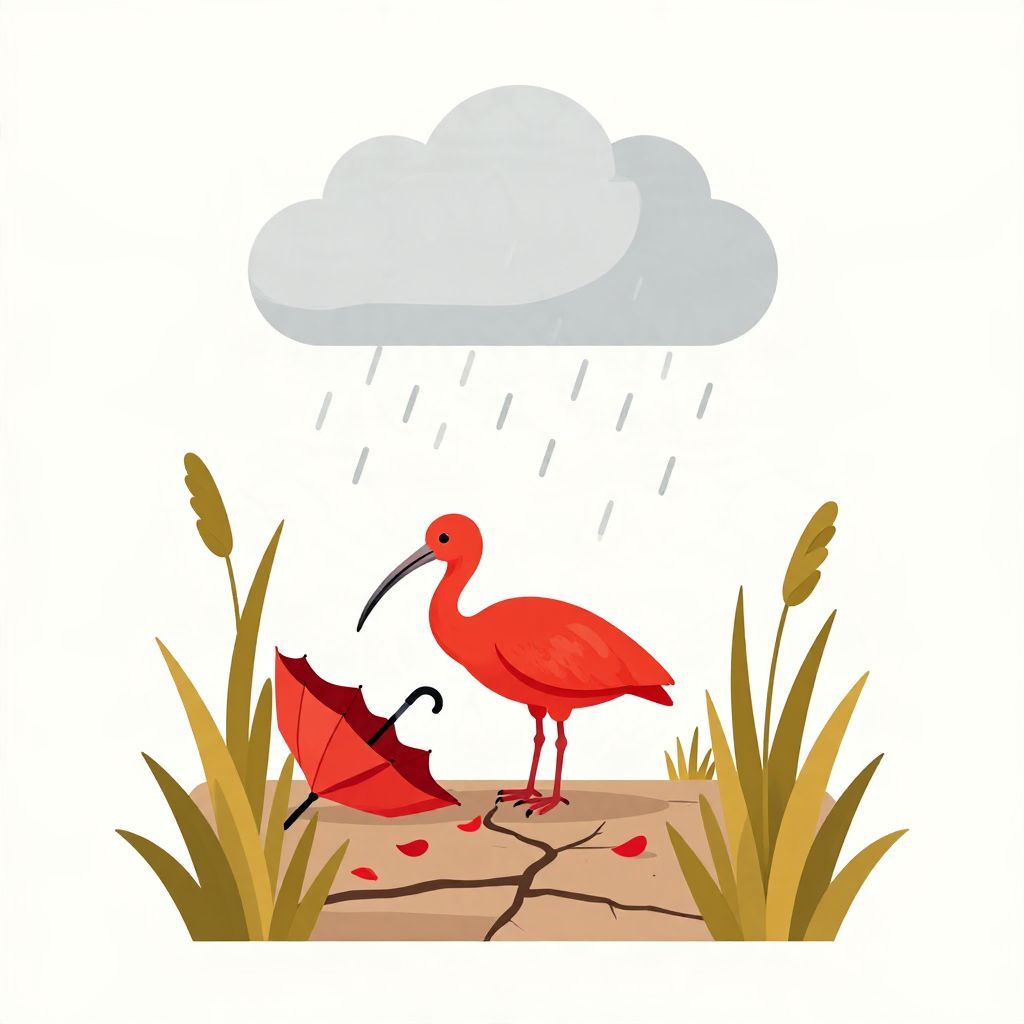
If you’re asking how did Doodle die in The Scarlet Ibis, the short answer is that he dies after collapsing while trying to keep up with his brother during a storm. The story makes his death tragic because it is tied to pride, pressure, and the fragile limits of his body.
James Hurst’s short story is more than a sad ending, though. It is a carefully built tragedy about love, guilt, disability, and the painful difference between wanting someone to change and accepting who they are.
How did Doodle die in The Scarlet Ibis?
Doodle dies from physical exhaustion after running through a storm to prove he can keep up with his brother. The effort pushes his weak body beyond its limits, and he is later found dead in the rain, a death the story frames as both accidental and deeply connected to his brother’s pride and cruelty.
What happens in the story?
The Scarlet Ibis follows a boy nicknamed Doodle and his older brother, who is never named. Doodle is born with serious physical frailty, and the family initially expects he may not survive. When he does live, his brother becomes obsessed with teaching him to walk, run, and act like other boys.
At first, this seems like devotion. But the brother’s motivation is complicated: he loves Doodle, yet he is also embarrassed by him and determined to shape him into someone more acceptable. That tension drives the story toward its ending.
Doodle’s condition and early life
Doodle is physically delicate from the start. He cannot walk at first, and his family worries about his survival. His brother gives him the nickname “Doodle,” a name that reflects both affection and condescension.
The story shows Doodle as imaginative, sensitive, and eager to please. He is not simply weak; he is also emotionally aware and deeply attached to his brother.
The brother’s training plan
Once Doodle learns to walk, his brother begins pushing him harder. He teaches him to run, climb, and endure more than he naturally can. The brother’s pride becomes a major force in the story, especially when he imagines how impressive Doodle will seem if he can do everything other boys can do.
This is where the story’s tragedy sharpens. The brother’s love is real, but it is mixed with vanity and impatience, and that mixture has consequences.
The storm and the final run
Near the end, the boys are caught in a storm while Doodle is trying to keep up. He is exhausted, frightened, and physically overwhelmed. The brother runs ahead and then realizes Doodle is no longer beside him.
When he returns, he finds Doodle dead. The story strongly suggests that Doodle’s heart and body simply could not withstand the strain.
Why does Doodle die?
Doodle dies because his body is too fragile for the intense physical demands placed on it, especially during the final run in the storm. On a deeper level, he dies because the story’s central conflict—love mixed with pride—pushes him into a situation he cannot survive.
Physical weakness
Doodle has always been vulnerable. The story makes clear that his health is precarious, and the strain of running in bad weather is more than he can bear.
Pride and pressure
The brother’s pride is not the same as direct violence, but it matters. He wants Doodle to succeed partly for Doodle’s sake and partly to satisfy his own ego. That pressure creates the conditions for the tragedy.
Emotional betrayal
One of the most painful parts of the ending is that Doodle trusts his brother completely. He follows him because he wants to belong and because he believes in their bond. That trust makes the death feel even more heartbreaking.
Main themes in The Scarlet Ibis
Love and cruelty
The story is powerful because it shows how love can be tangled with selfishness. The brother genuinely cares for Doodle, but his care is not pure or selfless. He wants to improve Doodle, yet he also wants to erase what makes Doodle different.
Pride
Pride is the story’s most obvious theme. The brother admits, in effect, that his actions are driven by shame and vanity. Pride makes him push too hard, and it becomes the moral center of the tragedy.
Acceptance versus change
The story asks whether love means helping someone grow or accepting them as they are. Doodle’s brother cannot fully accept Doodle’s limits, and that inability leads to harm.
Fragility of life
Doodle’s death reminds readers how vulnerable life can be. The story suggests that beauty, progress, and hope can be real, but they are also fragile and easily lost.
Characters that shape the tragedy
Doodle
Doodle is gentle, imaginative, and physically vulnerable. He is the emotional center of the story, and his innocence makes the ending especially devastating.
The older brother
The unnamed narrator is both sympathetic and flawed. He tells the story from a reflective distance, which allows readers to see his guilt and regret. His narration is important because the story is not only about Doodle’s death, but also about the brother’s lifelong memory of it.
The parents and family
Doodle’s parents are present mostly as background figures, but they help establish the atmosphere of worry and uncertainty around his survival. Their reactions underscore how unusual and fragile Doodle’s life has always been.
Symbols and imagery in the story
The scarlet ibis
The scarlet ibis is the story’s most important symbol. The bird appears in the family’s yard after being blown off course, exhausted and out of place. Its red color, beauty, and weakness mirror Doodle’s own condition and foreshadow his death.
Red imagery
Red appears throughout the story in connection with the ibis, blood, and death. This repeated color imagery creates a sense of danger and inevitability.
The storm
The storm symbolizes the emotional and physical force that overwhelms Doodle. It also reflects the chaos of the brother’s guilt and the collapse of his hopes.
Narrative style and literary techniques
First-person retrospective narration
The story is told by the older brother looking back on the past. This retrospective point of view matters because it gives the story a tone of confession and regret. The narrator already knows the outcome, so the reader feels the weight of hindsight.
Foreshadowing
James Hurst uses foreshadowing carefully. The scarlet ibis itself is a major clue, but the story also plants repeated signs that Doodle’s body cannot endure the pressure being placed on it.
Symbolism
The story relies heavily on symbolism rather than direct explanation. The bird, the storm, the color red, and Doodle’s physical fragility all work together to deepen the meaning of the ending.
Is Doodle’s death an accident or a tragedy caused by his brother?
It is both. Doodle’s death is not a murder in the literal sense, but the story clearly suggests that the brother’s pride and relentless expectations help cause it. That is what makes the ending tragic rather than merely sad: the death could have been avoided if the brother had acted with more compassion and less ego.
At the same time, the story does not reduce everything to blame. Doodle’s body is genuinely fragile, and the storm is a real physical danger. The power of the ending comes from how many forces converge at once.
Why the ending of The Scarlet Ibis matters
The ending is memorable because it transforms a family story into a moral reckoning. The brother is left with guilt, and the reader is left with the uncomfortable realization that love alone is not enough if it is mixed with shame, pressure, and unrealistic expectations.
Doodle’s death also gives the story its emotional force. It is not just a plot twist; it is the final consequence of everything the story has been building toward.
Book summary and review
The Scarlet Ibis is a compact but emotionally rich short story. Its language is lyrical, its imagery is memorable, and its ending is carefully prepared. For readers, students, and literature lovers, it offers a strong example of how symbolism and narration can make a short text feel larger than its page count.
As a reading experience, it is heartbreaking but rewarding. The story invites sympathy for both boys while also asking readers to think critically about responsibility, pride, and the difference between helping someone and trying to remake them.
Quick takeaway
Doodle dies after overexertion during a storm, but the deeper cause is the emotional pressure created by his brother’s pride. The Scarlet Ibis endures because it turns that death into a haunting lesson about love, guilt, and acceptance.
If you’re interested in more literary “how did they die” analyses, you may also like how Ophelia died and how Juliet died.