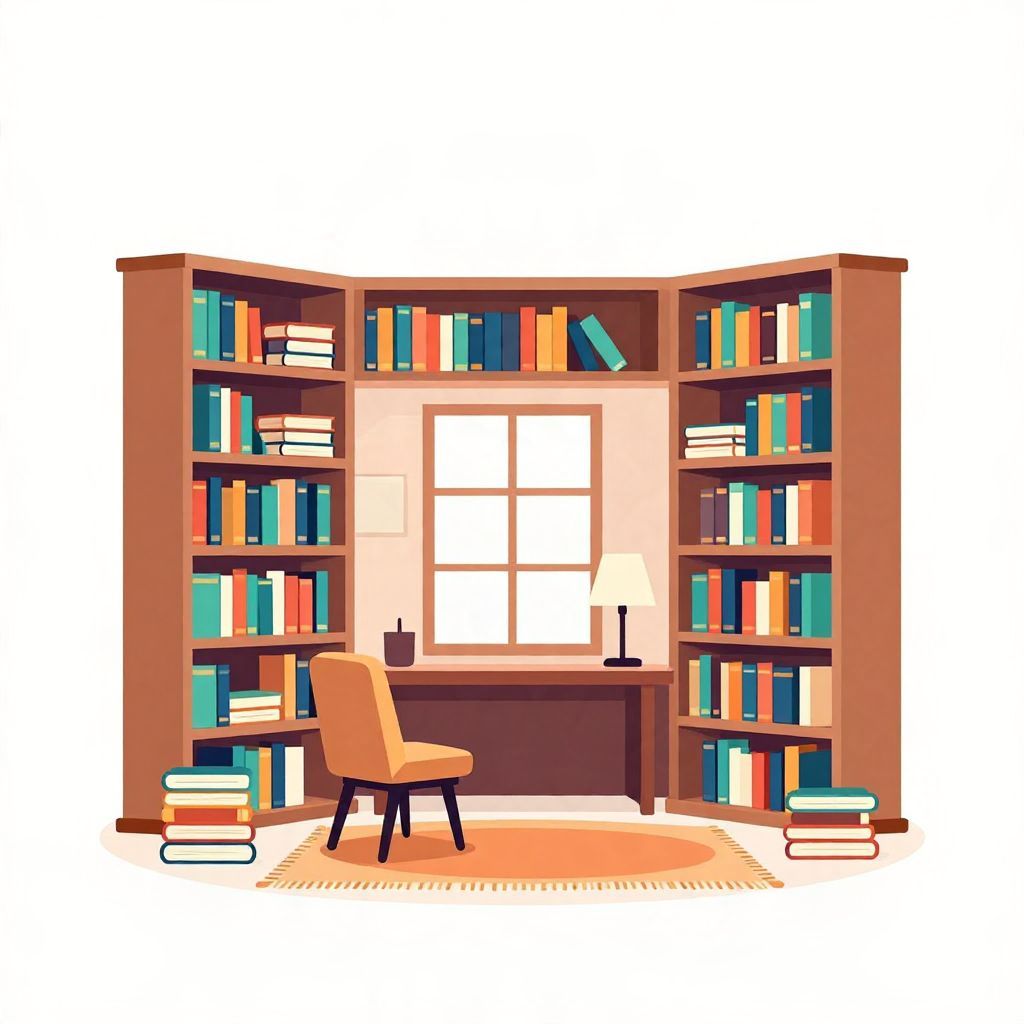
If you are wondering how many books make a home library, the short answer is: there is no fixed number. A shelf with a carefully chosen dozen books can feel like a library, while a room full of hundreds may still feel more like storage if it lacks intention, organization, or personal meaning.
What matters most is not the count alone, but the purpose of the collection. A home library is usually defined by curation, accessibility, and the sense that books are gathered for regular reading, reference, and enjoyment rather than left as random decor.
How many books are needed to be considered a home library?
There is no universal threshold, but many people think of a home library as starting around 25 to 50 books if the collection is purposeful and organized. Even a smaller number can qualify if the books are selected with care, grouped coherently, and used as a real reading resource rather than a display of leftovers.
What makes a book collection a library instead of just a bookshelf?
A home library is less about size and more about structure. If your books are arranged for easy access, reflect your interests, and support reading, study, or collecting, they function like a library even if the total is modest.
Signs your collection feels like a home library
- Curated selection: the books reflect clear interests, subjects, or reading goals.
- Organization: books are arranged by author, genre, subject, or reading status.
- Regular use: you return to the books for reading, research, or quiet enjoyment.
- Preservation: the books are stored in a way that protects them and makes them easy to find.
- Personal identity: the collection tells a story about the reader who built it.
What does not automatically make a library
Rows of unread books, decorative hardcovers, or inherited boxes of mixed titles do not necessarily create a home library on their own. A library is more than volume; it is a deliberate relationship between reader and books.
How many books do people usually have in a home library?
Home libraries vary widely. Some households keep a few shelves of 20 to 40 books, while avid readers may own several hundred or even thousands. The “usual” number depends on space, budget, reading habits, and whether the collection is meant for casual browsing, study, or serious collecting.
Common ranges and what they suggest
- 1–24 books: a small personal collection, often focused on favorites or current reading.
- 25–100 books: often enough to feel like a recognizable home library if organized well.
- 100–500 books: a substantial personal library with room for multiple genres or subjects.
- 500+ books: a large collection that may require dedicated shelving and a system for cataloging.
These ranges are only practical guides. A compact but focused collection of poetry, philosophy, or reference works can feel more library-like than a larger pile of miscellaneous paperbacks.
Why the idea of a home library matters
The phrase “home library” suggests more than ownership. It implies a reading life: books chosen over time, a space shaped around them, and a habit of returning to them for pleasure, learning, or reflection.
A home library can serve several purposes
- Reading space: a place to choose what to read next.
- Reference space: a local source for dictionaries, essays, history, or specialized topics.
- Memory space: a record of what has mattered to the reader over time.
- Design space: a room element that adds warmth and character to a home.
For many readers, the emotional value of a home library is as important as the practical one. Books can mark stages of life, family traditions, and intellectual curiosity.
How to build a home library with any budget
You do not need a large house or expensive first editions to create a meaningful library. Start with books you genuinely want to keep, then build slowly and intentionally.
Simple steps for starting a home library
- Choose a focus: fiction, poetry, history, cookbooks, children’s books, or a mix.
- Keep what you reread: prioritize books you return to or want to revisit.
- Buy with intention: add titles that fill gaps or deepen your interests.
- Organize early: create a system before the collection becomes hard to manage.
- Leave room to grow: plan for future books rather than filling every shelf at once.
Good starter categories
- favorite novels and short story collections
- poetry books or literary anthologies
- reference books you actually use
- nonfiction on topics you study often
- books from childhood or family favorites
How should a home library be organized?
Organization helps a home library feel usable rather than cluttered. There is no single correct method, but the best system is the one that matches how you read and search for books.
Popular ways to arrange books
- By author: useful for fiction and literary collections.
- By genre: practical if you read many different types of books.
- By subject: ideal for nonfiction, research, and reference collections.
- By size or color: visually pleasing, though sometimes less practical.
- By reading status: unread, current, and reread shelves can help active readers.
If your collection is small, keep the system simple. If it grows, you may want a more detailed method or even a digital list to track what you own.
How many books do you need for a room to feel like a library?
A room can begin to feel like a library with surprisingly few books if the shelves are visible, the arrangement is intentional, and the space invites reading. Atmosphere often comes from lighting, seating, and order as much as from the number of volumes.
Elements that create the library feeling
- books grouped on real shelves rather than stacked randomly
- comfortable seating for reading
- good lighting, natural or artificial
- a quiet, uncluttered atmosphere
- books that reflect a coherent personality or purpose
In other words, a home library is partly architectural and partly literary. The books matter, but so does the way they shape the room around them.
Is there a difference between a book collection and a home library?
Yes, though the difference can be subtle. A book collection may simply mean books you own, while a home library usually suggests a more organized, usable, and meaningful body of books.
Collection vs. library
- Collection: ownership is the main idea.
- Library: access, organization, and use are central.
- Collection of books: may be casual or incomplete.
- Home library: implies a system and a reading culture.
That said, many home libraries begin as simple collections. Over time, they become libraries as the owner organizes, revisits, and expands them with purpose.
Practical reading guide for building your own home library
If you want your shelves to feel like a real home library, think in terms of reading life rather than decoration. The strongest libraries are built from books that are loved, used, and remembered.
Questions to ask yourself
- Which books do I reread or consult often?
- What subjects or genres do I want to explore further?
- Do I want a broad library or a specialized one?
- How much shelf space do I realistically have?
- What organization system will I actually maintain?
Answering these questions will help you decide whether your next purchase should be a classic novel, a reference title, a poetry collection, or a book that fills a gap in your shelves.
Final answer: how many books count as a home library?
There is no exact number. A home library can begin with as few as 25 to 50 thoughtfully chosen books, and it can be smaller or much larger depending on how it is used. The real measure is not quantity alone, but intention, organization, and the way the books support your reading life.
If you enjoy practical reading ideas and book-related guides, you may also want to explore Ultimate Book Source and related articles at this reading-focused post.