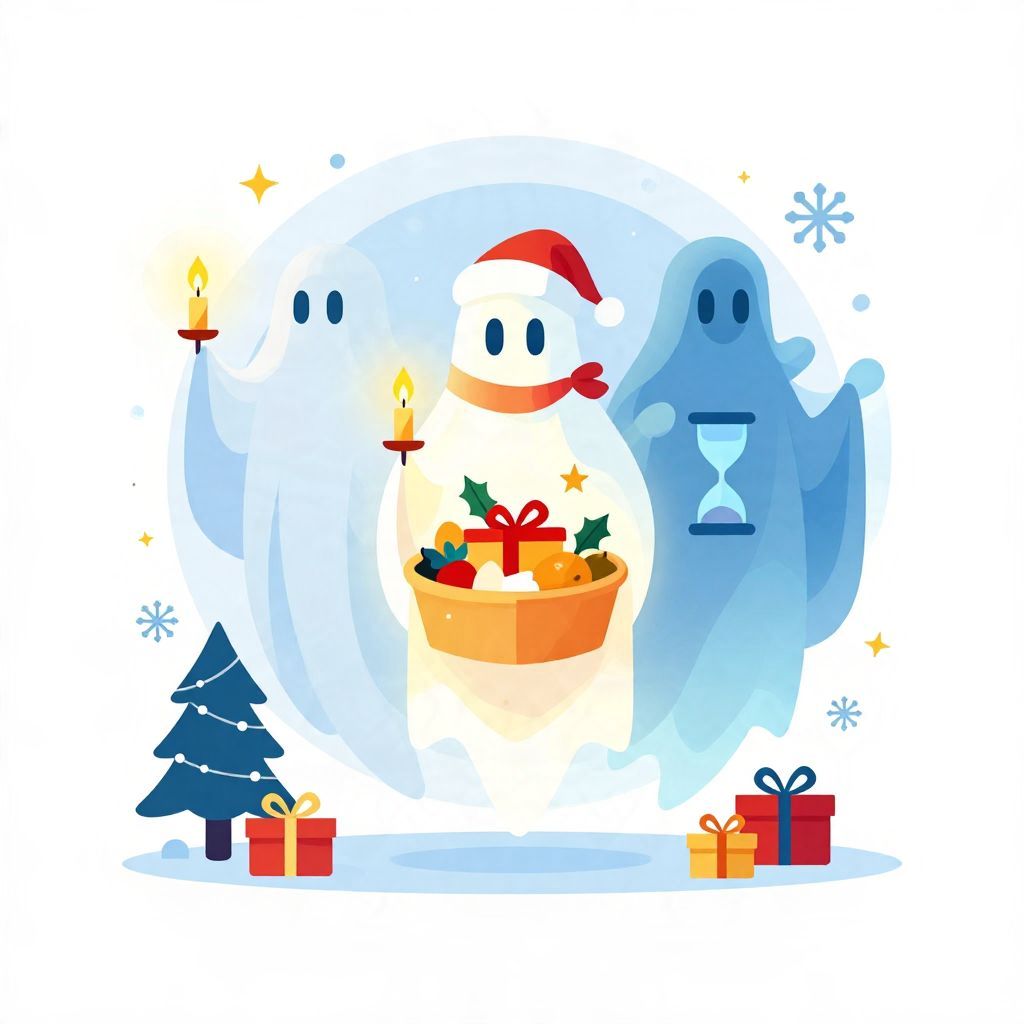
If you’re wondering how many ghosts are in A Christmas Carol, the quick answer is four. Charles Dickens gives Ebenezer Scrooge four supernatural visitors: Marley and the Ghosts of Christmas Past, Present, and Yet to Come. Each one shapes Scrooge’s journey from miserliness to remorse and, ultimately, change.
That simple count matters because the ghosts are not just spooky figures; they are the novel’s structure, symbolism, and moral argument. Dickens uses them to move Scrooge through memory, social awareness, and fear of consequences, turning a short Christmas narrative into one of literature’s most enduring redemption stories.
How many ghosts are in A Christmas Carol?
There are four ghosts in A Christmas Carol: Jacob Marley and the three Spirits of Christmas Past, Present, and Yet to Come. Marley appears first as a warning, then the three spirits guide Scrooge through scenes that reveal his past, expose the suffering around him, and show the future he is heading toward if he does not change.
Who are the four ghosts?
1. Jacob Marley
Marley is Scrooge’s former business partner, dead before the story begins. He is not one of the three Christmas spirits, but he is the first supernatural visitor and the one who opens the door to the rest of the novella’s action.
Marley’s chained ghost is a moral warning. He embodies the consequences of a life spent in greed, isolation, and indifference to others.
2. The Ghost of Christmas Past
This spirit takes Scrooge back through earlier moments in his life, including scenes of loneliness, ambition, and lost affection. The visit is painful because it shows that Scrooge’s present character did not appear overnight; it was shaped over time.
As a figure of memory, the Ghost of Christmas Past helps Dickens explore regret, innocence, and the emotional costs of choosing money over human connection.
3. The Ghost of Christmas Present
This spirit reveals the warmth and hardship of the world around Scrooge in the present moment. Through it, he sees families, workers, and celebrations, including people whose lives are far more precarious than his own.
The Ghost of Christmas Present emphasizes generosity, community, and social responsibility. It also forces Scrooge to confront the suffering he has ignored.
4. The Ghost of Christmas Yet to Come
The final spirit shows Scrooge a future shaped by his current behavior. Silent and ominous, it offers little comfort and no explanation, which makes its lesson especially powerful.
This ghost represents consequence. It pushes the novella toward its moral climax by showing that change is still possible, but not guaranteed.
Why does Dickens use four ghosts instead of one?
Dickens builds Scrooge’s transformation in stages. One ghost could have delivered a message, but four supernatural figures let the story move through memory, present reality, and possible future in a carefully ordered pattern. That structure makes Scrooge’s change feel earned rather than sudden.
The sequence also gives the novella its dramatic rhythm. Marley warns, the past explains, the present expands Scrooge’s moral vision, and the future frightens him into action.
What do the ghosts symbolize?
Ghosts as moral education
The spirits function like teachers, though not in a gentle way. Each one corrects Scrooge’s narrow view of life by showing him what he has refused to see: his own history, other people’s needs, and the consequences of selfishness.
Ghosts as time itself
One of Dickens’s most memorable ideas is that time is not just a backdrop but a force that can reveal truth. The ghosts turn time into a moral instrument, making the past, present, and future active parts of Scrooge’s education.
Ghosts as symbols of conscience
Some readers also see the spirits as externalized conscience. Whether read literally or symbolically, they dramatize Scrooge’s inner reckoning and make his private moral crisis visible on the page.
How the ghosts shape the story’s themes
Redemption
The most famous theme in A Christmas Carol is redemption. The ghosts show that a damaged life can still be changed if the person is willing to face truth and act differently.
Social responsibility
Through the Ghost of Christmas Present, Dickens widens the story beyond Scrooge. The novella insists that wealth carries obligations and that ignoring poverty is a moral failure, not a neutral choice.
Memory and regret
The Ghost of Christmas Past reveals how personal history shapes present behavior. Scrooge’s sorrow is not only about what he has done, but also about what he has allowed himself to become.
Fear of the future
The final spirit uses dread to motivate change. Dickens does not treat fear as the goal, but as a necessary shock that can interrupt moral inertia.
Are all of the ghosts equally important?
In a practical sense, yes: each ghost is essential to Scrooge’s transformation. But they play different roles. Marley starts the warning, the first two spirits build understanding, and the last spirit delivers the strongest emotional pressure.
If you are reading the novella for class or discussion, it helps to think of the ghosts as a sequence rather than separate episodes. Together, they create the full arc of the story.
Reading guide: how to follow the ghostly structure
Read for cause and effect
As you read, notice how each appearance changes Scrooge’s perspective. Dickens carefully arranges scenes so that one revelation leads to the next.
Track the settings
The ghosts do not only bring messages; they also move Scrooge through distinct spaces. These settings matter because they reveal class differences, emotional memory, and social realities.
Pay attention to contrast
Much of the novella’s power comes from contrast: cold and warmth, isolation and fellowship, wealth and want, silence and speech, darkness and light. The ghosts help Dickens stage those oppositions.
Notice the tone shifts
The story moves from eerie and accusatory to reflective, then communal, and finally unsettling. That tonal progression mirrors Scrooge’s internal change.
Common questions about the ghosts
Is Marley counted as one of the ghosts?
Usually, yes, if you are counting all supernatural visitors. But when people ask how many ghosts are in A Christmas Carol, they often mean the three Christmas spirits plus Marley, for a total of four.
Why is the Ghost of Christmas Yet to Come silent?
Its silence makes the future feel impersonal and inescapable. Dickens uses that lack of speech to heighten fear and uncertainty.
Are the ghosts real or imagined?
The novella presents them as real within the story’s world. At the same time, readers can interpret them symbolically as forces of conscience, memory, and moral awakening.
Why the ghosts still matter today
The ghosts endure because they make an abstract moral lesson vivid. Instead of preaching directly, Dickens dramatizes change through haunting encounters that are easy to remember and rich enough for repeated interpretation.
That is part of why A Christmas Carol remains such a popular seasonal read. The ghosts are memorable characters, but they are also the engine of the novella’s emotional and ethical power.
If you want to keep exploring Dickens and related literary themes, you may also enjoy what A Tale of Two Cities is about and the theme of Verification.