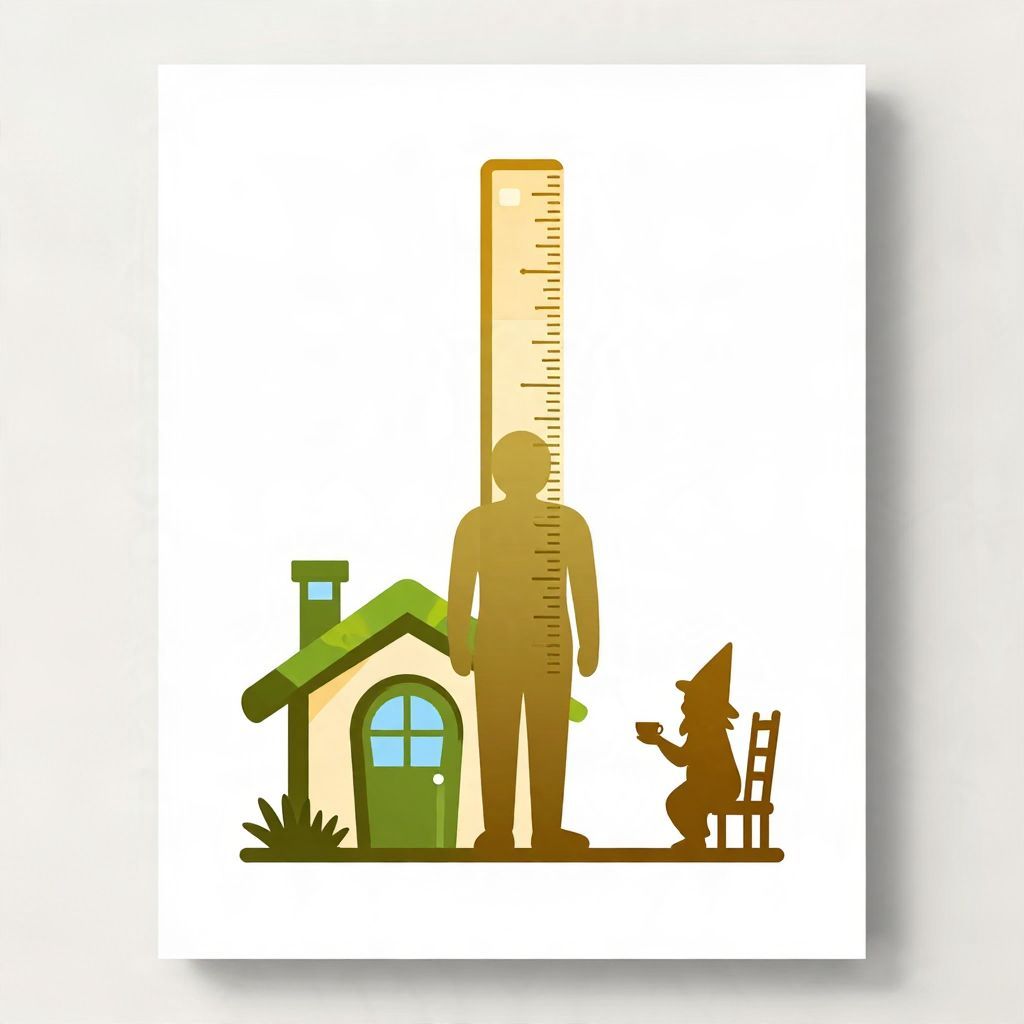
If you’re wondering how tall a hobbit is, the short answer is that hobbits are usually described as being about half the height of adult humans. In J.R.R. Tolkien’s Middle-earth, that means most hobbits stand roughly in the range of 2 to 4 feet tall, with variations by family and individual.
This simple physical detail matters more than it first appears. Tolkien uses hobbit size to shape their culture, their vulnerability, and their surprising courage, making height part of the larger literary meaning of the species.
How tall is a hobbit in Tolkien’s books?
In Tolkien’s fiction, hobbits are generally about half the height of Men, which places them around 2 to 4 feet tall. The exact number is not fixed as a scientific measurement, but the books consistently present hobbits as small, sturdy people whose size contrasts with the larger races of Middle-earth.
What Tolkien suggests about hobbit size
Tolkien does not give a single official measurement for every hobbit. Instead, he presents them as a small branch of humanity, with enough variation to feel realistic while still clearly distinct from Men, Dwarves, and Elves.
That flexibility is part of the charm of the worldbuilding. A hobbit’s height is less about precision than about proportion, identity, and the way others perceive them.
Relative size in Middle-earth
- Compared with Men: hobbits are roughly half as tall.
- Compared with Dwarves: hobbits are usually a little shorter or similar in height, depending on the individual.
- Compared with Elves and Orcs: hobbits are distinctly small.
Why does hobbit height matter in the story?
Hobbit size is not just a physical trait; it is a literary device. Tolkien uses it to emphasize how ordinary-seeming characters can become central to epic events, and how power in Middle-earth does not belong only to the large, the strong, or the grand.
Size and theme
The contrast between hobbit stature and heroic action reinforces one of Tolkien’s most enduring themes: greatness can come from the humble. Frodo, Sam, Merry, and Pippin are physically small, but their choices carry enormous moral weight.
This is one reason hobbits are so memorable. Their smallness makes their bravery feel earned rather than assumed.
Size and social identity
Hobbits are often overlooked by larger peoples, and that invisibility works both ways. It can make them seem unimportant, but it also allows them to move through the world with a kind of quiet resilience.
Tolkien turns a physical trait into a social one: being small shapes how hobbits live, travel, and survive, but it does not define their value.
Who are the hobbits in Tolkien’s legendarium?
Hobbits are a fictional people in The Hobbit and The Lord of the Rings, created by J.R.R. Tolkien. They are known for comfort, food, farming, family life, and a preference for peace, but the stories repeatedly show that they are capable of extraordinary endurance and moral courage.
Core hobbit traits
- They are small in stature.
- They tend to live in rural communities.
- They value good meals, domestic routine, and local custom.
- They are often cautious, but not cowardly.
- They can be surprisingly resilient under pressure.
Famous hobbits readers often think of
- Bilbo Baggins — the reluctant adventurer of The Hobbit.
- Frodo Baggins — the Ring-bearer in The Lord of the Rings.
- Samwise Gamgee — Frodo’s steadfast companion.
- Merry Brandybuck and Pippin Took — younger hobbits whose growth is central to the story.
How Tolkien uses hobbits as literary symbols
Hobbits often symbolize the ordinary person placed in extraordinary circumstances. Their height helps make that symbolism visible at a glance. They are physically unassuming, yet they become the moral center of the narrative.
The ordinary versus the heroic
Traditional epic literature often focuses on kings, warriors, and chosen champions. Tolkien complicates that pattern by making small, comfort-loving hobbits the agents of major historical change.
Their size becomes a quiet rebuke to the idea that heroism must look imposing.
Home, scale, and perspective
Because hobbits are small, their homes, habits, and landscapes are scaled to a more intimate world. The Shire feels protected, domestic, and human-sized, which makes the wider dangers of Middle-earth feel even more overwhelming when the hobbits leave it.
That shift in scale is one of Tolkien’s most effective narrative techniques. The reader moves from cozy local detail to vast mythic conflict, and the hobbits carry that transition.
What kind of book is this question really pointing to?
“How tall is a hobbit” is not a standalone book title, but it is a common reader question about Tolkien’s fantasy world. It usually points to The Hobbit or The Lord of the Rings, where hobbits are central characters and their physical description is part of the worldbuilding.
If you are new to Tolkien
If your interest in hobbit height comes from curiosity about the books, the best starting point is usually The Hobbit. It introduces Bilbo Baggins and gives readers an accessible entry into Tolkien’s style, humor, and invented world.
The Lord of the Rings expands that world into a darker, more complex epic, with hobbits at the emotional center of the story.
How Tolkien’s style shapes the way hobbits are described
Tolkien’s prose often blends plain description with mythic resonance. He does not over-explain hobbit anatomy, but he gives enough detail to make them vivid, believable, and distinct.
Descriptive economy
Instead of cataloging exact measurements, Tolkien relies on comparison and contrast. Hobbits are understood through their relationship to other peoples, which is a classic fantasy technique for making a fictional race feel coherent without sounding clinical.
Worldbuilding through implication
By leaving some details open, Tolkien invites readers to imagine hobbits as a living people rather than a list of traits. Their height is one of those details: specific enough to matter, flexible enough to feel natural.
Common questions readers ask about hobbits
Are all hobbits the same height?
No. Tolkien presents hobbits as a people with variation, just as humans vary in height. They are generally small, but not identical.
Are hobbits shorter than dwarves?
Usually, yes, though the difference is not always dramatic. Hobbits are generally portrayed as smaller than most dwarves and much smaller than men.
Why are hobbits so small?
Tolkien does not give a scientific origin story that explains their size in modern biological terms. In the mythology of Middle-earth, their smallness is simply part of what they are.
Does height affect hobbit courage?
Not at all. In fact, Tolkien uses their size to show that courage is not tied to physical power. Their bravery is often stronger because it is chosen, not assumed.
Why hobbits remain so appealing to readers
Hobbits endure because they combine comfort and adventure in a single image. They are small enough to seem safe and familiar, but their stories reveal how quickly safety can give way to responsibility.
That tension gives them lasting literary power. Readers recognize themselves in hobbits because they are not born as legends; they become memorable through loyalty, endurance, and difficult choices.
Final thoughts on how tall a hobbit is
A hobbit is generally about half the height of a human, usually around 2 to 4 feet tall in Tolkien’s world. But the more interesting answer is literary rather than numerical: hobbit height helps Tolkien explore scale, humility, and the idea that small people can change the course of history.
If you want to keep exploring Tolkien’s world, you may also enjoy reading about how long hobbits live and how old Frodo is in Lord of the Rings.