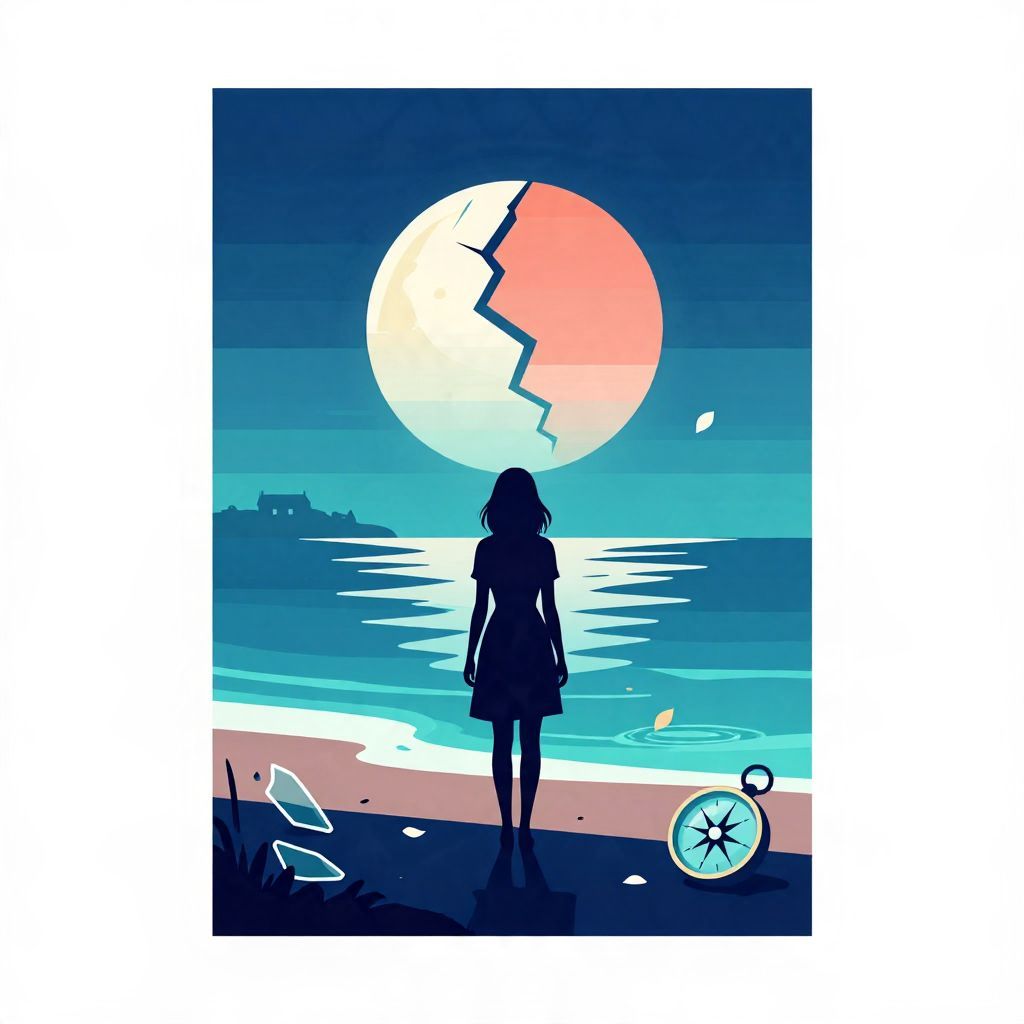
If you’re wondering what happened to Cadence in We Were Liars, the short answer is that her injuries, memory loss, and emotional shock are all tied to a devastating summer accident on Beechwood Island. E. Lockhart’s novel keeps the truth hidden until the end, so Cadence’s confusion is part of the story’s design.
Below is a spoiler-filled explanation of Cadence’s fate, the key events that lead to it, and why the ending lands so powerfully.
What happened to Cadence in We Were Liars?
Major spoilers ahead: Cadence is caught in the fire set by the Liars during a desperate act of rebellion, and the trauma leaves her with a severe head injury, memory gaps, and lasting psychological damage. The novel gradually reveals that she survives, but her recollection of the summer is fractured because her mind has blocked out the most painful parts of what happened.
Cadence’s summer before the accident
Cadence Sinclair Eastman is the eldest grandchild in the wealthy Sinclair family, and the novel opens after the summer when everything changed. She returns to Beechwood Island two years after the accident, still suffering from migraines, confusion, and missing memories.
Her narration is intentionally unstable. She remembers fragments of family gatherings, private grief, and her close bond with her cousins and Gat, but she cannot fully reconstruct the night that shattered her life.
The Sinclair family and the “Liars”
Cadence belongs to a family defined by money, image, and control. The “Liars” are Cadence, her cousins Mirren and Johnny, and Gat Patil, the outsider who becomes part of their group.
Their friendship matters because it creates a contrast between youthful honesty and the adults’ polished secrecy. The novel uses that contrast to build toward the central tragedy.
How the accident happens
Cadence’s breakdown is linked to the night the Liars set fire to Clairmont, the family house on Beechwood. Their plan is reckless and emotional rather than calculated: they want to force change in a family that has ignored pain, conflict, and injustice for years.
The fire goes terribly wrong. Cadence is struck in the head and left unconscious, and the event kills the other Liars. Much of the novel’s tension comes from Cadence’s inability to remember that she was not just a witness to the disaster—she was part of the group that caused it.
Why the Liars start the fire
The Liars are driven by frustration, grief, and moral outrage. The Sinclair adults are wrapped up in inheritance, appearances, and family politics, while the younger generation sees the damage underneath the surface.
Gat, in particular, pushes Cadence to think about privilege and responsibility. The fire becomes a symbolic act of protest, but the novel makes clear that protest without control can destroy everyone involved.
What happened to Cadence physically and mentally?
Cadence survives, but the accident leaves her with a serious concussion and persistent symptoms. She experiences headaches, disorientation, and memory loss, which the novel presents through a fragmented first-person voice.
Just as important, she is psychologically traumatized. Her mind protects her by suppressing the full truth, especially the fact that the other Liars died in the fire and that she was deeply involved in the events leading up to it.
Why she can’t remember
The memory loss is not just a mystery device; it reflects how trauma can distort recollection. Cadence’s mind keeps circling the same summer because it cannot yet face the full emotional weight of what happened.
This is why the narrative feels dreamlike and repetitive. The structure mirrors Cadence’s mental state, making the reader experience confusion alongside her.
The truth behind the ending
As Cadence pieces together the story, she realizes that the Liars died in the fire and that her family has been hiding the truth from her. The final revelations also expose the extent of the Sinclair family’s denial and the way they try to preserve appearances even after catastrophe.
Cadence’s last memories of the others are therefore heartbreaking: the summer she thought was full of possibility was actually the lead-up to a fatal act. The ending turns the novel from a coming-of-age mystery into a tragedy about love, class, and self-deception.
What the ending means for Cadence
By the end, Cadence is no longer simply trying to remember. She is forced to accept that memory, guilt, and grief are part of growing up in a family that refuses honesty.
Her survival does not feel triumphant in a conventional sense. Instead, it marks the beginning of understanding, even if that understanding comes too late to save the people she loved.
Key events that shape Cadence’s fate
- Cadence returns to Beechwood after the accident, already dealing with pain and missing memories.
- She reconnects with the Liars and slowly revisits the emotional tensions of the previous summer.
- The Sinclair family conflict intensifies, especially around inheritance, loyalty, and control.
- The Liars set fire to Clairmont in a desperate attempt to force change.
- Cadence is injured in the blaze and the others die, though she does not fully remember this at first.
- The truth is revealed, and Cadence must face the real scale of the tragedy.
Why Cadence’s story is so effective
We Were Liars works because it turns a mystery into an emotional reckoning. Cadence is not just solving a puzzle; she is recovering the truth of a life-altering trauma.
The novel’s power comes from the gap between what Cadence wants to remember and what she can bear to know. That gap gives the book its suspense, but it also gives the ending its sadness.
Major themes connected to Cadence
- Memory and repression — the mind hides pain until it can be faced.
- Privilege and denial — wealth shields the Sinclair family from accountability.
- Love and loss — Cadence’s relationships are central to the emotional impact.
- Truth and storytelling — the novel shows how narrative can conceal as much as it reveals.
Cadence as a narrator
Cadence is an unreliable narrator, but not because she is deceptive in a simple sense. She is unreliable because trauma, guilt, and partial knowledge shape what she can tell.
That technique allows E. Lockhart to build suspense while also exploring how people survive unbearable events. Cadence’s voice is intimate, lyrical, and often deceptively calm, which makes the final revelations hit even harder.
Final takeaway
So, what happened to Cadence in We Were Liars? She survived a catastrophic fire that killed the other Liars, but the trauma left her with memory loss, pain, and a shattered sense of self. The novel’s ending reveals that her confusion is part of the tragedy, not a separate mystery.
If you enjoy twist-driven literary fiction and emotionally layered family dramas, you may also like what happens in Ugly Love and what happens in Verity.