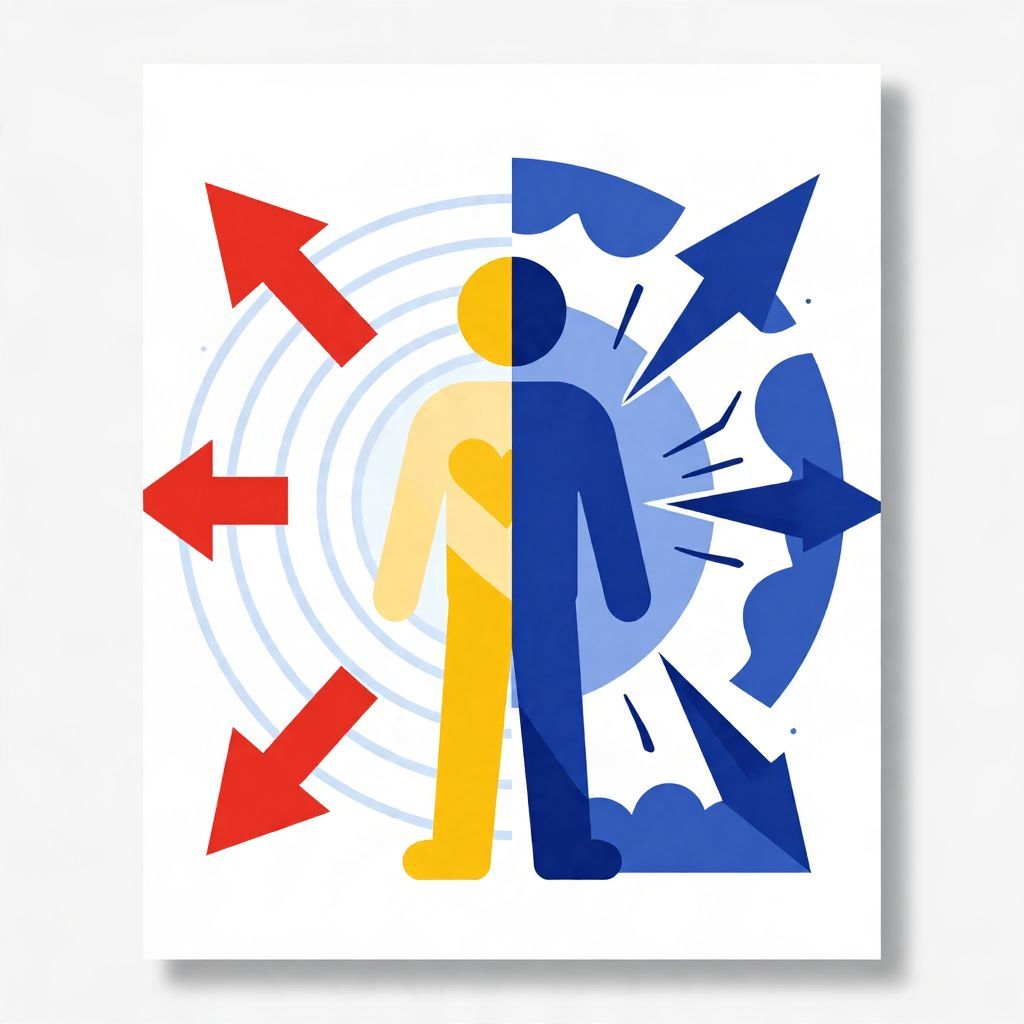
When readers ask what is internal and external conflict, they are usually trying to understand how stories create tension. These two forces shape nearly every novel, play, and poem: one happens inside a character, while the other comes from the world around them.
Knowing the difference helps you read more closely, write more clearly, and explain why a character’s choices matter. It also makes literary analysis easier, because conflict often reveals theme, character growth, and the central stakes of a story.
What is internal and external conflict in literature?
Internal conflict is a struggle within a character’s mind or conscience, while external conflict is a struggle between the character and an outside force such as another person, society, nature, fate, or technology. Most stories use both, often at the same time, to create pressure and drive the plot forward.
What is internal conflict?
Internal conflict happens when a character is divided against themselves. The tension may involve fear, guilt, desire, duty, grief, identity, or a moral choice that cannot be settled easily.
Common forms of internal conflict
- Choice versus conscience — a character knows what may be right but wants something else.
- Fear versus courage — a character must act despite anxiety or trauma.
- Identity versus expectation — a character struggles to define who they are.
- Desire versus responsibility — personal longing clashes with duty to family, community, or self.
Internal conflict often appears through thought, hesitation, self-contradiction, or symbolic actions. In fiction, it can be shown through dialogue, interior monologue, unreliable narration, or repeated images that reflect a character’s divided state.
Why internal conflict matters
This kind of conflict makes characters feel human. Even in action-heavy stories, the most memorable moments often come when a character must decide what kind of person they will be.
What is external conflict?
External conflict is any struggle that comes from outside the character. It usually creates visible obstacles, danger, or opposition that forces the character to respond.
Major types of external conflict
- Character vs. character — conflict with another person, rival, enemy, or antagonist.
- Character vs. society — conflict with laws, social norms, class systems, or institutions.
- Character vs. nature — conflict with weather, wilderness, disease, or the physical world.
- Character vs. fate — conflict with destiny, prophecy, or forces beyond human control.
- Character vs. technology — conflict with machines, systems, or inventions that threaten human agency.
External conflict is often easier to spot than internal conflict because it appears in events: arguments, battles, disasters, chases, trials, or social pressure. It gives a story momentum and creates the conditions under which inner struggle becomes visible.
How internal and external conflict work together
In strong literature, internal and external conflict rarely exist in isolation. An outside problem usually presses on an inner one, and an inner struggle often shapes how a character responds to outside pressure.
Why writers combine both
External conflict gives the story action; internal conflict gives it emotional depth. Together, they create a layered narrative in which a character is tested not only by events, but by their own values, fears, and desires.
For example, a character may face a hostile society externally while privately wrestling with shame or self-doubt. The external conflict raises the stakes, and the internal conflict determines what the character is willing to sacrifice.
Simple examples of internal and external conflict
It can help to think about conflict in everyday terms before looking at literature.
Internal conflict example
A student wants to tell the truth about cheating, but fears losing a friendship. The struggle is inside the student: honesty versus loyalty, conscience versus comfort.
External conflict example
A worker is denied fair treatment by an employer. The struggle is outside the character: person versus person, or person versus institution.
Example with both
A person trapped in a storm must find shelter, but also overcome panic. The weather is the external conflict; fear is the internal conflict.
Literary examples of internal and external conflict
Many classic and contemporary works use both kinds of conflict to shape character and theme. The examples below are broad and spoiler-light, focusing on how conflict functions rather than on detailed plot summary.
Shakespearean tragedy
In Shakespeare’s tragedies, characters often face intense internal conflict alongside social or political danger. A character may be torn between ambition and moral hesitation, or between loyalty and revenge, while external events push them toward catastrophe.
This combination is one reason tragedy feels so powerful: the outside world does not merely threaten the character; it exposes what is already unsettled within them.
Modern realist fiction
In realist novels, external conflict may look ordinary on the surface: family tension, class pressure, work, marriage, or social expectation. Yet these everyday pressures often reveal deep internal conflict about identity, freedom, and belonging.
Realist fiction often shows that a person can be in conflict without dramatic violence or spectacle. A difficult conversation, a refusal, or a silent compromise can carry as much weight as a battle scene.
Dystopian fiction
Dystopian stories frequently combine character vs. society with internal conflict. The protagonist may resist an oppressive system while also questioning whether resistance is possible, safe, or morally justified.
That tension gives dystopian fiction its urgency. The outer conflict shows the system’s power, while the inner conflict shows how oppression affects thought, trust, and identity.
Adventure and survival stories
In survival narratives, the external conflict is often obvious: hostile terrain, hunger, isolation, or disaster. But the deeper interest usually lies in the character’s internal struggle to endure fear, loneliness, or despair.
These stories ask not only whether the character can survive physically, but whether they can preserve hope, judgment, or humanity under pressure.
How to identify conflict in a text
If you are reading for class or writing an essay, conflict is often one of the first things to track. Ask what stands in the character’s way and what is happening inside them at the same time.
Questions to ask while reading
- What does the character want?
- What or who prevents them from getting it?
- What fear, belief, or doubt complicates their decision?
- Does the conflict come from inside the character, outside them, or both?
- How does the conflict reveal theme?
These questions help you move beyond plot summary and into interpretation. Conflict is not just what happens; it is often the mechanism through which a story explores meaning.
Conflict, character development, and theme
Conflict is one of the main engines of character development. A character changes, or refuses to change, because conflict forces a decision.
What conflict reveals
- Values — what the character believes is worth protecting.
- Weaknesses — fear, pride, denial, temptation, or insecurity.
- Relationships — who supports, opposes, or misunderstands the character.
- Theme — the larger idea the story explores, such as freedom, justice, love, or identity.
When a story centers on internal conflict, it often asks readers to consider moral complexity. When it centers on external conflict, it often highlights power, survival, or resistance. Many works do both, which is why conflict is so central to literary analysis.
Internal conflict vs. external conflict: a quick comparison
- Internal conflict takes place inside a character.
- External conflict takes place between a character and an outside force.
- Internal conflict is often psychological or moral.
- External conflict is often visible and event-driven.
- Internal conflict shapes decisions.
- External conflict creates obstacles and action.
- Both can appear together in the same scene or chapter.
Why this distinction matters for students and readers
Understanding what is internal and external conflict makes essays stronger and reading more attentive. Instead of saying only that a character “has problems,” you can explain what kind of struggle is happening and why it matters to the story’s meaning.
It also helps you compare books more intelligently. Two novels may share the same external setup, such as war or social pressure, but differ greatly in how they present inner conflict and emotional change.
Final takeaway
In literature, internal conflict is the battle within a character, and external conflict is the battle with the world around them. Most memorable stories use both, because together they create tension, reveal character, and deepen theme.
If you want to keep exploring literary terms and related reading topics, you may also find what mass market paperback means and who Moses represents in Animal Farm useful next reads.