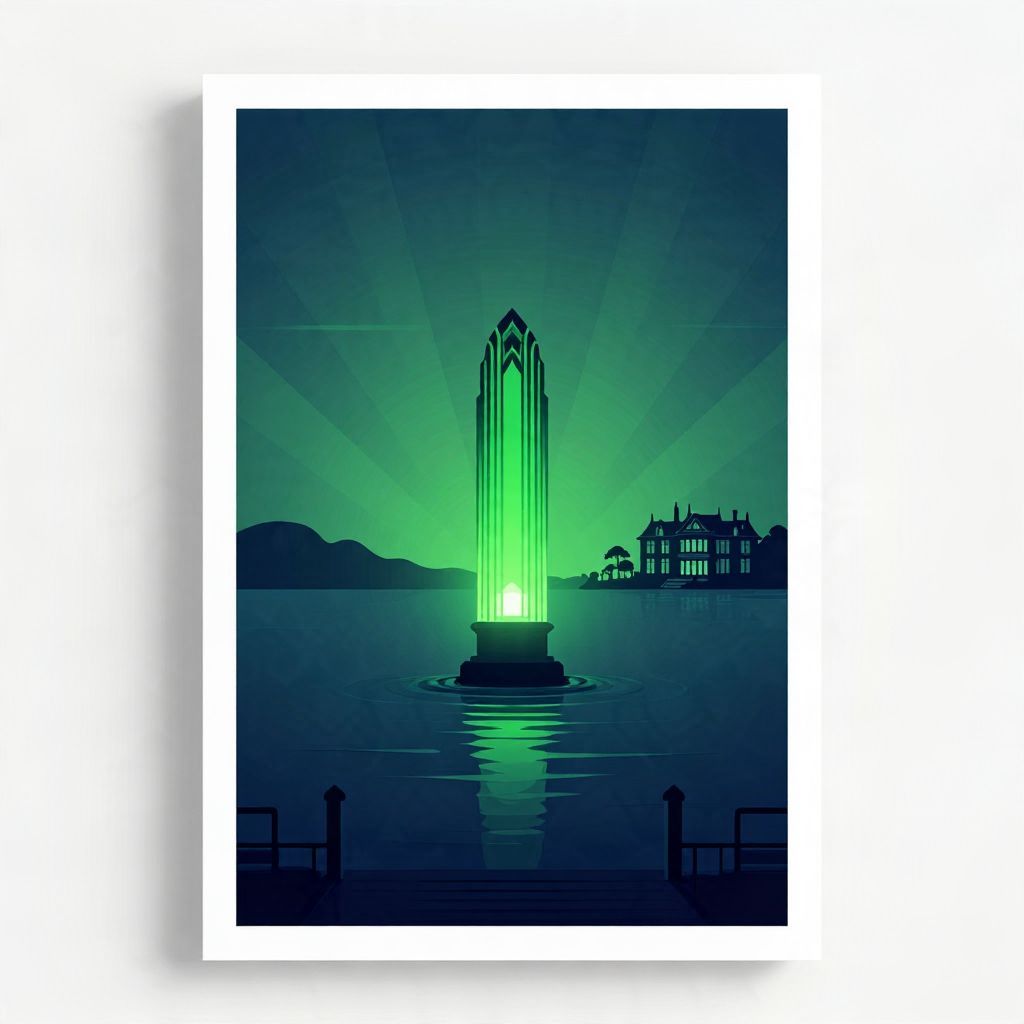
If you have ever finished The Great Gatsby and wondered what the green light really means, you are asking one of the novel’s central literary questions. F. Scott Fitzgerald turns a small, distant object into a powerful symbol that carries the book’s emotional weight.
The green light is not just a detail of setting. It represents desire, hope, distance, and the painful gap between what Gatsby wants and what he can actually reach.
What is the green light in The Great Gatsby?
The green light in The Great Gatsby is a symbol of Gatsby’s longing for Daisy, his dream of the future, and the larger American hope that life can be remade. Seen across the water from Gatsby’s mansion, it is both physically real and emotionally loaded, making it one of the novel’s most famous images.
Where does the green light appear in the novel?
The light appears early in the novel, when Nick observes Gatsby stretching his arms toward it at the end of his dock. It is located across the bay, near Daisy Buchanan’s home, which makes it a visual marker of both separation and obsession.
Because the light is distant and faint, Fitzgerald uses it to emphasize that Gatsby’s dream is always just beyond reach. The object matters less as a practical detail than as a recurring emblem of yearning.
The light as a physical object
On the most literal level, the green light is simply a dock light. Fitzgerald never needs to explain it in technical terms because its symbolic meaning quickly becomes more important than its practical function.
The light as a recurring image
Each time the green light is mentioned, it deepens the novel’s atmosphere of anticipation. It helps tie Gatsby’s private desire to the broader themes of illusion, memory, and aspiration.
What does the green light symbolize?
The green light symbolizes Gatsby’s dream of Daisy, but it also stands for the larger human tendency to chase an ideal that may never fully exist. In the novel, it becomes a symbol of hope, distance, desire, and the fragility of dreams.
1. Gatsby’s longing for Daisy
Gatsby associates Daisy with the life he wants to recover. The green light becomes a visual stand-in for her presence, attention, and approval, all of which he believes will complete his dream.
2. The future he imagines
Gatsby is not only reaching for a person; he is reaching for a version of the future that seems cleaner, richer, and more meaningful than the present. The light suggests motion toward something better, even if that future is unstable or impossible.
3. The American Dream
Many readers also see the green light as a symbol of the American Dream itself. Fitzgerald links Gatsby’s private ambition to a national ideal of self-invention and success, then shows how that ideal can become distorted by money, class, and illusion.
Why is the green light so important to the novel’s themes?
The green light matters because it condenses several of the novel’s major themes into one image. Fitzgerald uses it to show how dreams can inspire people, but also how they can remain permanently out of reach.
Dreams and illusion
Gatsby believes he can recover the past, but the novel repeatedly suggests that the past cannot be perfectly restored. The green light reflects that tension: it promises fulfillment while staying distant enough to preserve the dream.
Class and separation
The bay between Gatsby and Daisy is not just geographic. It also represents the social divide between Gatsby’s self-made wealth and the inherited privilege of Daisy and Tom Buchanan.
Time and memory
The light is tied to Gatsby’s refusal to accept change. He treats the past as something that can be retrieved, and the green light becomes a fixed point for that impossible wish.
How does Fitzgerald use the green light as a literary symbol?
Fitzgerald uses the green light through symbolism, imagery, and motif. The object appears simple, but its meaning expands as the novel develops, allowing Fitzgerald to connect setting, character psychology, and theme in a single recurring image.
Symbolism
A symbol is a concrete thing that carries abstract meaning. In this case, the green light stands for Gatsby’s hopes and the emotional distance between dream and reality.
Imagery
The green color and the light’s faint glow create a visual impression of something alluring but unreachable. Fitzgerald makes readers feel the pull of the symbol before fully explaining its significance.
Motif
Because the light returns at key moments, it functions as a motif, reinforcing the novel’s central concerns each time it reappears.
What does the green light mean at the end of the novel?
Near the novel’s end, the green light takes on a broader, more reflective meaning. It is no longer only Gatsby’s private desire; it becomes a symbol of human aspiration itself, especially the way people look toward the future with longing and uncertainty.
This final expansion of meaning is part of why the image has lasted so long in literary memory. The light begins as Gatsby’s personal obsession and ends as a meditation on ambition, time, and the limits of hope.
Spoiler note: the dream cannot be sustained
By the end of the novel, Gatsby’s dream has collapsed, but the symbol remains powerful because it shows how deeply he believed in it. The green light survives as an image of striving, even after the dream it represented has failed.
Literary examples of the green light in context
Rather than quoting at length, it helps to look at how Fitzgerald places the green light in different narrative moments. Each use sharpens its meaning.
- Early in the novel: Nick sees Gatsby reaching toward the light, which immediately frames Gatsby as a man oriented toward desire and distance.
- During Gatsby and Daisy’s reunion: The symbol becomes less about fantasy and more about the reality Gatsby has been chasing, revealing how much of his dream depends on imagination.
- Toward the end: The light shifts from a personal marker to a philosophical symbol of the future and the human impulse to keep reaching forward.
Why is the green light still discussed today?
The green light remains famous because it is both specific and universal. Readers can understand Gatsby’s private longing, but they can also recognize their own hopes in the image of something just out of reach.
It is also a model of effective literary symbolism. Fitzgerald never overexplains it, which allows the image to keep expanding in meaning each time readers return to the novel.
Common questions about the green light
Is the green light only about Daisy?
No. Daisy is central to its meaning, but the light also represents Gatsby’s idealized future, his desire for reinvention, and the broader promise of the American Dream.
Why green?
Green often suggests growth, hope, and forward motion, which suits the novel’s themes. It can also imply money and material aspiration, adding another layer to Gatsby’s world.
Does the green light have one fixed meaning?
Not exactly. Its power comes from its layered symbolism. It means different things at different moments, while still remaining tied to longing and distance.
The green light in one sentence
The green light in The Great Gatsby is Fitzgerald’s most famous symbol for longing: a distant glow that represents Gatsby’s love for Daisy, his dream of the future, and the human habit of reaching toward what cannot quite be possessed.
If you want to keep exploring Fitzgerald’s symbols and themes, you may also enjoy reading more about major symbols in The Great Gatsby and F. Scott Fitzgerald’s life and writing.