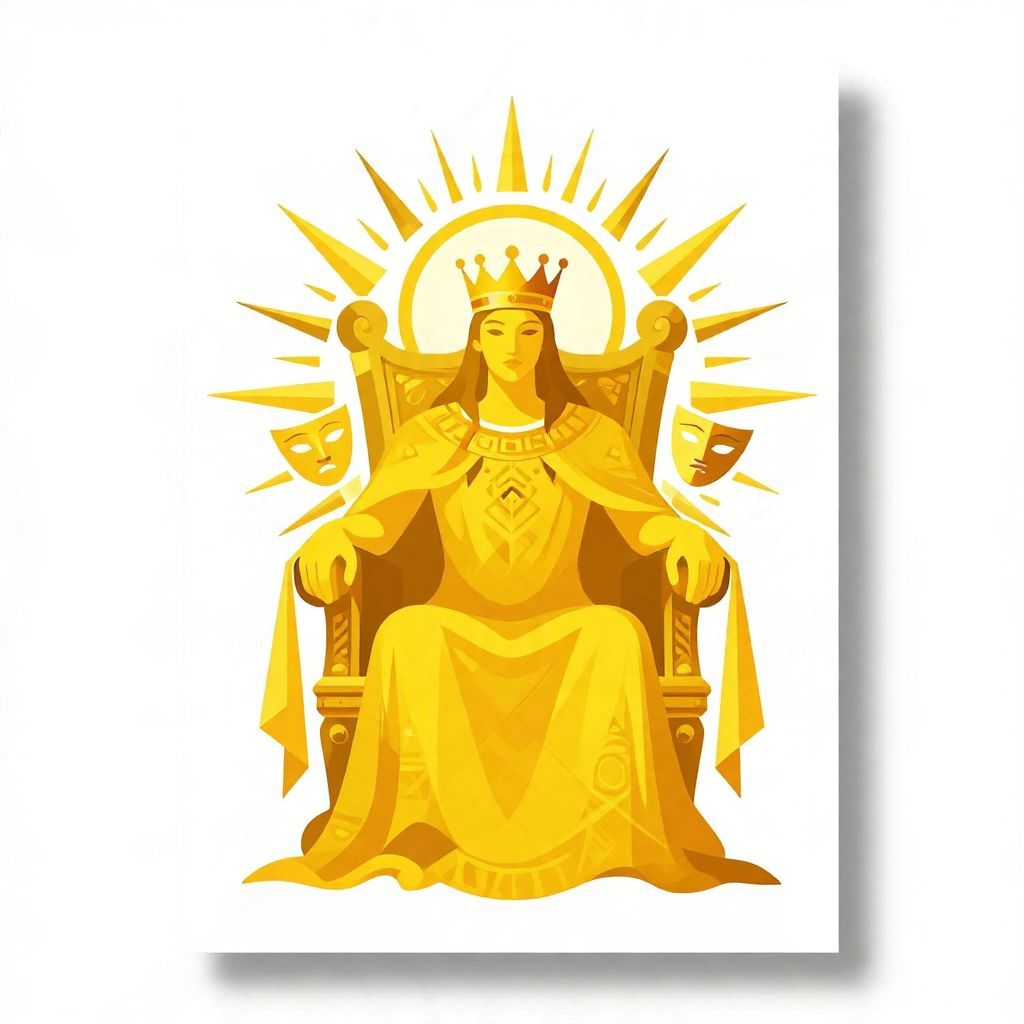
If you’ve come across The King in Yellow and wondered what it actually is, you’re not alone. The phrase can refer to Robert W. Chambers’s 1895 short-story collection, and within that collection it also names a mysterious play that seems to corrupt anyone who reads it.
That double meaning is part of the book’s enduring power. The King in Yellow is both a real literary work and a fictional object inside the stories, blending decadent fiction, horror, symbolism, and psychological unease in a way that helped shape later weird fiction.
What is The King in Yellow?
The King in Yellow is a 1895 collection of linked and unlinked short stories by Robert W. Chambers, famous for its eerie fictional play of the same name. The first half of the book leans toward supernatural and atmospheric horror, while the later stories shift more toward romance and literary realism, though the book’s strange mood remains distinctive throughout.
Who wrote The King in Yellow?
Robert W. Chambers was an American writer and illustrator born in 1865. He studied art in Paris and later became a popular fiction writer, but The King in Yellow became his most influential book because of its unsettling imagery and memorable invented mythology.
Chambers is often remembered less for a single unified novel than for creating a literary atmosphere. His work helped bridge late-19th-century decadence, symbolist suggestion, and the emerging tradition of supernatural horror.
What is the fictional play in the book?
Within Chambers’s collection, The King in Yellow is the title of a forbidden play that drives readers toward madness or despair. The stories never fully present the play, but they repeatedly suggest that it contains dangerous truths, strange symbols, and an overpowering sense of doom.
This withheld text is one of the book’s most effective devices. By refusing to show the play directly, Chambers turns absence into suspense and lets readers imagine something even more disturbing than any explicit description.
Why does the play matter so much?
The fictional play functions as a symbol of forbidden knowledge. It also creates a recurring pattern in the stories: characters encounter a fragment, a reference, or a trace of the play, and that contact seems to destabilize their minds or lives.
In literary terms, the play works as a motif, a MacGuffin-like object of obsession, and a symbol of the danger hidden in art, memory, and interpretation.
What kind of book is it?
The King in Yellow is usually classified as weird fiction, supernatural horror, or fin-de-siècle literary horror. It is not a conventional novel with one continuous plot. Instead, it is a collection of stories connected by recurring names, images, and the shadow of the fictional play.
Readers often notice two different tones in the book. The early stories are more overtly uncanny, while the later ones are gentler and more romantic, showing Chambers’s range rather than a single fixed style.
What are the main themes?
Several themes make the book memorable and explain why it still matters to readers of horror and literary fiction.
- Madness and instability: Characters often seem to lose their grip on reality after encountering a strange text or symbol.
- Forbidden knowledge: The play suggests that some truths are dangerous to read, see, or understand.
- Decay and ruin: Chambers frequently uses crumbling settings, faded beauty, and emotional exhaustion.
- Art and influence: The book asks what stories do to the people who absorb them.
- Ambiguity: The most frightening elements are often implied rather than fully explained.
The Yellow sign
One of the most famous symbols associated with the book is the Yellow Sign, a mysterious emblem tied to the fictional play and its aura of dread. Like the play itself, the sign is more suggestive than concrete, which makes it ideal for later adaptations and reinterpretations.
The symbol has become a lasting part of horror culture because it feels both specific and unknowable: a mark that implies meaning without ever fully revealing it.
What are some important stories in the collection?
The collection includes several stories that are frequently discussed because they establish the book’s atmosphere and mythology. Not every story is directly tied to the fictional play, but many readers focus on the opening section because it contains the strongest horror material.
- “The Repairer of Reputations” — one of the most famous stories, centered on paranoia, delusion, and the influence of the strange play.
- “The Mask” — a dreamlike tale involving art, transformation, and a mysterious alchemical device.
- “In the Court of the Dragon” — a tense, nightmarish story of pursuit and spiritual dread.
- “The Yellow Sign” — perhaps the clearest link to the fictional play and its ominous symbol.
These stories are often read as a loose cycle of psychological horror rather than as chapters in a single plot. Their power comes from repetition, suggestion, and a sense that something hidden is pressing in from the edges.
How should readers interpret the book?
There is no single official interpretation of The King in Yellow. Some readers treat the fictional play as a supernatural force, while others see it as a metaphor for artistic obsession, social decay, or mental breakdown.
That openness is part of the book’s appeal. Chambers gives just enough detail to create a mythology, but not enough to close down interpretation, which is one reason the work has remained fertile ground for critics and later writers.
Psychological or supernatural?
The book often invites both readings at once. Events can feel like genuine supernatural intrusion, but they can also be read as symptoms of obsession, trauma, or unreliable perception.
This ambiguity is a hallmark of classic weird fiction: the story becomes more unsettling because the reader cannot easily decide whether the horror is external, internal, or both.
Why is The King in Yellow important in literary history?
The book is important because it helped define a mode of horror that depends on atmosphere, implication, and symbolic menace rather than gore or direct explanation. It influenced later writers of speculative and cosmic horror, including authors who favored ancient, unreadable, or reality-bending forces.
Its legacy also lies in the fictional object at its center. The idea of a cursed text that alters the reader has become a recurring literary device, and Chambers’s version is one of the most famous examples.
What should a new reader expect?
If you are approaching The King in Yellow for the first time, it helps to expect a collection rather than a modern novel. The prose reflects its 19th-century origins, and the book’s mood matters more than fast plotting.
- Expect unevenness: some stories are much stronger or stranger than others.
- Expect suggestion over explanation: the book often withholds what it most wants you to fear.
- Expect literary atmosphere: the language is part of the experience.
- Expect historical distance: some stories feel more dated than modern horror fiction.
For readers interested in horror history, symbolism, or the roots of weird fiction, that unevenness is not a flaw so much as a record of the book’s era and ambitions.
How does it compare with later horror?
Compared with modern horror, Chambers’s book is quieter and more elliptical. It rarely relies on explicit violence or detailed monster-description. Instead, it builds dread through fragments, atmosphere, and the suggestion that language itself can be dangerous.
That makes it a useful point of comparison with later writers who emphasize cosmic dread, unreliable narration, or the terror of hidden knowledge. It is less about spectacle than about contamination: the fear that a story, image, or idea can change the person who encounters it.
Why do readers still talk about it?
The King in Yellow still attracts attention because it is both a book and a myth. Readers are drawn to the mystery of the missing play, the eerie symbol of the Yellow Sign, and the sense that the collection contains something larger than the stories themselves.
It is also a reminder that horror can work through restraint. Chambers does not need to show everything; he only needs to suggest that something terrible has been seen, read, or remembered.
Quick definition
In literary terms, “The King in Yellow” usually means Robert W. Chambers’s 1895 short-story collection and the fictional cursed play inside it. The title refers both to the real book and to the imagined text that haunts its stories, making it one of the most influential ideas in early weird fiction.
If you want to keep exploring literary horror and related classics, you may also enjoy what The Yellow Wallpaper is about and how The King of Elfhame Learned to Hate Stories uses fairy-tale tradition.