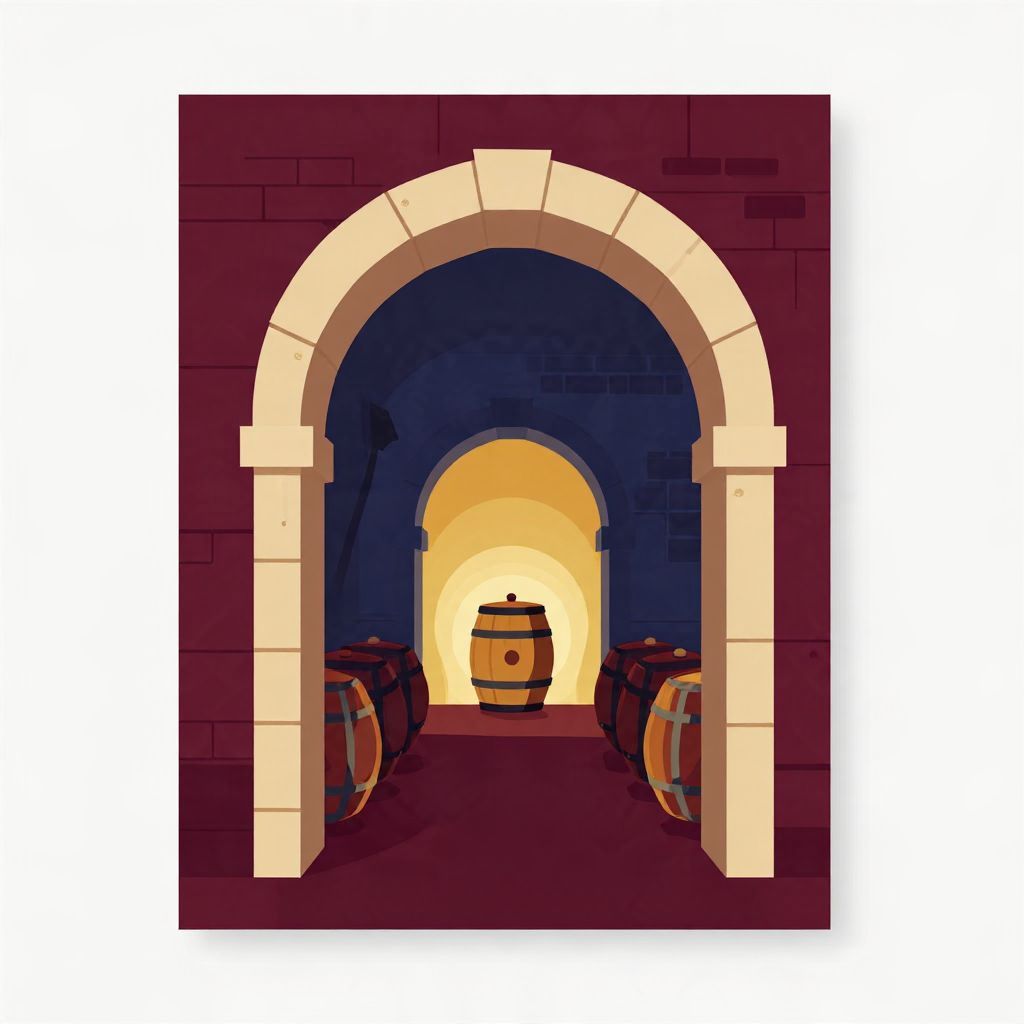
If you’re asking what is the theme of “The Cask of Amontillado”, the short answer is that Edgar Allan Poe’s story is a chilling study of revenge, pride, deception, and the dangerous desire to punish perceived insults. Beneath the Gothic setting, the tale explores how wounded ego can become obsession and how revenge can be carried out with cold, calculated control.
The story is also unsettling because Poe never offers moral comfort. Instead, he traps the reader inside Montresor’s perspective, forcing us to watch a revenge plot unfold while questioning the reliability of the narrator and the true nature of the offense that supposedly justifies it.
What is the theme of The Cask of Amontillado?
The central theme of The Cask of Amontillado is the destructive power of revenge, especially when it is fueled by pride and a sense of injury. Poe shows how a person can turn a slight, real or imagined, into a lifelong grievance and then pursue vengeance with disturbing patience, secrecy, and self-justification.
How revenge drives the story
Montresor’s stated goal is revenge, and everything in the story serves that purpose. He does not act in anger alone; instead, he plans carefully, lures Fortunato into the catacombs, and engineers a punishment that is both personal and symbolic.
Revenge as obsession
What makes the theme especially powerful is that revenge is not presented as a momentary impulse. Montresor has thought about the injury deeply, and his determination suggests that vengeance has become part of his identity.
Poe leaves the exact nature of the insult vague, which makes the theme broader. The story is not only about one grudge; it is about how private resentment can grow into a consuming force.
Revenge without justice
The tale also questions whether revenge can ever be morally justified. Montresor believes he has a right to punish Fortunato, but the story gives the reader no reason to accept his logic as fair or honorable.
That gap between Montresor’s self-image and the horror of his actions is central to the story’s meaning. Poe invites readers to see how revenge can mimic justice while actually becoming cruelty.
Pride and humiliation in the story
Another major theme is pride, especially the kind that makes people vulnerable to manipulation. Fortunato’s vanity about his wine expertise helps Montresor draw him deeper into danger.
Fortunato’s weakness
Fortunato is easily baited by the promise of rare Amontillado and by the suggestion that another expert, Luchesi, might replace him. His desire to prove himself matters more to him than caution.
Poe uses this to show that pride can be a fatal flaw. Fortunato’s confidence, which seems harmless at first, becomes the very trait that leads him to his death.
Montresor’s wounded ego
Montresor is also driven by pride, though in a different way. He cannot bear the insult he believes he has suffered, and his revenge becomes a way to restore his sense of superiority.
In that sense, the story is about two forms of pride colliding: Fortunato’s public vanity and Montresor’s private arrogance. Poe makes both men morally compromised, though only one becomes the executioner.
Deception and irony as literary themes
Deception is one of the story’s most important themes and techniques. Montresor hides his intentions behind polite language, false concern, and a carefully staged invitation that appears friendly.
Verbal irony
The story is full of irony, especially when Montresor speaks in a courteous tone while leading Fortunato toward death. The contrast between what he says and what he means creates a deep sense of dread.
That irony is not decorative; it is part of the theme. Poe shows how social manners can conceal violence, and how a polished exterior may hide a murderous interior.
Situational irony
Fortunato believes he is being honored and consulted as an expert, but he is actually being manipulated. The situation becomes more ironic because the victim walks willingly into the trap, unaware that each step brings him closer to entombment.
This makes the ending especially horrifying. The reader understands the danger long before Fortunato does, which intensifies the story’s tragic irony.
The theme of unreliable narration
Because Montresor tells the story himself, readers must interpret it cautiously. His narration is controlled, selective, and emotionally revealing, which makes unreliable narration a major part of the story’s meaning.
What Montresor reveals
Montresor never fully explains the insult, and that omission matters. It suggests either that the offense is too small to justify revenge or that Montresor is unwilling to admit its true nature.
His calm tone can make the murder seem even more disturbing, because he describes a brutal act without remorse. The gap between his polished storytelling and the horror of his actions exposes his moral emptiness.
Why the unreliability matters
The story’s theme is not only revenge but also the way people narrate revenge to themselves. Montresor frames his crime as necessary and deserved, showing how self-deception can support violence.
Readers are left to judge the truth for themselves, which is part of Poe’s power. The story becomes a psychological puzzle as much as a Gothic horror tale.
Symbols that support the theme
Poe reinforces the theme through memorable symbols. These details are not random decorations; they deepen the story’s ideas about revenge, decay, and entrapment.
The catacombs
The underground catacombs symbolize death, secrecy, and burial. They are the perfect setting for a revenge plot because they isolate Fortunato from the world and place him inside a literal tomb.
The setting also mirrors Montresor’s hidden motives. Everything is buried: the insult, the plan, and ultimately the victim.
The nitre and dampness
The damp, unhealthy atmosphere of the catacombs contributes to the story’s Gothic mood, but it also suggests decay and moral corruption. The environment feels physically and spiritually rotten.
Fortunato’s cough and discomfort contrast with Montresor’s control, emphasizing the imbalance of power between them.
The family crest and motto
Montresor’s family motto, often interpreted as “No one attacks me with impunity,” is a symbolic clue to his worldview. It reveals a code centered on retaliation rather than forgiveness.
This motto helps explain the story’s theme: Montresor sees revenge not as a choice, but as a family principle and a personal duty.
What literary techniques help express the theme?
Poe uses several techniques to make the theme of revenge unforgettable. The story’s structure, tone, and imagery all work together to create suspense and moral unease.
- First-person narration places readers inside Montresor’s mind.
- Foreshadowing appears in the opening claim that revenge must be certain and unpunished.
- Irony deepens the gap between appearance and reality.
- Gothic imagery creates a dark, claustrophobic atmosphere.
- Symbolism turns the catacombs, wine, and masonry into extensions of the theme.
These techniques make the story more than a simple revenge tale. They turn it into a psychological and moral study of how violence can be rationalized.
Common interpretations of the theme
Readers and critics often read the story in a few different but compatible ways. Each interpretation highlights a different aspect of the same dark core.
Revenge destroys both victim and avenger
One interpretation is that revenge ultimately dehumanizes the person who seeks it. Montresor may succeed in punishing Fortunato, but he also reveals his own moral collapse.
Even without overt punishment in the story, the act itself suggests corruption. The revenge is complete only in a physical sense, not a spiritual one.
Pride leads to downfall
Another common reading is that both men are undone by pride. Fortunato’s vanity makes him easy to deceive, while Montresor’s wounded pride makes him merciless.
This double downfall gives the story its tragic force. Poe shows that arrogance can be fatal whether it appears as boastfulness or as grievance.
The story as a study of psychological cruelty
The tale can also be read as an exploration of sadism and emotional control. Montresor does not simply kill Fortunato; he stages the death to maximize helplessness and fear.
That cruelty makes the story psychologically disturbing. The theme is not only revenge, but the pleasure some people take in power over another person’s suffering.
Why the theme still matters
The Cask of Amontillado remains widely read because its themes are timeless. People still recognize the danger of resentment, the temptation to justify cruelty, and the way pride can blind judgment.
Poe’s story is brief, but its emotional and moral force is lasting. It reminds readers that revenge may feel satisfying in imagination, yet in practice it often reveals the worst parts of human nature.
Quick takeaway
The theme of The Cask of Amontillado is the ruinous power of revenge, sharpened by pride, deception, irony, and psychological manipulation. Poe’s story suggests that when wounded ego becomes obsession, justice is replaced by cruelty and both men, in different ways, are lost.
If you’re interested in more literary theme analyses, you may also like what is the theme of “The Lottery” and what is the theme of “Verity”.