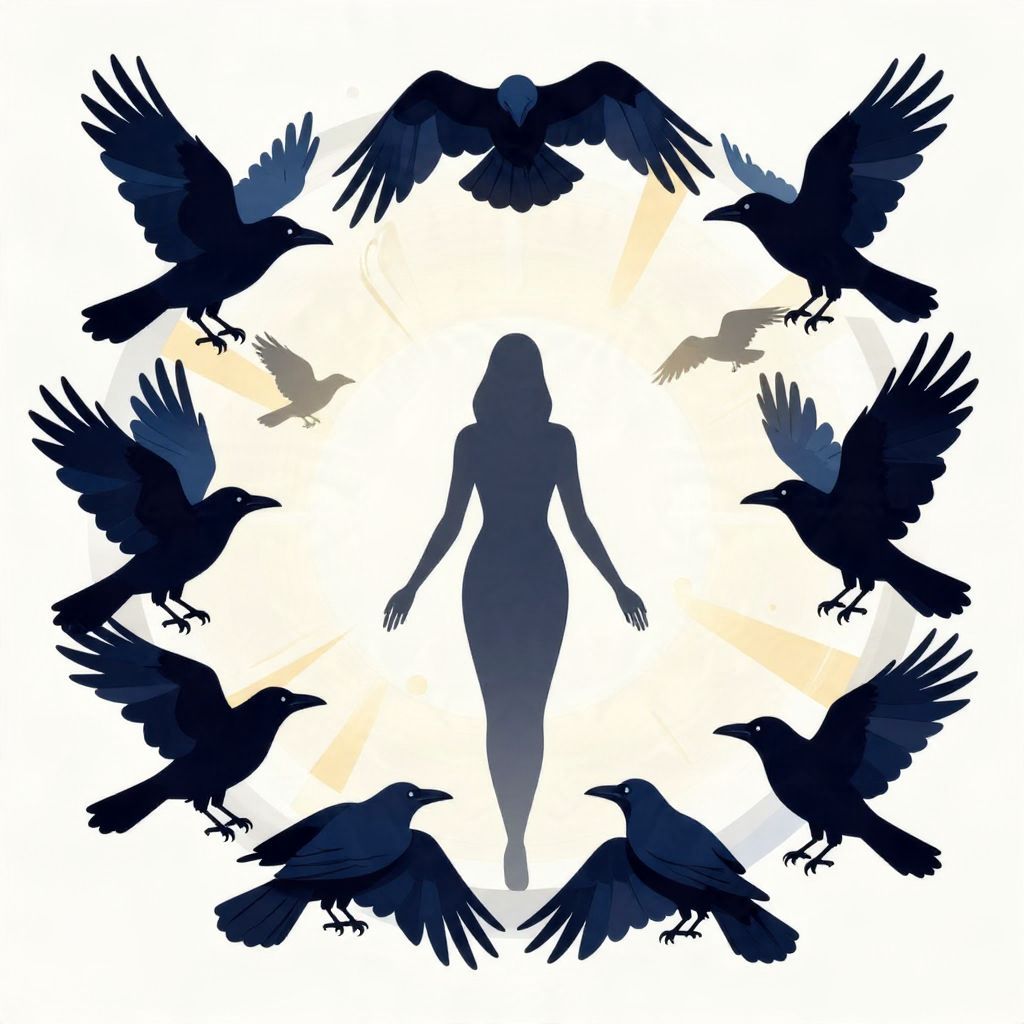
If you’re searching for When Among Crows, you may be looking for a book explanation, a quick plot guide, or a clearer sense of what the work is really about. Because the title can be easy to confuse with similar literary phrases, it helps to approach it carefully and focus on the specific text you mean.
This article gives a reader-friendly overview of When Among Crows, with attention to its literary context, major ideas, and the kinds of questions readers often ask about it. Where information is uncertain or not widely established, it stays cautious rather than guessing.
What is When Among Crows?
When Among Crows is best understood as a title that invites symbolic reading: crows often suggest memory, omen, intelligence, grief, or survival, depending on the work itself. If you are looking for a specific book with this title, the most useful first step is to identify the author or edition, since titles with this kind of phrasing can be easy to misidentify.
Why does the title matter?
The phrase “when among crows” immediately creates an atmosphere of tension and observation. In literary terms, it signals a setting or emotional state shaped by symbolism, ambiguity, and possibly a sense of being outnumbered, watched, or changed by one’s surroundings.
The symbolic weight of crows
Crows are among literature’s most flexible symbols. They can stand for intelligence, collective behavior, death, trickery, prophecy, or resilience, so a title built around them often prepares readers for layered meaning rather than a simple literal scene.
What the phrase suggests to readers
- Isolation or vulnerability in an unfamiliar environment
- Observation, as if the speaker or character is being watched
- Transformation, especially if the crows function as a metaphor
- Unease or mystery, since the phrase feels suggestive rather than direct
What kind of story or text does this title usually imply?
Without relying on unsupported specifics, a title like When Among Crows often points toward a work that is atmospheric, reflective, or psychologically charged. It may lean toward literary fiction, folklore-inflected storytelling, or a symbolic narrative where setting and image carry as much weight as plot.
Common literary possibilities
Readers encountering a title like this might expect one or more of the following:
- a character in conflict with a harsh social world
- a story shaped by memory, loss, or moral uncertainty
- a nature image used as a recurring motif
- a narrative that leaves room for interpretation
How should readers interpret the title?
A strong literary title rarely just names an object; it frames the reading experience. In this case, “when among crows” can be read as a condition rather than a place, suggesting what it feels like to move through a world where instinct, caution, and adaptation matter.
Possible interpretive angles
Depending on the text, the title may emphasize one or more of these ideas:
- Belonging and estrangement — being in a group without fully fitting in
- Survival — learning how to navigate a difficult environment
- Witness and memory — crows as keepers of what others overlook
- Moral complexity — no easy division between innocence and danger
What themes are commonly associated with crow imagery?
Even when a specific work is not fully established, crow imagery in literature tends to cluster around a few recurring themes. These themes are useful for readers trying to make sense of the title’s emotional and symbolic force.
1. Death and mourning
Crows are frequently linked to endings, burial grounds, or the presence of loss. That does not mean a story is necessarily grim; rather, it may be concerned with what follows grief and how people endure it.
2. Intelligence and adaptation
Crows are famously clever birds, and literature often uses them to represent quick thinking, social awareness, or the ability to survive under pressure. A title centered on crows may therefore point to mental agility as much as darkness.
3. Community and collective behavior
Crows are often seen in groups, which can make them a symbol of social force, crowd dynamics, or the pressure of belonging. This can be especially meaningful in stories about outsiders or divided communities.
4. The uncanny in ordinary life
Because crows are common but still striking, they are ideal for stories that locate mystery inside everyday settings. That balance between familiar and unsettling is one reason they appear so often in literary symbolism.
How do literary techniques shape a work like this?
If When Among Crows is a literary or symbolic text, its meaning likely depends on technique as much as on event. Readers should pay attention to imagery, tone, and repetition, since these are often the main tools used to build significance.
Imagery
Crow imagery can appear visually, acoustically, or emotionally. A writer may describe flight, feathers, calls, shadows, or gathering patterns to create atmosphere and reinforce the title’s central idea.
Tone
The title suggests a tone that may be reflective, ominous, elegiac, or quietly defiant. Tone matters because it tells readers whether the crows are being framed as threat, symbol, companion, or witness.
Motif
If crows recur throughout the text, they may function as a motif—a repeated element that accumulates meaning. A motif can shift over time, so the same image may feel different at the beginning and end of the work.
Ambiguity
Ambiguity is often a feature, not a flaw, in works with this kind of title. The reader may be invited to decide whether the crows are literal, symbolic, psychological, or all three at once.
Who might enjoy a book or story with this title?
Readers who like symbolic fiction, atmospheric writing, or stories that reward close reading are likely to appreciate a work titled When Among Crows. It may also appeal to those drawn to folklore, nature symbolism, or narratives with a slightly eerie edge.
Good fit for readers who enjoy
- literary fiction with layered meaning
- nature symbolism and animal imagery
- quietly suspenseful or reflective prose
- stories about grief, identity, or survival
How to read it closely
If you are studying or discussing When Among Crows, focus on how the title’s image is used inside the text. The most useful questions are often the simplest ones: What do the crows represent? When do they appear? Does their meaning change?
Questions to ask while reading
- Is the crow image literal, symbolic, or both?
- Does the tone around the crows feel threatening or protective?
- What emotions are tied to the image: fear, grief, clarity, memory?
- Does the title describe the setting, the speaker, or the inner life of a character?
How does it compare to other crow-centered literature?
Many literary works use birds, especially crows and ravens, to create atmosphere or deepen theme. What makes a title like When Among Crows distinctive is its sense of condition or circumstance: it suggests not just a symbol, but what it is like to exist within that symbolic world.
What sets it apart
Compared with titles that simply name a bird, this phrasing feels more experiential. It implies movement, contact, and immersion, which often makes the work feel more immediate and more psychologically charged.
Final takeaway
When Among Crows is a title that invites close reading because it carries symbolic weight from the start. Whether you are approaching it as a literary text, a reading assignment, or a book you have just encountered, the most important thing is to track how the crow imagery shapes theme, tone, and interpretation.
If you’d like to explore more literary reading guides and related title analyses, you may also enjoy When I Heard the Learn’d Astronomer and When Haru Was Here.