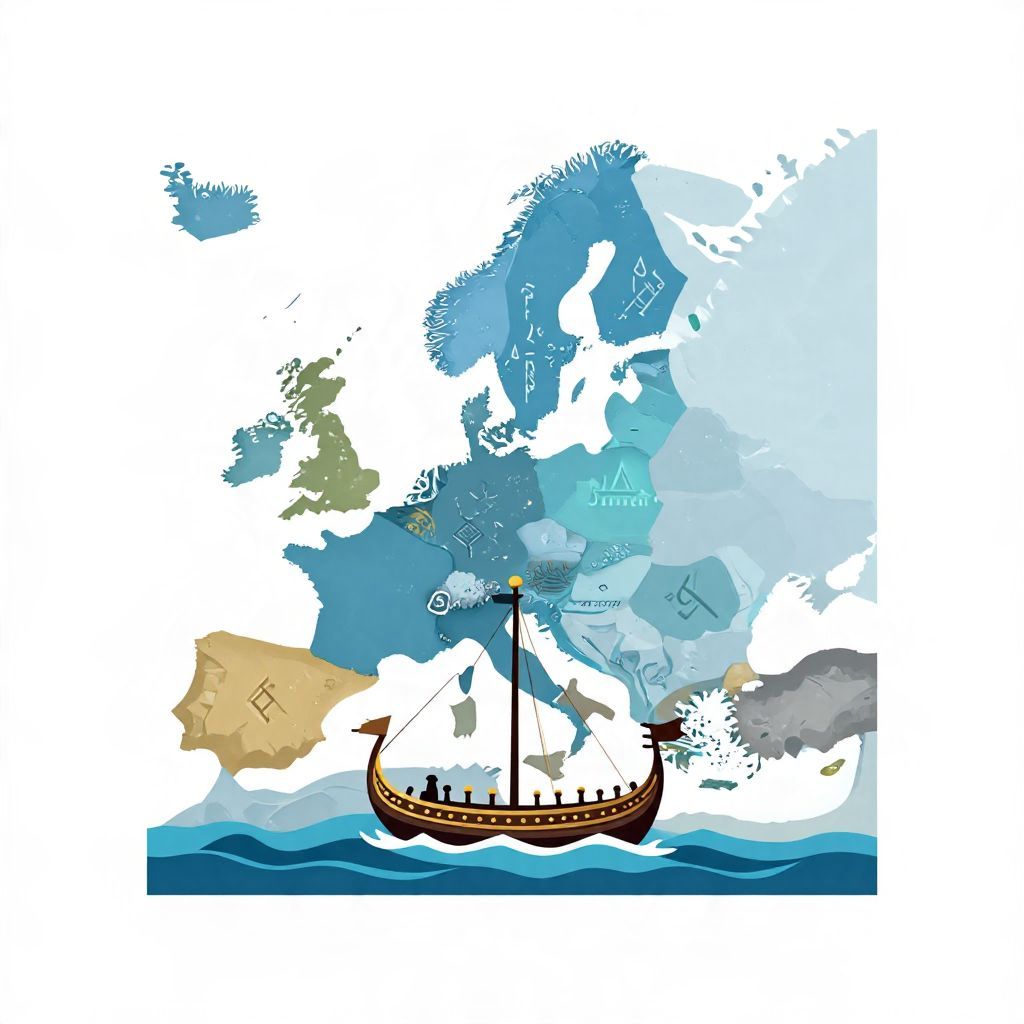
If you’ve ever wondered where Beowulf is from, the answer depends on whether you mean the hero, the story, or the poem itself. Beowulf is a legendary warrior from the Geatish people, while the poem Beowulf survives as an Old English work from early medieval England.
That split is part of what makes the poem so fascinating: it tells a Scandinavian heroic tale, but it was written down in a language and literary culture rooted in Anglo-Saxon England. Understanding that background helps explain the poem’s setting, style, and lasting importance.
Where is Beowulf from?
Beowulf is from Geatland, the homeland of the Geats, a people usually associated with southern Sweden in the early medieval world. In the poem, he is presented as a Geatish hero who travels to Denmark to help King Hrothgar, which places his origins in a Scandinavian heroic landscape rather than in England.
What is Beowulf, exactly?
Beowulf is the name of both the poem and its central hero. The poem is the best-known surviving work of Old English literature, and it tells how Beowulf fights monsters and later rules as king among the Geats.
The hero and the poem are not the same thing
When people ask “Where is Beowulf from?” they may mean one of two things: the character’s homeland or the literary work’s cultural origin. The hero comes from Geatland; the poem comes from the Anglo-Saxon literary tradition of England.
Beowulf’s homeland in the story
The poem places Beowulf among the Geats, a tribal group known from early medieval sources. His journey begins when he sails across the sea to Denmark, where the Danes are suffering under the attacks of Grendel.
Geats, Danes, and the heroic world
- Beowulf is a Geat.
- Hrothgar is a Danish king.
- Wiglaf is one of Beowulf’s loyal retainers in the later part of the poem.
This world is built on alliances, gift-giving, loyalty, and reputation. A hero’s homeland matters because identity in the poem is tied to kinship, lineage, and service to a lord.
Where the poem itself comes from
Beowulf was composed in Old English, the language of Anglo-Saxon England, and survives in a single manuscript. Scholars generally place the poem’s written form in England, even though its story is set in Scandinavia and draws on older Germanic heroic traditions.
Oral tradition and written manuscript
The poem likely reflects a long oral tradition before it was written down. That means its roots may be older and broader than the surviving manuscript, but the text we read today is an English literary artifact.
Why is a Scandinavian story in an English poem?
Early English writers often preserved stories about the Germanic past of the peoples who settled in Britain. Beowulf is one of the clearest examples of this cultural memory: it looks back to a heroic age across the North Sea.
Anglo-Saxon identity and ancestral memory
The poem’s setting in Denmark and Geatland does not make it “foreign” to English literature. Instead, it shows how Anglo-Saxon writers imagined their own past through stories of heroic ancestors, pagan kings, and social duty.
Historical background: what we can and cannot know
There is no single historical Beowulf we can confidently identify. The poem blends legend, memory, and literary invention, so the hero should be understood as a legendary figure rather than a securely documented person.
Geatland and real geography
Geatland is usually linked with parts of modern-day southern Sweden, but the poem is not a map in the modern sense. Its geography is literary as well as historical, shaped to support the hero’s journey and the poem’s themes.
Key themes tied to Beowulf’s origin
Beowulf’s Geatish identity matters because it connects to the poem’s major concerns: fame, loyalty, mortality, and the fragility of human communities. His travels show how heroic honor depends on crossing borders and proving oneself among strangers.
1. Heroism and reputation
Beowulf’s name is bound to deeds. In the poem’s world, a warrior’s worth is measured by public action, not private feeling.
2. Loyalty and kinship
As a Geat, Beowulf belongs to a social network of lordship and obligation. His role as warrior and later king reflects the importance of protecting one’s people.
3. The passage of time
The poem moves from youthful adventure to old age and final sacrifice. Beowulf’s homeland becomes especially important at the end, when he defends the Geats against a dragon and faces the limits of human strength.
Beowulf’s journey in the poem
Although the question “Where is Beowulf from?” is usually about origin, his movement through the poem is just as important. He leaves Geatland, travels to Denmark, returns home, and later rules his own people.
A simple reading of his path
- Beowulf sails from Geatland to Denmark.
- He defeats Grendel and then Grendel’s mother.
- He returns to the Geats and eventually becomes king.
- In old age, he fights a dragon to protect his people.
This structure makes his homeland central to the poem’s emotional arc. Beowulf is not just a wandering fighter; he is a foreign helper, a returning leader, and finally a king defending his own land.
Literary features that shape the answer
Beowulf is full of formal techniques that make its setting feel ancient and elevated. These include alliteration, formulaic phrasing, compound expressions, and elevated heroic diction.
Old English style
The poem’s language is compact and rhythmic, built for oral performance or oral-style recitation. Its style reinforces the sense that Beowulf comes from a heroic world older than the manuscript that preserves him.
Symbolic geography
Water, halls, mead-benches, burial mounds, and wilderness all carry meaning. Beowulf’s movement between lands is not just travel; it marks the boundary between civilization and danger, community and isolation.
Common misconceptions about Beowulf’s origin
Because the poem is often taught in English classes, readers sometimes assume Beowulf is an English hero. In fact, he is not English in the story, even though the poem is an English-language masterpiece.
What to keep straight
- Character origin: Beowulf is from Geatland.
- Literary origin: the poem is from Anglo-Saxon England.
- Story setting: mostly Denmark and Geatland, with a Scandinavian heroic atmosphere.
Keeping those distinctions clear makes the poem easier to understand and more interesting to read.
Why this matters for readers
Knowing where Beowulf is from helps you read the poem more accurately. It clarifies why the hero crosses the sea, why kinship matters so much, and why the poem feels both Scandinavian and English at once.
In the end, Beowulf is from Geatland, but the poem Beowulf belongs to the literary world of Anglo-Saxon England. That double identity is part of its power: a northern hero preserved in an English poem, standing at the meeting point of legend, history, and literature.