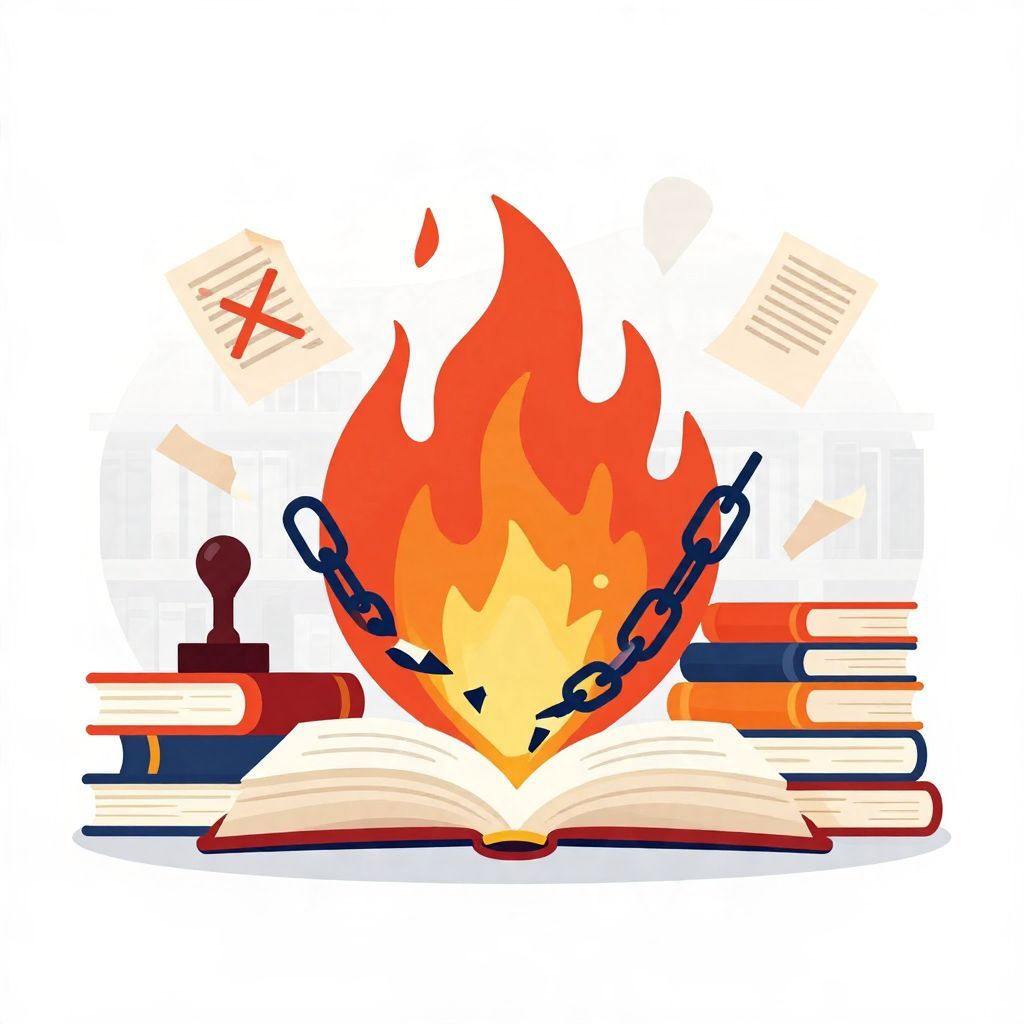
If you’ve wondered why Fahrenheit 451 was banned, the short answer is that Ray Bradbury’s novel has often been challenged for its language, references to suicide, and criticism of censorship and anti-intellectualism. Ironically, a book about book burning has itself been restricted in some schools and libraries.
That tension is part of what makes the novel so enduring: it asks readers to think about free expression, fear, and the power of ideas. The reasons behind its bans are tied not just to one scene or word, but to the broader themes Bradbury explores.
Why was Fahrenheit 451 banned?
Fahrenheit 451 has been banned or challenged mainly because of profanity, references to suicide, politically sensitive ideas, and its treatment of censorship and authority. In some places, parents or school officials have objected to the novel’s language and disturbing content, while others have viewed its anti-censorship message as controversial in classrooms.
What the book is about
Published in 1953, Fahrenheit 451 is a dystopian novel set in a future society where books are outlawed and “firemen” burn them. The story follows Guy Montag, a fireman who begins to question the system after encountering people who value reading and independent thought.
The novel is not only about literal book burning. It is also about a culture that prefers distraction over reflection, speed over depth, and conformity over curiosity.
Why schools and libraries have challenged it
1. Language and profanity
One of the most common objections to Fahrenheit 451 is its use of strong language. In school settings, even a relatively small number of offensive words can lead to complaints, especially in younger grade levels.
2. Suicide and mental distress
The novel includes a disturbing scene involving a suicide attempt and medical intervention. Some readers and educators have found this content upsetting or too mature for certain students, particularly when the book is assigned without enough discussion or context.
3. Violence and disturbing imagery
Bradbury describes state violence, emotional numbness, and the destruction of books and homes. Although the novel is not graphic in a modern action-thriller sense, its imagery can feel intense and bleak, which has contributed to challenges.
4. Political and social controversy
Because the novel criticizes censorship, shallow mass culture, and passive obedience, it can become controversial in communities sensitive to political or ideological debate. In some cases, the book has been challenged not because of one scene, but because of what it represents.
Why the irony matters
The irony is central to the book’s legacy: a novel warning about the dangers of censorship has itself been censored. That irony does not make every challenge identical, but it does help explain why Fahrenheit 451 remains a frequent subject in conversations about intellectual freedom.
Bradbury’s premise makes the book especially vulnerable to misunderstanding. Some people object to the content without engaging with the warning the story is trying to deliver.
Historical context and publication background
Bradbury wrote Fahrenheit 451 during the early Cold War era, a period marked by anxiety about conformity, propaganda, and ideological pressure. That context helps explain why the novel feels so alert to social control and the suppression of dissent.
The book’s title refers to the temperature at which paper is said to ignite, which reinforces its symbolic focus on destruction and knowledge. While the exact science is often discussed in popular culture, the title’s real purpose is literary: it turns censorship into a chilling image.
Main themes that often spark discussion
- Censorship and the suppression of books
- Conformity versus independent thought
- Technology and distraction as substitutes for reflection
- Isolation and emotional emptiness
- Knowledge as a form of resistance
These themes are part of why the novel is still assigned and debated. It is not simply a story about banned books; it is a warning about what happens when a society stops valuing them.
Characters and their role in the ban controversy
Guy Montag
Montag’s transformation drives the novel. He begins as someone who enforces the system and becomes someone who questions it, which makes the book a classic coming-of-age and awakening narrative.
Clarisse McClellan
Clarisse is a perceptive, unconventional young woman who encourages Montag to notice the world differently. Her presence is often read as a symbol of curiosity and human connection.
Captain Beatty
Beatty is one of the novel’s most important voices on censorship. He is articulate, contradictory, and deeply committed to the system he serves, which makes him a powerful embodiment of the book’s conflicts.
Symbols and literary techniques that deepen the message
Fire
Fire is the novel’s central symbol. It represents destruction, but it also carries the possibility of renewal and change, depending on how it is used and understood.
The mechanical hound
The mechanical hound suggests surveillance, control, and the replacement of instinct with programmed force. It helps create the novel’s oppressive atmosphere.
Fast-paced, compressed prose
Bradbury’s style is vivid and urgent. He uses short bursts of imagery, metaphor, and sensory detail to make the world feel unstable and immediate, which supports the novel’s emotional impact.
Is Fahrenheit 451 still banned today?
Yes, in some places it continues to be challenged or removed from reading lists, though the reasons vary by district, school policy, and community standards. In other places, it remains a staple of secondary education and a common choice for discussing censorship and media literacy.
That mixed history is typical of challenged classics. A book may be taught widely while still facing local objections, especially when it deals with sensitive topics.
Should students read it?
For many readers, yes. Fahrenheit 451 is accessible, thought-provoking, and especially useful for discussions about freedom of expression, media, and the role of literature in society. Teachers and parents may want to provide context for its mature material, but the novel’s ideas are often exactly what make it valuable.
If you are reading it for school, it helps to approach it as both a story and an argument: Bradbury is not only telling a dystopian tale, but also making a case for why books matter.
Bottom line
Fahrenheit 451 was banned or challenged because some readers objected to its language, mature content, and controversial themes, especially its criticism of censorship. The irony is that these objections echo the very warning Bradbury built into the novel: when society fears difficult ideas, it risks losing the freedom to think.
For more on challenged classics, you may also want to read why Fahrenheit 451 is banned and why The Catcher in the Rye is banned.