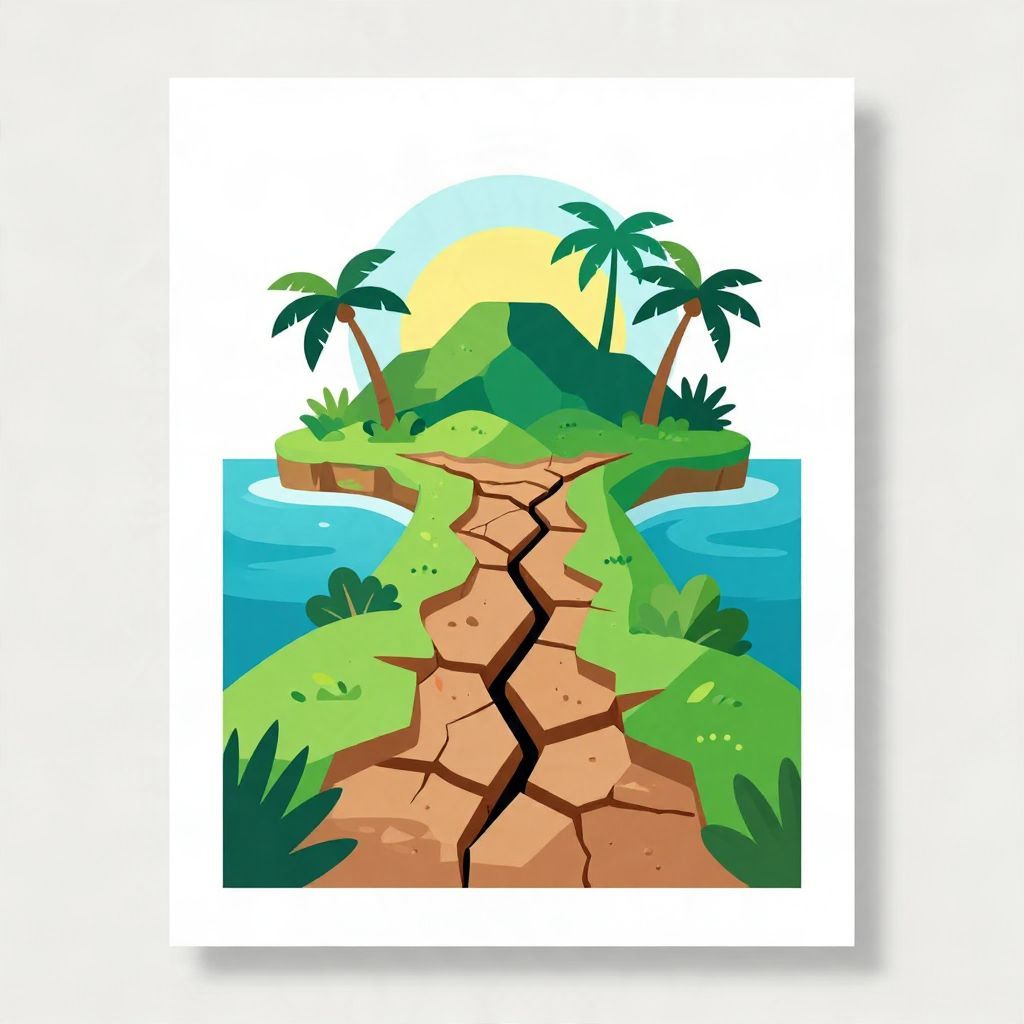
If you’re asking what the scar is in Lord of the Flies, you’re looking at one of the novel’s most important symbols. The scar is the wound left on the island when the boys’ plane crashes, and it quickly becomes a sign of human disruption, fear, and the damage civilization can do to nature.
It also matters because Golding uses it from the very beginning to suggest that the boys do not arrive on a blank paradise. They arrive on a place already marked by violence, and that mark becomes a quiet warning about what they themselves may become.
What is the scar in Lord of the Flies?
The scar is the physical damage caused by the plane crash that brings the boys to the island. In a literary sense, it symbolizes the human imprint on nature, the loss of innocence, and the destructive force that follows the boys even before their society fully collapses.
The scar as a symbol in the novel
A wound in the landscape
Golding describes the island’s scar as a visible break in the natural world. The term itself suggests injury, as if the island has been cut or marked. That image makes the setting feel less like a pure paradise and more like a place already touched by human violence.
This matters because the boys’ story is not only about survival. It is also about how quickly order, restraint, and moral behavior can be damaged when social structures disappear.
A warning about civilization
The scar can be read as an early sign that the boys bring civilization’s conflicts with them. Even though they are stranded in nature, they are not free from the habits, fears, and aggression of the world they came from. The island’s wound mirrors the deeper wound in human behavior.
In this sense, the scar is not just scenery. It is part of Golding’s argument that evil or violence is not created by the island; it is revealed there.
A contrast with the island’s beauty
At first, the island seems lush, bright, and inviting. The scar interrupts that beauty. Golding uses the contrast to show how fragile innocence is and how quickly an apparently peaceful setting can be altered by destructive human action.
The image also helps establish the novel’s tension between appearance and reality. The island may look like a paradise, but the scar reminds readers that danger and corruption are already present.
Why the scar matters thematically
Loss of innocence
The boys begin with hopes of play, adventure, and freedom. The scar foreshadows how those hopes will be damaged. As the novel progresses, the boys’ behavior becomes increasingly violent, and the original wound in the island feels like a visual metaphor for the loss of their innocence.
Humanity’s impact on nature
Golding is often attentive to the relationship between people and the natural world. The scar shows that human presence is not neutral. Even before the boys build shelters, make rules, or hunt, they have already altered the island through catastrophe.
Order versus chaos
The scar can also be linked to the novel’s larger conflict between order and disorder. The boys attempt to create rules and a society, but those efforts are always vulnerable. The scar is the first sign that disorder has entered the island and may spread.
How Golding uses the scar as a literary device
Foreshadowing
The scar works as foreshadowing. It hints that the island will not remain untouched and that the boys’ arrival is the beginning of a broader breakdown. Readers may not yet know how severe the conflict will become, but the scar suggests trouble from the start.
Symbolism
As a symbol, the scar carries several meanings at once: physical damage, moral damage, and the intrusion of human violence into nature. Golding often uses simple images this way, allowing one detail to carry a large thematic weight.
Imagery
The word “scar” itself is vivid and memorable. It creates a visual image of something torn open and left marked. That language helps the island feel like a living place rather than just a backdrop.
Examples of the scar’s significance in the story
The crash that creates it
The scar originates with the plane crash, which is the boys’ first encounter with disaster. This event separates them from the adult world and places them in a setting where they must govern themselves, though they prove unequipped to do so well.
The boys’ first impressions
When the boys explore the island, the scar is part of what shapes their understanding of where they are. It reminds readers that this is not a pristine escape but a place entered through trauma. The setting is therefore tied to instability from the beginning.
The island’s changing condition
As the novel continues, the island becomes more damaged through fire, hunting, and neglect. The original scar is echoed by these later harms. What begins as a single wound becomes a larger pattern of destruction.
Common interpretations of the scar
Psychological reading
Some readers see the scar as a projection of the boys’ inner conflict. The island bears the mark of their arrival because they themselves carry fear, aggression, and rivalry. The landscape reflects the breakdown happening inside the group.
Social reading
Others connect the scar to the fragility of social systems. The boys have been removed from the structures that normally regulate behavior, and the scar becomes a sign that once those structures are gone, damage begins quickly. The island is altered, just as their society is.
Moral reading
From a moral perspective, the scar suggests that innocence is never guaranteed. Golding’s novel repeatedly shows that human beings are capable of harm even in childhood. The scar is the first visible trace of that truth.
How the scar compares to other symbols in Lord of the Flies
- The conch represents order, authority, and civilized speech.
- The beast represents fear, imagination, and the boys’ inner darkness.
- The fire represents rescue, hope, and also destruction when uncontrolled.
- The scar represents the initial wound, the intrusion of violence, and the damage already done before the boys even begin to govern themselves.
Unlike the conch or the beast, the scar is not a spoken idea or a rumor. It is a concrete image that grounds the novel’s themes in the physical world. That makes it especially effective as an opening symbol.
Why the scar is important for readers
Understanding the scar helps readers see that Golding’s novel is not simply about stranded boys on an island. It is about how quickly human beings can damage what seems beautiful, and how that damage can reveal deeper truths about fear, power, and violence.
So, if you are wondering what the scar in Lord of the Flies means, the short answer is this: it is the crash mark on the island, but it also stands for the novel’s central warning that human beings leave wounds wherever they go.
For more on Golding’s symbolism, you may also want to read about what the beast means in Lord of the Flies and how Simon dies in Lord of the Flies.