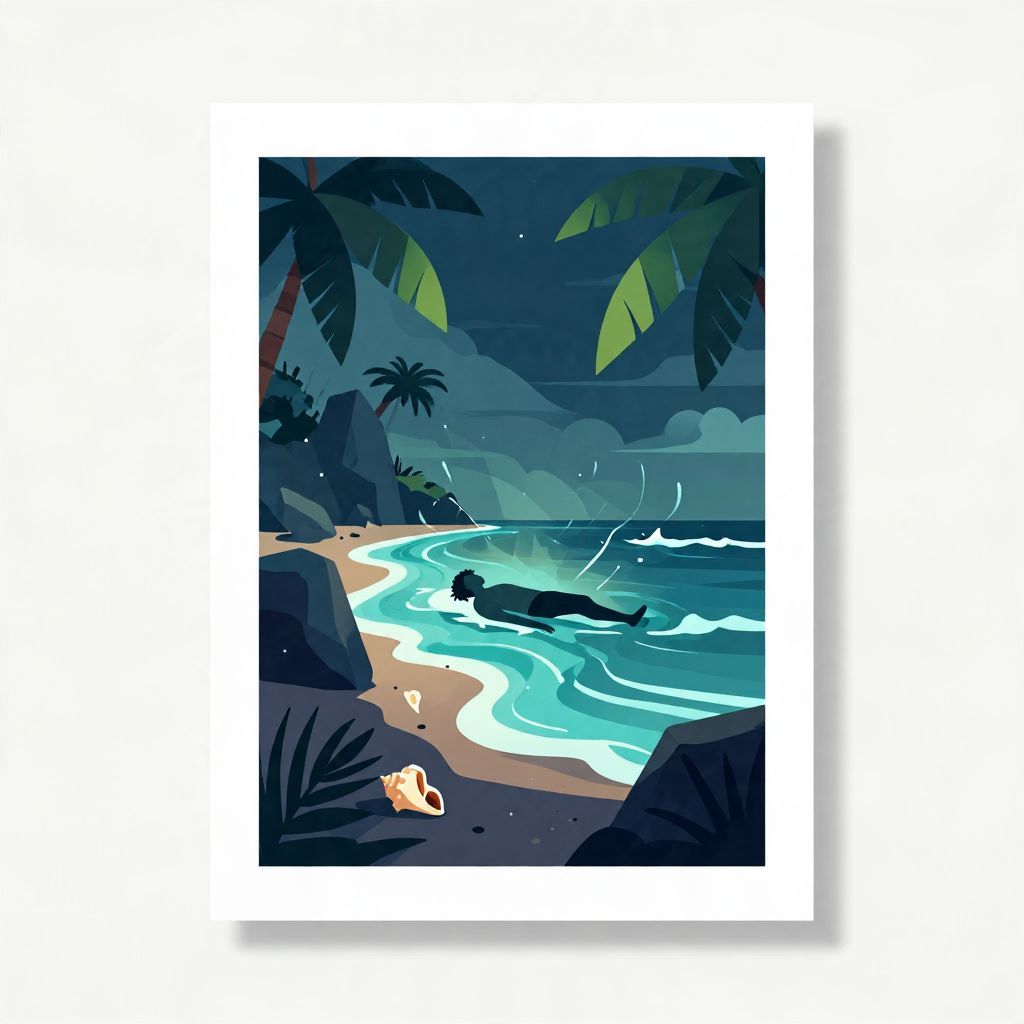
Readers who search How Does Simon Die In Lord Of The Flies are usually looking for a clear explanation of one of the novel’s most shocking scenes. In William Golding’s Lord of the Flies, Simon does not die in a private confrontation or a heroic duel; he is killed by the boys during a frenzied, chaotic ritual on the beach.
The scene is one of the novel’s most important turning points, both for the plot and for its larger ideas about fear, violence, and human nature. Understanding how Simon dies also helps explain why the book has remained so widely studied and discussed.
How does Simon die in Lord of the Flies?
Simon dies when the boys, caught up in a violent dance and mistaken certainty about the “beast,” attack him on the beach during a storm. They beat and stab him in a collective frenzy, and his body is carried out to sea. Golding presents the death as accidental in one sense, but morally devastating because the group has surrendered to savagery.
What happens in the scene before Simon dies?
Simon has spent the novel as one of the few boys who senses the truth behind the fear on the island. After discovering that the feared “beast” is actually the dead parachutist, he tries to bring the news back to the others.
When he reaches the beach, however, the boys are already absorbed in a tribal dance, chanting and moving together in a state of near-trance. The storm, darkness, and excitement make it harder for them to think clearly, and Simon becomes a tragic victim of their panic.
Why the boys attack Simon
- Fear: The boys are convinced the beast is real.
- Group hysteria: The chant and dance erase individual judgment.
- Darkness and confusion: They cannot clearly see who is approaching.
- Loss of restraint: The scene shows how quickly order breaks down.
Why Simon’s death matters in the novel
Simon’s death is not just a tragic event; it is the novel’s clearest demonstration of how civilized behavior can collapse under pressure. He represents insight, compassion, and a kind of moral clarity that the other boys cannot sustain.
Because Simon is the character who understands the beast most deeply, his death also marks the destruction of truth. The boys kill the one person who could have explained that their greatest danger is not an external monster but the violence growing within themselves.
Simon as a symbolic character
Many readers see Simon as a Christ-like figure because he is gentle, self-sacrificing, and killed by a crowd that does not understand him. Golding does not turn him into a simple religious symbol, though; Simon is also a deeply human character whose sensitivity sets him apart from the others.
His death therefore works on both literal and symbolic levels. Literally, he is killed by the boys. Symbolically, the novel suggests that innocence, insight, and moral courage are fragile in a society driven by fear.
Spoiler explanation: what exactly happens during Simon’s death?
During the storm, Simon stumbles into the boys’ ritual and tries to tell them the truth about the beast. But the boys, already caught in a wild emotional rhythm, mistake him for the beast itself or simply lose all individual awareness in the crowd.
They attack him as a group, and the violence becomes almost impersonal. Golding’s language emphasizes movement, noise, and confusion rather than a single villain, which makes the scene especially disturbing.
Key details of the death scene
- Simon comes down from the mountain with the truth about the “beast.”
- The boys are gathered in a storm and are dancing in a trance-like state.
- They surround and attack him without recognizing him.
- Simon is killed in the frenzy.
- His body is carried away by the sea.
What themes are revealed by Simon’s death?
Simon’s death brings several of the novel’s central themes into sharp focus. It is one of the most important scenes for understanding Golding’s view of fear, civilization, and the darkness inside human beings.
1. The collapse of civilization
The boys begin the novel with rules, assemblies, and hopes of rescue. By the time Simon dies, those structures have weakened so much that the group can kill one of their own without meaning to.
2. Fear and imagination
The “beast” is born from fear, rumor, and imagination. Simon’s death shows how fear can become more powerful than reason, even when the truth is physically present in front of the boys.
3. The darkness within human nature
Golding’s novel is often read as a meditation on human nature. Simon’s death suggests that savagery is not a distant threat but something that can emerge from ordinary people when social order disappears.
4. Innocence lost
The boys are children, but the scene strips away the idea that childhood is automatically pure. Simon’s death is one of the novel’s most painful reminders that innocence can be destroyed by fear and collective violence.
How Golding writes the scene
Golding’s style in this chapter is intense and disorienting. He uses the storm, the dark beach, and the chanting boys to create a sense of momentum that feels almost unstoppable.
The writing becomes more fragmented and rhythmic as the violence builds. That technique helps readers feel how the boys lose their separate identities and become part of a single destructive force.
Literary techniques in the death scene
- Symbolism: Simon stands for truth, insight, and moral innocence.
- Imagery: The storm and darkness mirror the boys’ confusion.
- Rhythm and repetition: The chant reinforces the trance-like violence.
- Dramatic irony: Readers understand the truth before the boys do.
Is Simon’s death accidental or intentional?
The novel presents Simon’s death as a collective act of violence rather than a planned murder. The boys do not gather with the intention of killing him specifically, but they are responsible for what they do.
That distinction matters. Golding is showing how moral responsibility can survive even when individual intention is blurred by crowd behavior. The scene is tragic because the boys are both children and perpetrators.
Simon’s death in relation to the rest of the plot
Simon’s death changes the direction of the novel. Afterward, the boys become even more divided, and the possibility of returning to reason grows weaker. The death also deepens the conflict between Ralph’s fragile order and Jack’s increasingly violent rule.
In practical plot terms, Simon’s death removes the character most capable of understanding the beast. In thematic terms, it confirms that the island has become a place where truth cannot easily survive.
Characters connected to Simon’s death
Ralph
Ralph is one of the few boys who still values rescue, rules, and cooperation. Simon’s death intensifies the moral collapse Ralph is trying to resist.
Jack
Jack’s leadership depends on fear, power, and ritual. Even if he does not personally intend Simon’s death, his influence helps create the conditions for it.
Piggy
Piggy represents reason and practical thought, but he cannot prevent the violence. Simon’s death foreshadows the further breakdown of order that will eventually threaten Piggy too.
Why readers remember Simon’s death
Simon’s death is memorable because it is both violent and deeply sad. He is one of the kindest boys on the island, and he dies just as he seems ready to bring the truth to everyone else.
For many readers, the scene is the emotional center of the novel. It captures the book’s bleakest insight: when fear and group pressure take over, people can destroy what is most truthful and humane among them.
Book summary and review: what Lord of the Flies is saying overall
Lord of the Flies follows a group of boys stranded on an island after a plane crash. What begins as an attempt to organize survival slowly turns into a struggle for power, with Ralph representing order and Jack representing domination and violence.
Simon’s death sits at the heart of that movement from civilization to chaos. The novel is often read as a bleak allegory, but it is also a gripping survival story, a psychological study, and a warning about how quickly communities can turn on truth when fear is in control.
What makes the novel effective
- It builds tension through a simple but escalating premise.
- It uses symbolic characters without losing emotional force.
- It explores big ideas through concrete action rather than abstract lecture.
- It leaves readers with uncomfortable questions about society and human behavior.
Final takeaway
So, how does Simon die in Lord of the Flies? He is killed by the other boys in a storm-driven, fear-fueled frenzy when they mistake him for the beast. The scene is tragic because Simon is the novel’s clearest voice of truth, and his death shows how completely reason can be overwhelmed by collective violence.
If you want to go deeper into the novel’s symbolism, you may also enjoy reading about what the beast means in Lord of the Flies.