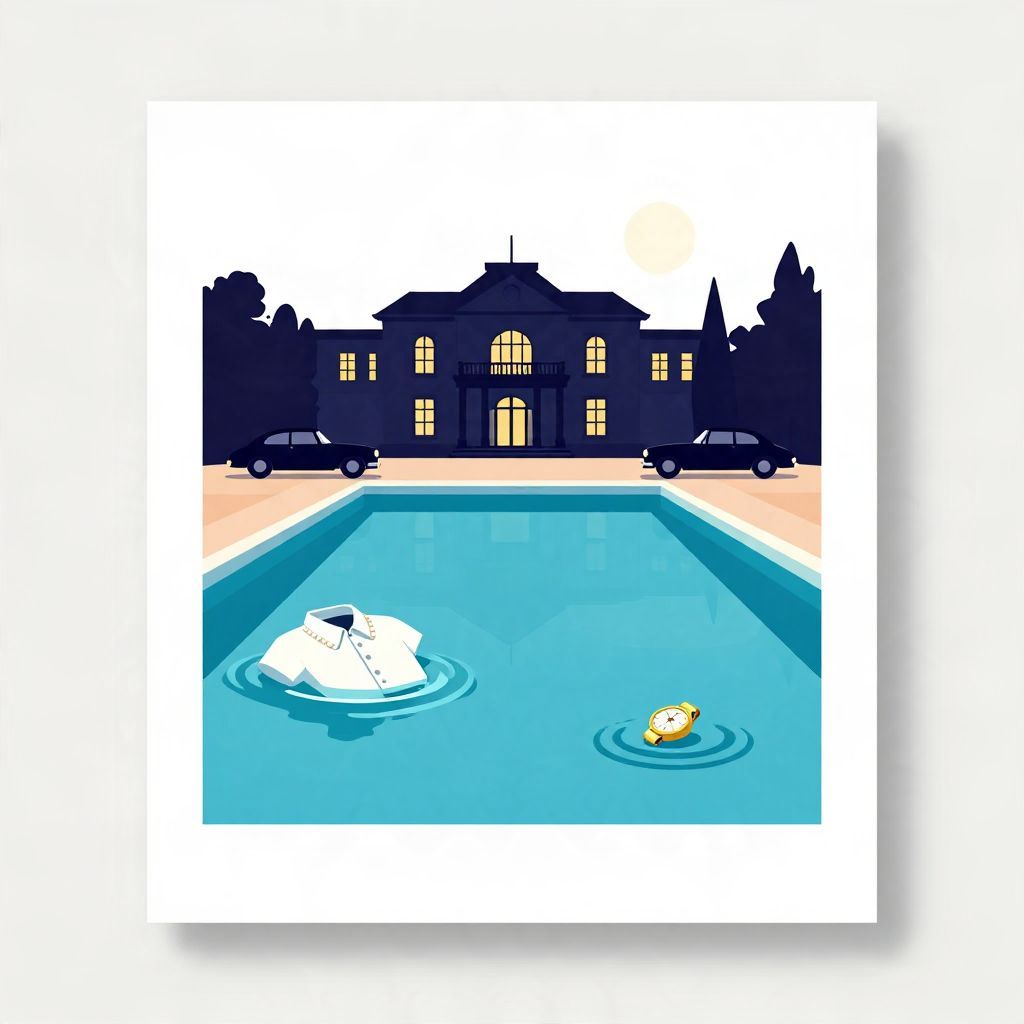
If you’re asking how Gatsby dies, the short answer is that Jay Gatsby is shot and killed by George Wilson near the end of The Great Gatsby. The death is not just a plot point; it is the tragic result of mistaken blame, moral carelessness, and the collapse of Gatsby’s dream.
F. Scott Fitzgerald uses Gatsby’s death to expose the emptiness beneath glamour and wealth. It also gives the novel its emotional force, turning a story of parties and longing into a bleak commentary on the American Dream.
How does Gatsby die in The Great Gatsby?
Gatsby dies by gunshot. After Myrtle Wilson is killed in a car accident, George Wilson believes Gatsby was responsible and goes to Gatsby’s mansion, where he shoots Gatsby and then kills himself. The novel presents the death as a tragic misunderstanding shaped by infidelity, class privilege, and the failure of others to tell the truth.
What happens before Gatsby dies?
Before the killing, the novel’s central conflict tightens around Daisy Buchanan, Tom Buchanan, and Gatsby’s hope that the past can be recovered. Gatsby has taken the blame for Daisy’s driving, partly out of love and partly to protect her, even though Tom has already redirected George Wilson’s anger toward Gatsby.
The car accident and its aftermath
Myrtle Wilson is struck and killed by Gatsby’s car, but Daisy is the one driving. Daisy flees the scene, and Gatsby later agrees to shield her from consequences. This choice matters because it shows how Gatsby’s devotion to Daisy overrides self-preservation.
Tom’s role in the tragedy
Tom Buchanan tells George Wilson that Gatsby owns the yellow car and implies that Gatsby was involved with Myrtle. Tom is not directly responsible for pulling the trigger, but his manipulation helps set the final tragedy in motion. Fitzgerald makes Tom’s influence feel morally poisonous rather than merely accidental.
Spoiler-focused ending explanation
Spoiler warning: Gatsby is killed at the end of the novel while waiting at his pool. After the shooting, Nick Carraway discovers Gatsby’s body and later learns that George Wilson has also died by suicide. The ending is stark and unsentimental, closing the novel with loss rather than resolution.
Why Gatsby is waiting in the pool
Gatsby’s final moments are quiet and strangely peaceful. He is alone, still clinging to the possibility that Daisy may call or come to him. Fitzgerald places him in the pool as summer ends, a symbolic setting that suggests both luxury and the fading of illusion.
Why Gatsby’s death matters thematically
Gatsby’s death is the novel’s clearest statement about the cost of illusion. He has built his life around reinvention and desire, but the dream that once seemed radiant collapses into violence and abandonment. His death reveals how fragile his world really is.
The American Dream and its corruption
Gatsby is often read as a figure of the American Dream: self-made, ambitious, and driven by aspiration. Yet Fitzgerald shows that wealth does not bring moral clarity or emotional fulfillment. Gatsby’s dream is corrupted by money, social barriers, and the impossibility of recreating the past.
Carelessness and moral failure
One of the novel’s most important ideas is that the wealthy characters often act without consequence. Daisy and Tom retreat into their privilege after the disaster, while Gatsby and George bear the fatal weight of it. Gatsby’s death underscores Fitzgerald’s critique of social irresponsibility.
Key characters connected to Gatsby’s death
- Jay Gatsby — the novel’s tragic center, whose hope and loyalty lead him into danger.
- Daisy Buchanan — the object of Gatsby’s devotion and the driver in the fatal accident.
- Tom Buchanan — Daisy’s husband, whose lies and manipulation help direct Wilson’s rage toward Gatsby.
- George Wilson — Myrtle’s husband, devastated by grief and driven to violence.
- Nick Carraway — the narrator, who witnesses the aftermath and frames Gatsby’s death as a moral judgment on the world around him.
Symbols and images around the death scene
Fitzgerald surrounds Gatsby’s death with recurring symbols that deepen its meaning. The pool, the car, and the fading season all contribute to the novel’s tragic atmosphere.
The pool
The pool is a place of leisure, wealth, and surface beauty, but in the final chapter it becomes the site of death. That contrast reinforces the novel’s sense that glamour hides vulnerability.
The car
The car represents status, speed, and reckless power. It is also the instrument of Myrtle’s death and the chain of blame that leads to Gatsby’s murder. In the novel, modern luxury is never far from destruction.
Seasonal fading
The ending takes place as summer gives way to autumn. This seasonal shift mirrors the collapse of Gatsby’s hopes and the end of the bright, temporary world he has tried to preserve.
How Fitzgerald’s style shapes the tragedy
Fitzgerald’s prose gives Gatsby’s death a lyrical, elegiac quality. Nick’s narration is reflective rather than sensational, which makes the violence feel more haunting. The novel does not dwell on the mechanics of the murder; instead, it emphasizes emotional emptiness and aftermath.
Nick Carraway’s perspective
Because the story is filtered through Nick, Gatsby’s death becomes part memory, part moral reflection. Nick admires Gatsby more than most of the other characters do, and his narration helps turn the ending into a critique of a whole social world.
Foreshadowing and irony
Fitzgerald plants subtle signs that Gatsby’s dream is doomed. Gatsby’s belief in Daisy’s return, the tension around the accident, and the false assumptions made by others all create dramatic irony. Readers can sense the tragedy gathering before it arrives.
Book summary in brief
The Great Gatsby follows Jay Gatsby, a wealthy and mysterious man who throws lavish parties in hopes of winning back Daisy Buchanan, the woman he loved years earlier. Through Nick Carraway’s narration, the novel traces obsession, class division, deceit, and the collapse of a dream built on illusion.
Review: why Gatsby’s death still resonates
Gatsby’s death remains memorable because it is both personal and symbolic. On one level, it is the killing of a lonely man who loved too intensely. On another, it is Fitzgerald’s verdict on a society that mistakes money for meaning and allows the vulnerable to absorb the consequences.
The ending is devastating not because it is surprising, but because it feels inevitable. Gatsby has spent the novel reaching toward an ideal that cannot survive contact with reality, and his death confirms that the dream was always unstable.
What readers often ask after Gatsby dies
Does Daisy go to Gatsby after his death?
No. Daisy does not return to Gatsby after the killing, and the novel makes clear that she and Tom leave the scene of the tragedy behind them. Their absence is part of the novel’s moral indictment.
Who is responsible for Gatsby’s death?
George Wilson pulls the trigger, but responsibility is shared across several characters and actions. Daisy’s driving, Tom’s manipulation, and the broader carelessness of the wealthy all contribute to the outcome.
Is Gatsby’s death the ending of the book?
It is the central climactic death, but the novel continues briefly afterward to show the emotional and social aftermath. Those final pages are important because they reveal how little the other characters truly value Gatsby’s life.
If you want to keep reading, you may also find how The Great Gatsby ends and what the green light means especially helpful for understanding Fitzgerald’s ending and symbols.