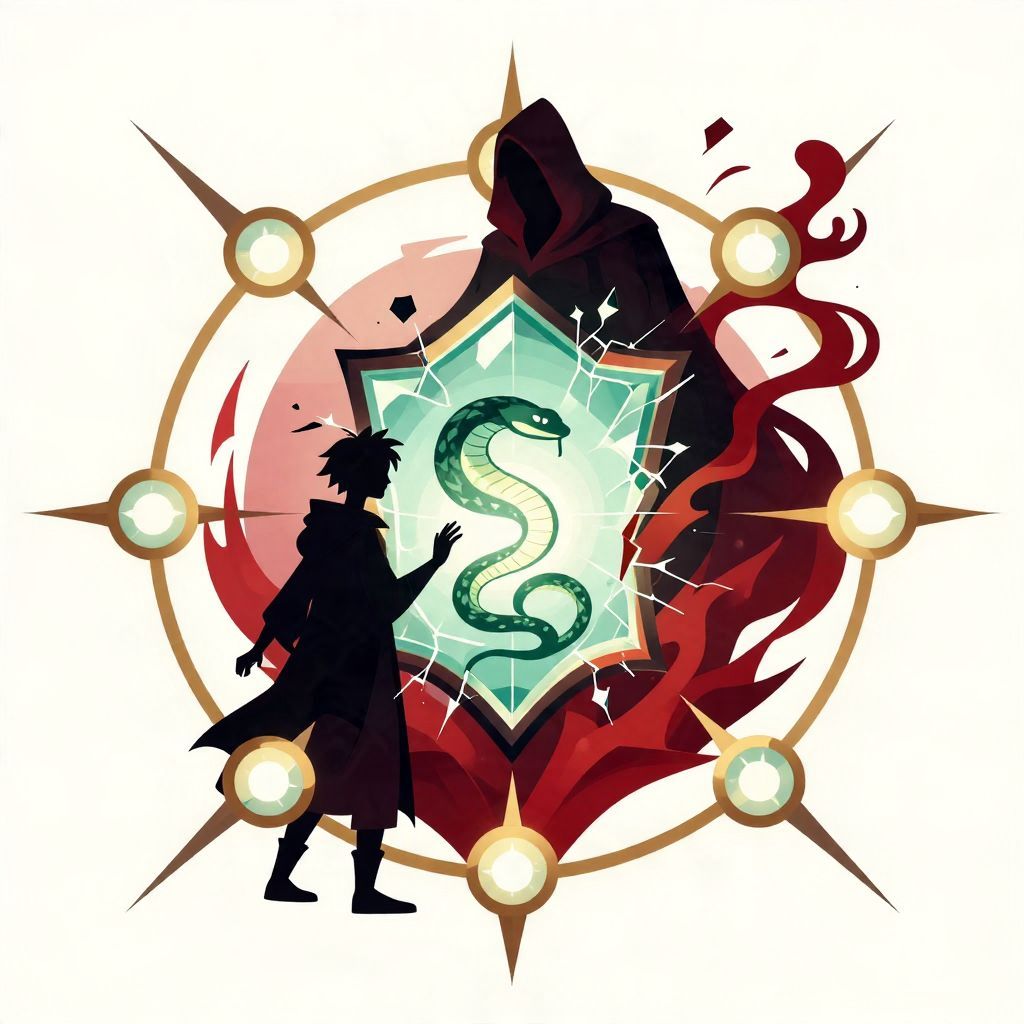
If you’re wondering how Tom Riddle became Voldemort, the answer lies in a gradual transformation shaped by obsession, fear of death, and a hunger for power. Across the Harry Potter series, J. K. Rowling reveals that Voldemort is not a separate person at all, but the name Tom Riddle chooses as he rejects his Muggle-born identity and remakes himself into a dark wizard.
This change is both psychological and magical: he abandons ordinary human ties, pursues immortality, and fractures his soul through Horcruxes. Understanding that shift helps explain not only his villainy, but also the series’ larger themes of identity, choice, and the cost of trying to defeat death.
How did Tom Riddle become Voldemort?
Tom Riddle becomes Voldemort by rejecting his birth name, embracing a new identity, and turning to dark magic in his effort to conquer death. He is introduced as a gifted but deeply damaged wizard whose pride, loneliness, and hatred harden into cruelty, eventually leading him to split his soul and become the Dark Lord.
Tom Riddle’s early life and the roots of his transformation
A child marked by abandonment
Tom Marvolo Riddle grows up in an orphanage after the death of his mother, Merope Gaunt, and the disappearance of his father. The series presents him as intelligent, controlled, and unnervingly self-contained, but also emotionally starved and incapable of trust.
His childhood matters because it helps explain, though not excuse, his later choices. Rowling makes clear that pain does not force him into evil; rather, he repeatedly chooses domination over empathy.
Discovering magic and power
When Dumbledore visits the orphanage, Tom learns that he is a wizard. That revelation gives him a sense of superiority and control, and he quickly begins using magic to intimidate and manipulate others rather than to connect with them.
Even as a boy, he shows a fascination with secrets, ownership, and control. Those traits later become central to his identity as Voldemort.
Why did Tom Riddle change his name to Voldemort?
Tom Riddle changes his name to distance himself from his father’s surname and from the vulnerability of his human past. “Voldemort” signals reinvention: a self-fashioned title meant to sound powerful, mysterious, and untouchable. The name change is symbolic of his larger refusal to remain ordinary, mortal, or emotionally known.
He also reshapes his identity to align with his beliefs about blood purity and wizarding supremacy. The new name is part of a performance of terror, designed to inspire fear and erase the boy he once was.
How Tom Riddle becomes Voldemort through dark magic
Hogwarts, ambition, and moral decline
At Hogwarts, Tom Riddle is brilliant, charming when he wants to be, and highly disciplined. He excels academically and wins the trust of teachers and students, but beneath that polish is a growing obsession with forbidden knowledge, especially the secrets of immortality.
His talent makes his descent more unsettling. Rowling suggests that intelligence without conscience can become a tool of destruction.
The pursuit of immortality
Voldemort’s defining goal is to escape death. He studies ancient magic and eventually creates Horcruxes, objects that hold pieces of his soul after he commits murder. This act is the clearest sign of his transformation: he is no longer merely ambitious, but willing to mutilate his own soul to avoid mortality.
In the series, this is not framed as a shortcut to power but as the ultimate corruption. The more he tries to preserve himself, the less human he becomes.
Spoiler note: the full transformation and what it means
Spoilers ahead. Tom Riddle’s transformation into Voldemort is complete when he embraces a life built on murder, fear, and fragmentation. By the time he is known as the Dark Lord, he has severed nearly every meaningful human bond and reduced himself to a figure of pure ideology and terror.
His downfall is tied to the same flaw that drives his rise: he cannot understand love, sacrifice, or the limits of power. That blindness becomes fatal.
Key themes in Tom Riddle’s transformation
- Identity and self-invention: The name “Voldemort” shows how identity can be performed, denied, and weaponized.
- Power versus belonging: Tom seeks control instead of connection, and that choice isolates him.
- Fear of death: His obsession with immortality drives the entire rise of Voldemort.
- Nature and nurture: The books suggest that trauma shapes him, but does not determine him.
- Choice and morality: Rowling repeatedly emphasizes that evil is not inevitable; it is chosen.
Characters who shape or reflect his rise
Dumbledore
Dumbledore recognizes Tom’s intelligence early and treats him with caution rather than admiration. He becomes one of the few characters who understands that Tom’s gifts are inseparable from danger.
Hagrid and the Hogwarts community
Tom’s treatment of others at Hogwarts reveals his contempt for those he sees as weaker or different. His cruelty toward classmates and his manipulation of events foreshadow the authoritarian logic of Voldemort’s later movement.
Harry Potter as a contrast
Harry’s story mirrors Voldemort’s in several ways, but the two diverge in crucial moral choices. Where Tom seeks power to avoid vulnerability, Harry accepts love, loss, and sacrifice as part of being human.
Symbols and literary techniques Rowling uses
The name as symbol
Tom’s renaming is one of the series’ most important symbolic acts. It marks a break with inheritance, family, and ordinary identity, while also revealing how language can be used to shape fear.
Fragmentation of the soul
The Horcruxes are both plot devices and symbols of moral disintegration. They make visible the cost of refusing death and the damage caused by dividing the self.
Foreshadowing and revelation
Rowling builds Voldemort’s history gradually through memories, clues, and retrospective revelations. This structure turns his backstory into a mystery that deepens the series’ emotional and thematic stakes.
Book summary: where this story appears in the series
Tom Riddle’s past is introduced in Harry Potter and the Chamber of Secrets through the diary memory of his younger self. Later books expand his biography, showing how he becomes Voldemort and how his choices shape the wizarding world.
Because the story is spread across multiple novels, readers experience his transformation as a layered mystery rather than a single origin chapter. That structure makes his villainy feel both personal and historical.
Why Tom Riddle’s transformation matters in the series
Tom Riddle becoming Voldemort is one of the central arcs of the Harry Potter books because it explains the series’ main conflict at its deepest level. The battle is not only between good and evil, but between two ways of understanding identity: one rooted in fear and domination, the other in love and responsibility.
His story also gives the series its moral gravity. Voldemort is frightening not just because he is powerful, but because he is what happens when brilliance is separated from empathy.
Reading takeaway
If you want the shortest answer to how did Tom Riddle become Voldemort, it is this: he chose to reject his past, pursued dark magic, split his soul, and built a new identity around fear and immortality. The books present that transformation as a warning about what happens when a person values power above humanity.
For more on Voldemort’s timeline, you may also want to read how old Voldemort is and explore what the seven Horcruxes were.