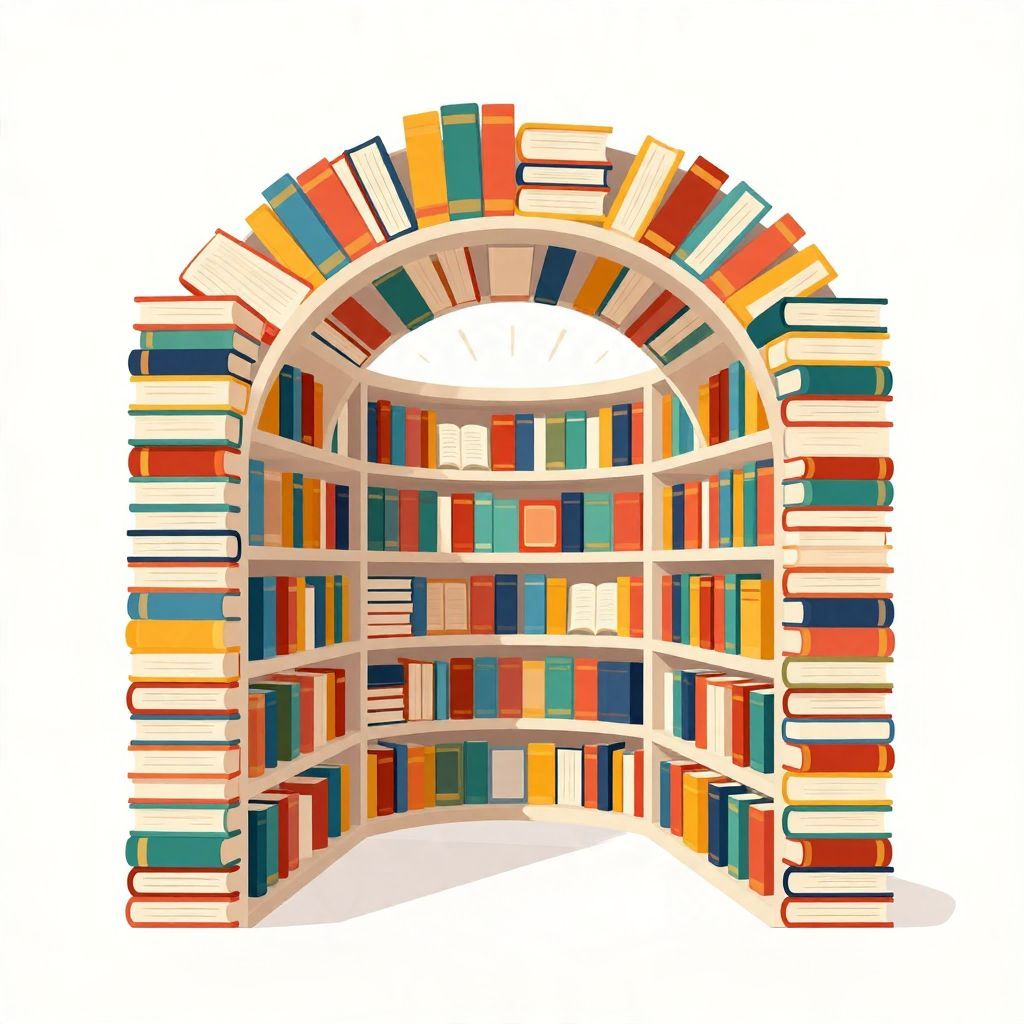
If you’re wondering how many books makes a library, the short answer is that there is no universal number. A library can be as small as a carefully chosen shelf or as large as a public institution, because what matters most is purpose, organization, and access rather than a strict count.
That said, people often use the word in different ways: a home library, a personal collection, a school library, or a public library. This guide explains the idea clearly, so you can judge when a book collection starts to feel like a library and what makes it function like one.
How many books make a library?
There is no official minimum number of books that turns a collection into a library. In practice, a library is defined less by size than by organization, intentional collecting, and the ability to find and use books efficiently. A few dozen books can form a library if they are curated and arranged with a clear purpose.
What actually defines a library?
A library is not just a pile of books. It is a collection that is arranged so readers can locate, borrow, consult, or study materials with ease.
Key features of a library
- Selection — the books are chosen for a reason, such as study, reading, reference, or enjoyment.
- Organization — books are grouped by subject, author, genre, or another useful system.
- Access — someone can actually use the books, whether that means a family, a classroom, or the public.
- Purpose — the collection serves reading, learning, research, or preservation.
Because of that, a “library” can be tiny or vast. A single bookshelf of reference works in an office may function as a library, while a large stack of books on the floor may not.
Different kinds of libraries, different expectations
The number of books needed depends on the kind of library you mean. A home collection, for example, does not need to meet the same scale as a school or public library.
Home library
A home library may be as small as one shelf or as large as a dedicated room. For many readers, once a collection is organized and intentionally built, it begins to feel like a library even if it contains only a modest number of books.
School or classroom library
A classroom library usually needs enough books to support different reading levels, subjects, and interests. Here, the emphasis is less on a fixed number and more on variety, accessibility, and age-appropriate selection.
Public or institutional library
A public library is a formal institution with a broader mission: serving a community. It typically needs a much larger and more diverse collection, along with cataloging systems, staff, and lending procedures.
When does a book collection feel like a library?
For many readers, the feeling of a library begins before the collection becomes large. A small but well-kept set of books can already create the sense of a library if it reflects thought, order, and reading habits.
Signs your collection is becoming a library
- You can find books quickly without guessing where they are.
- Your books are grouped in a way that makes sense to you.
- You keep books for reference, rereading, or long-term use.
- The collection reflects a pattern of reading rather than random accumulation.
In other words, the transition from “books I own” to “my library” is often about curation. A library suggests a relationship between reader and collection, not just quantity.
Is there a practical number people use?
People sometimes ask for a specific threshold, but any number would be arbitrary. One person may call 20 carefully arranged books a library, while another may not use the term until they have several hundred.
If you want a practical rule of thumb, think in terms of function:
- Under 50 books — often a small personal collection, though it may still be a library if curated.
- 50 to 200 books — commonly enough to feel like a home library, especially if organized.
- 200+ books — usually unmistakably library-like in a domestic setting, though organization still matters most.
These are not official categories. They are simply useful ways to think about scale when describing a personal collection.
Why organization matters more than quantity
A library is meant to be used. Without a system, even a large collection can become difficult to navigate, while a smaller one can remain highly functional and inviting.
Common ways to organize a library
- By genre — fiction, nonfiction, poetry, biography, and more.
- By author — useful for readers who collect series or favorite writers.
- By subject — especially helpful for research or reference books.
- By reading status — read, unread, and to-be-read shelves.
Any system can work if it helps you find books and use them comfortably. The best library is the one that supports the way you read.
How libraries differ from book collections
Not every book collection is a library, and not every library is huge. The distinction usually comes down to intent and structure.
Book collection
A collection may simply be a group of books someone owns. It might be sentimental, accidental, or incomplete in terms of subject coverage.
Library
A library implies a more deliberate arrangement. It suggests that the books are gathered, preserved, and made available for use in an orderly way.
This is why a person can have a library even without a large number of books. The collection becomes “library-like” when it is treated as a resource rather than just storage.
How to build a library at home
If your goal is to create a home library, start with the books you already love and use. You do not need to wait until you own hundreds of titles.
Simple steps to begin
- Choose a space, even if it is only one shelf.
- Gather books you want to keep long term.
- Sort them by a system that makes sense to you.
- Add a few categories that reflect your reading life.
- Leave room for future books so the collection can grow naturally.
A home library can be practical, decorative, or both. The most important thing is that it reflects your interests and remains easy to use.
What readers usually mean when they ask the question
When someone asks how many books makes a library, they are often really asking one of three things: “How big should my collection be?”, “When can I call it a library?”, or “What makes a group of books feel substantial?” The answer depends on context, but the core idea stays the same.
A library is defined by purpose and organization, not by a fixed number of books. A small, curated shelf can qualify just as much as a room full of volumes if it serves readers well.
Quick answer for readers in a hurry
If you want the shortest possible answer: there is no exact number of books that makes a library. A library can begin with a few dozen well-chosen books, provided they are organized and used with intention. The larger the collection, the more likely it is to be called a library, but size alone is never the whole story.
For more practical guidance, you may also want to read how many books are needed for a home library and how many books are needed to be considered a library.