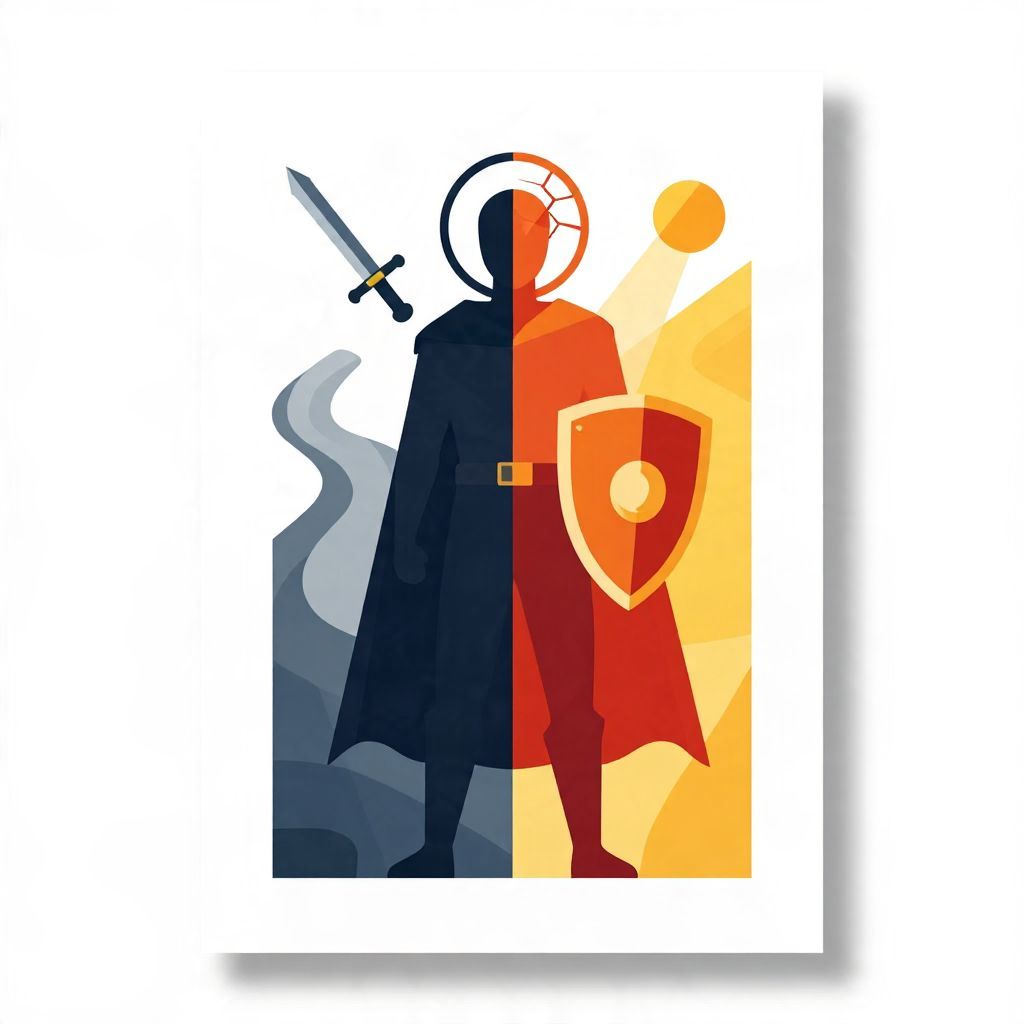
If you’ve ever wondered what is a anti hero, the short answer is that it’s a central character who lacks the usual qualities of a traditional hero but still remains compelling, sympathetic, or morally complex. Anti-heroes may be selfish, cynical, flawed, or even criminal, yet readers keep following them because their struggles feel human.
In literature, the anti-hero is less about perfect virtue and more about tension: between self-interest and conscience, power and vulnerability, or survival and morality. That complexity has made the anti-hero one of the most enduring character types in novels, plays, and modern storytelling.
What is an anti-hero in literature?
An anti-hero is a protagonist or major character who does not embody conventional heroic ideals such as bravery, nobility, selflessness, or moral clarity. Instead, anti-heroes are often flawed, conflicted, hesitant, ironic, or morally compromised, which makes them more realistic and often more interesting than a polished hero.
How is an anti-hero different from a villain?
The key difference is that an anti-hero is still usually positioned for audience identification, while a villain is primarily an opposing force. An anti-hero may do harmful things, but the story often invites readers to understand their motives, contradictions, or pain. A villain, by contrast, is typically framed as a threat rather than a lens through which the story is experienced.
Common traits of anti-heroes
- Moral ambiguity — they may do the right thing for the wrong reasons, or vice versa.
- Flaws and weaknesses — pride, fear, selfishness, addiction, resentment, or insecurity often shape them.
- Reluctance — many anti-heroes resist responsibility or reject idealism.
- Cynicism — they may distrust institutions, romance, honor, or social rules.
- Inner conflict — their appeal often comes from psychological tension rather than moral certainty.
What is the purpose of an anti-hero?
Anti-heroes allow writers to explore the messier side of human behavior. They can expose hypocrisy in society, challenge simplistic ideas of good and evil, and reflect the way real people often behave under pressure. Because they are imperfect, they can also make themes like guilt, survival, identity, and redemption feel more immediate.
Where did the anti-hero come from?
The anti-hero is not a modern invention, though the term is often associated with contemporary fiction. You can find early versions in classical literature, tragic drama, and picaresque stories, where clever, flawed, or socially marginal figures drive the narrative. Over time, literary realism and modernism made room for more psychologically complicated protagonists.
Literary history and development
In earlier heroic traditions, protagonists were often idealized. As literature became more interested in interior life and social contradiction, writers increasingly created characters who were less admirable but more believable. By the 19th and 20th centuries, anti-heroes became especially common in novels that questioned class, morality, war, alienation, and authority.
Examples of anti-heroes in literature
Anti-heroes appear across genres, from classic novels to contemporary fiction. The examples below show how flexible the type can be.
Jay Gatsby in The Great Gatsby
Gatsby is not a hero in the traditional sense. He is driven, secretive, self-invented, and morally compromised by the means he uses to pursue his dream. Yet he also embodies longing, hope, and tragic idealism, which makes him one of literature’s most memorable anti-heroes.
Holden Caulfield in The Catcher in the Rye
Holden is cynical, judgmental, and emotionally unstable, but his voice is also vulnerable and deeply human. His resistance to adulthood, social performance, and phoniness makes him a classic anti-heroic narrator: difficult, unreliable at times, but emotionally revealing.
Meursault in The Stranger
Meursault is detached, emotionally opaque, and indifferent to many social expectations. He does not fit the model of a noble protagonist, yet his distance from conventional morality is exactly what gives the novel its philosophical force. He is an extreme example of the anti-hero as existential figure.
Hester Prynne in The Scarlet Letter
Hester is not an anti-hero in the same sense as a cynical male protagonist, but she does challenge conventional moral categories. Her public shame, resilience, and independence place her outside the idealized heroine model, and her complexity has made her a lasting literary figure.
Raskolnikov in Crime and Punishment
Raskolnikov is brilliant, proud, isolated, and capable of terrible violence. At the same time, Dostoevsky makes his guilt and self-division central to the novel, turning him into a psychologically intense anti-hero whose inner debate matters as much as his actions.
Elizabeth Bennet’s less obvious anti-heroic counterparts
In some novels, anti-heroism appears in supporting figures rather than the main romantic lead. Characters who are witty, self-protective, socially awkward, or resistant to sentiment can function as anti-heroic presences even when the story remains broadly comic or romantic.
Why readers are drawn to anti-heroes
Readers often connect with anti-heroes because they feel closer to real life than flawless champions. Their contradictions invite interpretation. We may not approve of what they do, but we recognize fear, pride, loneliness, resentment, or the desire to justify ourselves.
What makes them compelling on the page
- Tension — readers want to know whether they will fail, redeem themselves, or worsen.
- Voice — anti-heroes often speak in memorable, sharp, or confessional ways.
- Uncertainty — their motives are rarely simple, which keeps the narrative alive.
- Transformation — some anti-heroes change; others remain stuck, and that too can be powerful.
Anti-hero vs. tragic hero
These two types overlap, but they are not identical. A tragic hero is often high-status, admirable, and undone by a fatal flaw or error in judgment. An anti-hero may be lower in status, more morally mixed, and less conventionally noble from the start. Both can end in suffering, but they create different effects.
Quick comparison
- Tragic hero: usually noble, capable, and brought down by a flaw.
- Anti-hero: often flawed from the outset, morally mixed, and emotionally complicated.
- Overlap: both can provoke sympathy, reflection, and pity.
Anti-heroes in modern fiction
Modern and contemporary literature often favors anti-heroes because they suit stories about alienation, social pressure, fractured identity, and distrust of institutions. In crime fiction, satire, literary fiction, and even fantasy, anti-heroes can carry the plot while also complicating the reader’s moral response.
Why the form remains popular
Anti-heroes work especially well in periods when readers are skeptical of simple moral messages. They let authors ask harder questions: What does survival cost? Can a damaged person still be decent? Is redemption possible? Those questions keep the anti-hero relevant across literary history.
How to read an anti-hero well
When you encounter an anti-hero, it helps to separate liking from understanding. A good reading strategy is to ask what the character wants, what they fear, what they refuse to admit, and how the narrative shapes your sympathy for them.
- Notice the character’s contradictions.
- Track the gap between their self-image and their behavior.
- Pay attention to how other characters respond to them.
- Consider whether the story rewards, punishes, or complicates their choices.
- Look for themes such as alienation, guilt, ambition, or redemption.
Final takeaway
An anti-hero is a flawed, morally complex central character who challenges the idea that a protagonist must be admirable to be worth following. In literature, that complexity often produces the richest stories, because anti-heroes reveal how messy, contradictory, and human people can be.
If you want to keep exploring character analysis, you may also enjoy related reading on Dallas Winston’s age and how Dally dies in The Outsiders.