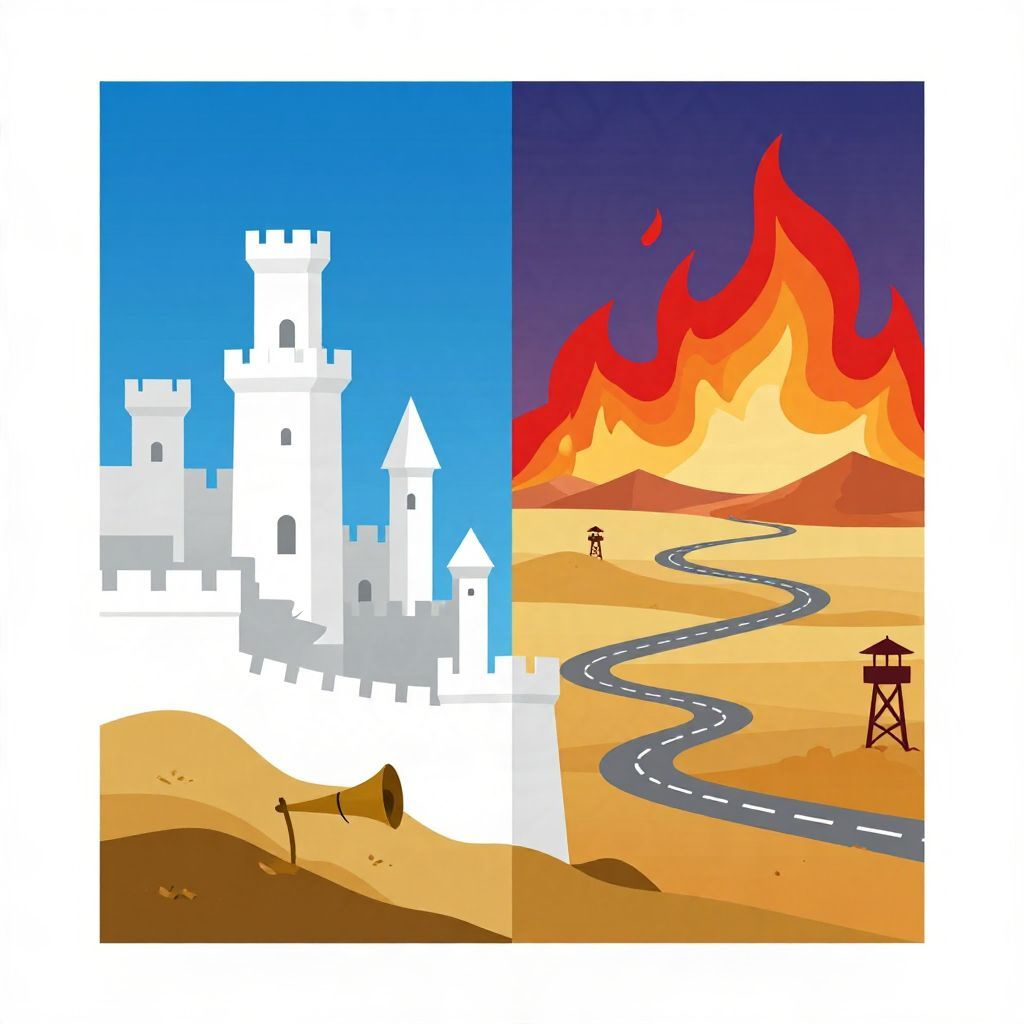
If you’ve heard the line “Where was Gondor when the Westfold fell?” and wondered what it means, you’re not alone. The phrase has become one of the most quoted lines associated with The Lord of the Rings, especially in discussions of loyalty, desperation, and political obligation.
It refers to a moment in J.R.R. Tolkien’s story when Rohan feels abandoned by Gondor. Understanding the line means looking at the scene, the characters speaking, and the larger history of the two kingdoms in Middle-earth.
What does “Where was Gondor when the Westfold fell?” mean in The Lord of the Rings?
The line expresses frustration that Gondor did not come to Rohan’s aid when the Westfold, a region of Rohan, was under attack. In context, it is less a factual accusation than an emotional complaint about broken alliances, uneven support, and the loneliness of a kingdom under siege.
The scene in context: why the line matters
The phrase is associated with Théoden, king of Rohan, during the events of The Two Towers. Rohan is facing grave danger from Saruman’s forces, and the Westfold has already suffered heavily. The line captures the strain of war: allies are expected, but help has not arrived in time.
Rohan’s sense of abandonment
Rohan is a horse-lord kingdom built on martial honor and mutual duty. When its people are threatened, the absence of aid from Gondor feels like a betrayal, even if the political and military realities are more complicated than a simple refusal to help.
Gondor’s own pressures
Gondor is not indifferent so much as overextended. Tolkien presents it as a realm under constant threat, stretched thin by its own defenses and internal burdens. That context matters because the line is part of a larger story about how alliances fail when every side is fighting for survival.
Who are the key characters connected to the line?
The quote is tied to the leaders and peoples of two allied kingdoms, and it gains meaning through their relationship rather than through the sentence alone.
- Théoden — King of Rohan, whose words reflect grief, anger, and the burden of leadership.
- Rohan — The horse-riding kingdom whose western lands, including the Westfold, are threatened.
- Gondor — The southern kingdom that is expected to support its ally but is itself under immense strain.
- Saruman — The immediate enemy whose war against Rohan intensifies the crisis.
Why the Westfold is important in Tolkien’s world
The Westfold is one of Rohan’s key regions, so its fall represents more than a local defeat. It signals the collapse of security along the kingdom’s western defenses and shows how quickly a border crisis can become a national emergency.
A military and symbolic frontier
In Tolkien’s geography, borders matter. The Westfold is not just a place on a map; it is a line of defense. When it falls, the kingdom’s vulnerability becomes visible, and the need for allied support becomes urgent.
Why readers remember it
The phrase endures because it sounds like a political challenge, but it is also deeply personal. It transforms a battlefield event into a question of solidarity: when one ally suffers, what does the other owe in return?
Is the line a literal historical complaint or a symbolic one?
It is both. On the surface, the line complains about a missed military response. Symbolically, it speaks to the fragility of alliances, the pain of being left alone, and the way wartime decisions are judged after the fact.
Alliance and responsibility
Tolkien often explores the tension between duty and distance. The line about Gondor and the Westfold highlights how alliances can be morally meaningful even when they are practically difficult to honor.
Leadership under pressure
Théoden’s frustration also reveals the human side of command. Leaders in Tolkien are often measured not only by battlefield success but by whether they can carry disappointment without losing resolve.
How the line fits Tolkien’s larger themes
This moment is small in wording but large in thematic weight. It connects to several of Tolkien’s recurring concerns: loyalty, endurance, fallen kingdoms, and the cost of delayed aid.
- Fellowship — The ideal that different peoples should stand together against a common threat.
- Loss and decline — Many of Tolkien’s realms are weakened versions of earlier greatness.
- Honor and memory — Past promises matter, even when circumstances make them hard to fulfill.
- War and scarcity — No kingdom has infinite strength, and that reality shapes every decision.
Why the phrase became so famous online
The line is widely repeated because it is concise, dramatic, and easy to adapt into modern arguments. People use it jokingly or seriously to comment on politics, friendship, teamwork, or any situation where someone feels unsupported.
From literature to meme culture
Its afterlife in internet culture has made it recognizable even to people who have not read Tolkien closely. That popularity can flatten the original scene, but it also shows how powerfully Tolkien’s language captures real emotional conflicts.
Common misunderstandings about the quote
Because the line is so often repeated out of context, it is easy to misread it as a simple “gotcha” statement. In the book, however, it is part of a larger moral and historical argument about what allies owe each other and how war distorts judgment.
It is not just about blame
The line is not merely an accusation against Gondor. It also reveals how fear and exhaustion can turn a strategic failure into a personal grievance, especially when a kingdom feels isolated.
It is not the whole story of Gondor and Rohan
The relationship between the two realms is more nuanced than a single complaint. Tolkien shows both cooperation and strain, which makes the line memorable precisely because it sits inside a broader history of alliance.
Reading The Lord of the Rings with this moment in mind
If you are approaching the books for the first time, this line is a useful lens for understanding Tolkien’s political imagination. He does not write only about quests and battles; he also writes about states, obligations, and the emotional cost of waiting for help that comes too late.
What to watch for as you read
- How Tolkien describes borderlands and defensive regions.
- How rulers balance pride with practical necessity.
- How alliances are tested by distance, delay, and fear.
- How often the books turn military events into moral questions.
Why this line still resonates
“Where was Gondor when the Westfold fell?” remains powerful because it names a feeling many readers recognize: the pain of needing support and not receiving it. In Tolkien’s world, that feeling is tied to history, duty, and the tragedy of limited power.
For readers interested in the wider mythology behind the kingdoms of Middle-earth, it can also help to explore what Gandalf represents in Tolkien’s work and why Saruman turns evil, since both figures shape the conflict that makes this line so memorable.